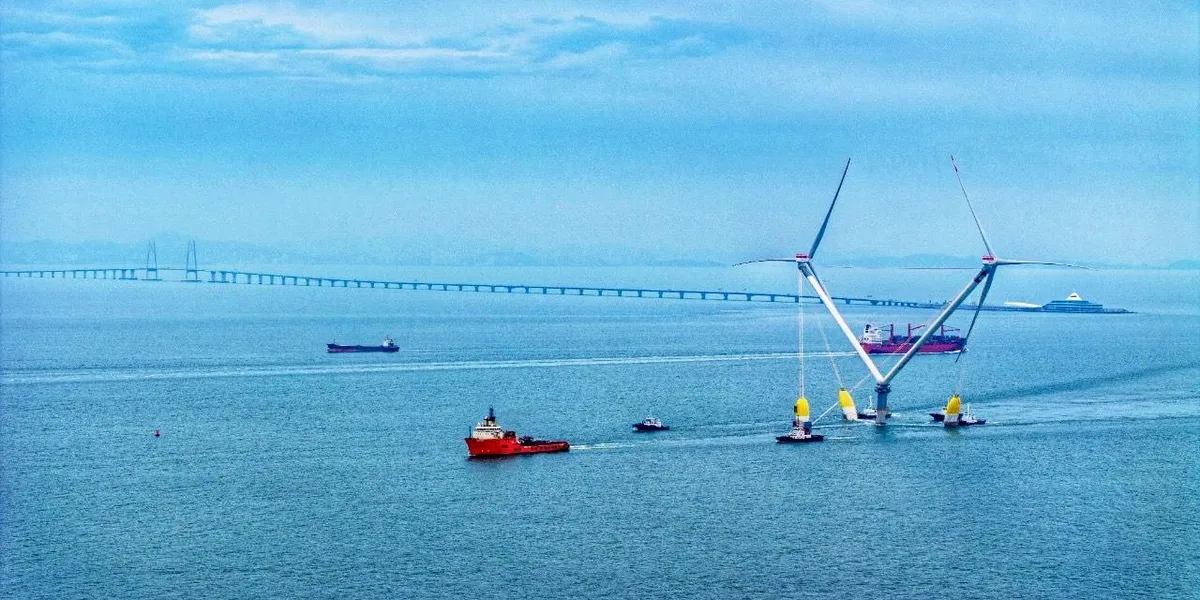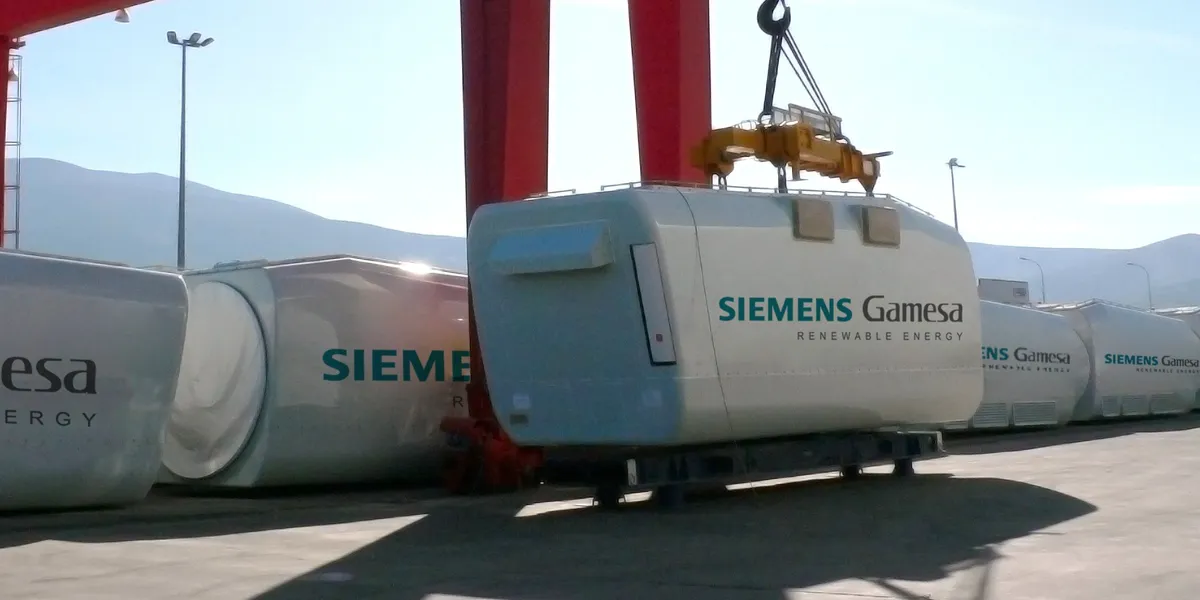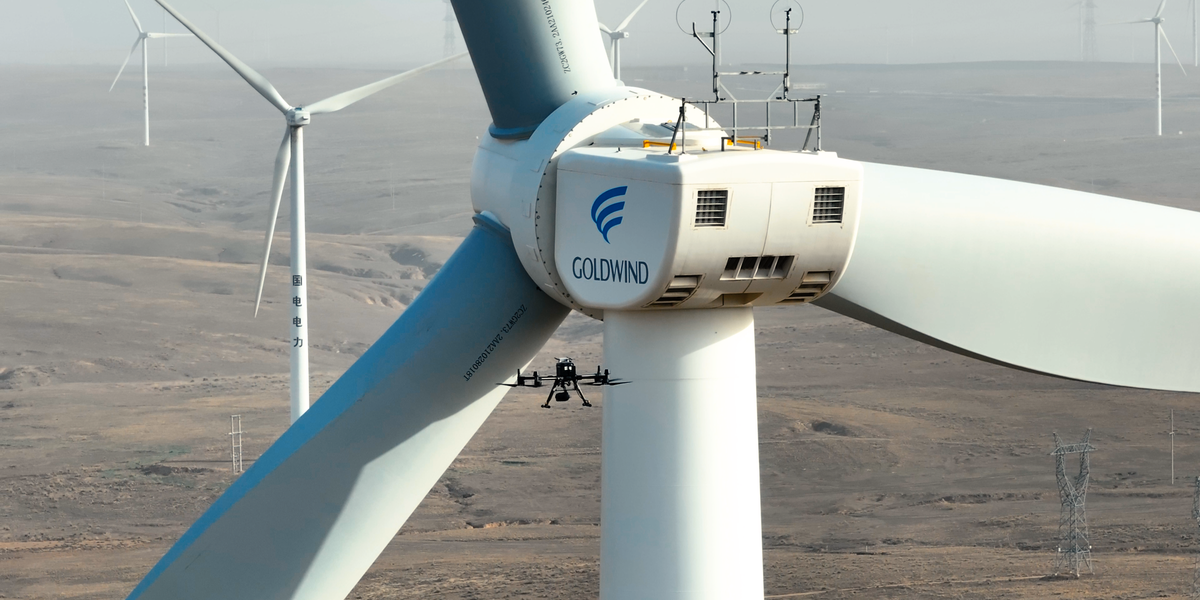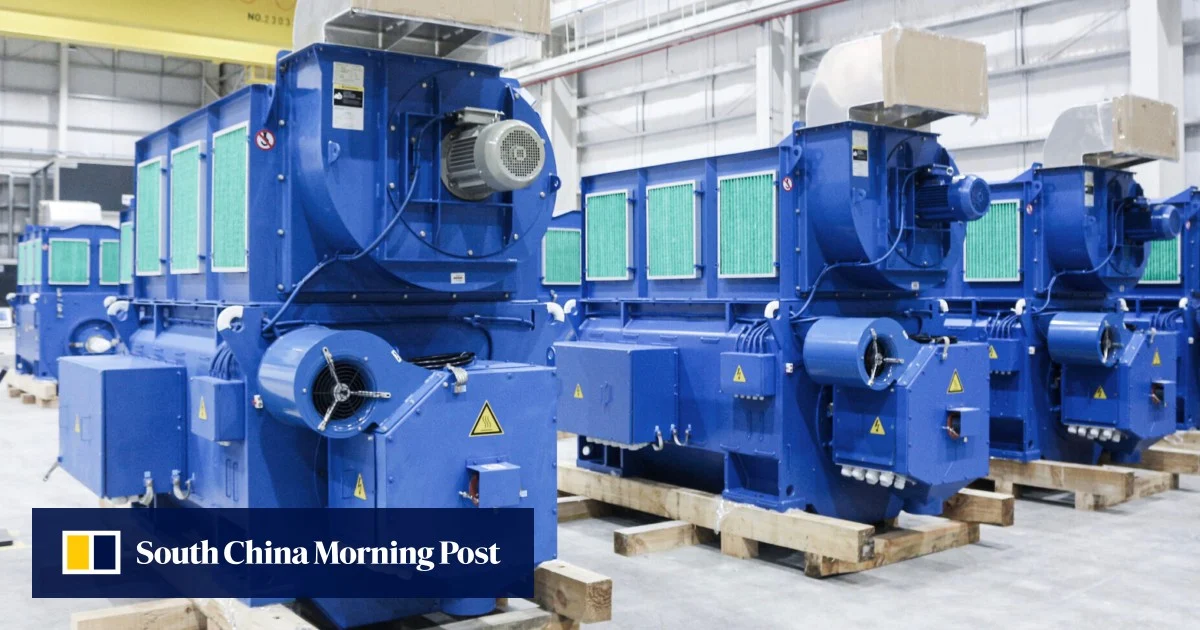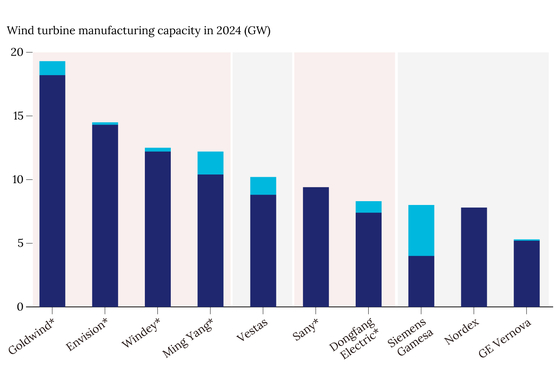
Chinese wind-turbine manufacturers are considering a hybrid manufacturing model to strengthen their position in the European market, according to a recent report by the Oxford Institute for Energy Studies (OIES). The plan involves producing larger and less technically complex parts, like blades and towers, within Europe, while more technologically advanced components would continue to be made in China. This strategy aims to meet emerging local production requirements and to address the high costs associated with shipping bulky turbine components to Europe. Anders Hove, a co-author of the report, noted that local production of such parts is cost-effective due to the high expense of international transportation for these large components [para. 1][para. 2][para. 3].The report highlights China’s dominance in the global wind turbine market, driven by strong domestic demand. In 2023, six out of the world’s ten largest wind turbine makers by manufacturing capacity were Chinese, including Goldwind, Envision Group, and Windey Energy Technology Group, which held the top three positions. This reflects China's rapid industrial growth and its significant role in global renewable energy markets [para. 4].The hybrid manufacturing model suggested by OIES is not new to the wind energy sector. Around 20 years ago, Western turbine companies employed a similar approach to meet Chinese regulations requiring local content in wind farm projects, which led them to manufacture certain parts in China while maintaining their design centers in Europe. Now, Chinese companies are replicating this approach by shifting some production activities to Europe [para. 5][para. 6][para. 7].Currently, Chinese wind turbine manufacturers have a limited presence in European manufacturing, although some have acquired local facilities. For instance, Goldwind owns a majority stake in Germany's Vensys Energy AG, which operates a blade factory in Spain, while Zhenshi Holding Group purchased a Spanish blade factory from Airbus. Additionally, several firms plan to expand their footprint, such as Ming Yang Smart Energy Group, which recently announced a £1.5 billion ($2 billion) investment in a UK manufacturing base. Sany Heavy Industry is reportedly considering similar moves [para. 8][para. 9].Chinese wind turbines are known for their competitive pricing and can be up to 50% cheaper than Western alternatives. However, the viability of the hybrid manufacturing model in keeping costs low is unclear because it remains largely untested in Europe. Anders Hove pointed out that replicating low home-market prices in Europe will be challenging due to added transportation costs and the need for local production [para. 10][para. 11].Credibility, rather than cost, poses a significant obstacle for Chinese manufacturers in Europe, according to Andrea Scassola of Rystad Energy. Factors such as limited international experience and incomplete EU certifications deter European developers, lenders, and policymakers. Furthermore, attitudes toward Chinese suppliers differ across Europe: Northern regions focus more on supply chain security and national interests, while Southern areas are comparatively more receptive due to prior exposure to Chinese suppliers in other regions. For example, Germany restricts Chinese participation, while the UK and Italy are more open [para. 12][para. 13][para. 14][para. 15].European policymakers are concerned that cheap Chinese imports could destabilize their wind manufacturing sector, analogous to what happened with solar panels. The EU has responded by setting a goal for domestic manufacturing to fulfill at least 40% of its clean energy deployment needs by 2030, and has introduced tariffs of 7.2% to 19.2% on Chinese wind turbine towers, along with a subsidy investigation [para. 16][para. 17][para. 18].Pressure exists for European wind farm developers to avoid Chinese suppliers even in the absence of explicit bans. The sector remains divided over Chinese participation, with some viewing it as beneficial for competition and bottleneck reduction, while others point to policy and regulatory uncertainty as major hurdles for Europe’s wind industry [para. 19][para. 20][para. 21][para. 22].AI generated, for reference only
Chinese Wind-Turbine Makers Look to Move Portion of Production to Europe
Under a hybrid model, Chinese companies would produce large components such as blades on the continent, while continuing to make tech-intensive parts at home, according to a new report
616 words~3 min read