I'll be honest: if you watched the Google I/O 2026 keynotes, you probably saw a lot of flashy consumer tech. There was a highly choreographed demo where Gemini used Android XR smart glasses to identify things in the room and play Charli XCX as entrance music.
As a consumer, that’s neat. As a developer? I don't care. To me, it felt like a glorified Bluetooth microphone that just connects to your phone to do the actual heavy lifting.
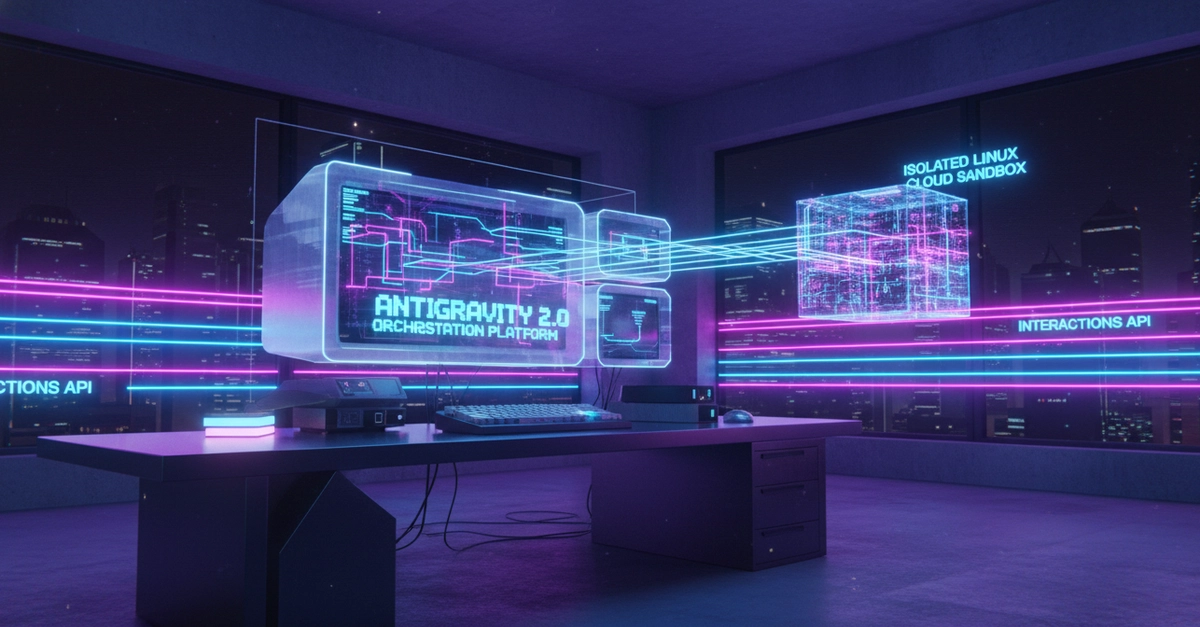
What I do care about is the heavy lifting. I care about the backend infrastructure required to make these autonomous "agentic" workflows actually function in the real world. For the past year, building an AI agent has been an absolute architectural nightmare. If you wanted an agent to execute Python code safely or search the web, you had to manually provision secure sandboxes, manage complex execution loops, and constantly shuffle massive arrays of message history back and forth to the LLM just to maintain the conversational context.
That’s why the most underrated and genuinely exciting announcement from Google I/O 2026 wasn't a piece of hardware or a shiny new IDE. It was a backend structural shift: Managed Agents and the Interactions API.
Here is a first-look guide into why this update fundamentally changes how we build with AI, and why I believe it's the single most important tool Google shipped this year.