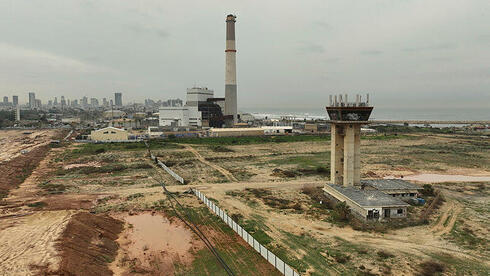
Health Ministry and Water Authority reject the new PFAS thresholds, freezing their use as experts warn looser cleanup rules could delay soil removal and expose the public to hazardous contamination Shani Ashkenazi/Calcalist|Following the discovery of widespread soil and groundwater contamination at Sde Dov, the Environmental Protection Ministry announced about a month ago new threshold values for remediating soil contaminated with PFAS (per- and polyfluoroalkyl substances). The new thresholds are higher than the previous ones, effectively allowing soil previously defined as contaminated to be classified as “clean.” They were issued as ministry directives without public debate and without consultation with the Health Ministry, after being written for the regulator by a commercial company.It has now emerged that the same company relied in part on articles written by employees of DuPont, one of the main companies that developed the polluting chemicals and is facing billions of dollars in lawsuits across the United States, as well as on senior figures who were dismissed from the U.S. Environmental Protection Agency over the same affairs.2 View gallery Site of the former Sde Dov airport in Tel Aviv(Photo: Orel Cohen)The Water Authority and the Health Ministry, the other regulators responsible for the field, are distancing themselves from the work carried out by the Environmental Protection Ministry and stress that they do not accept it. A Calcalist inquiry now shows that following their objections, the use of the ministry’s new threshold values has been frozen, and an interim agreement has been drafted until “updated” threshold values are set. During this period, soil with PFAS concentrations lower than the thresholds devised by the Environmental Protection Ministry alone will also be removed.The Environmental Protection Ministry did not announce this to the public, raising concerns that the soil removal process could be delayed and impose unplanned costs, as approvals for completing work at sites contaminated with PFAS compounds will not be granted until the threshold values are updated according to an agreed methodology.In February, the Environmental Protection Ministry announced initial findings of PFAS contamination in soil and groundwater at Sde Dov. PFAS pollutants are a group of highly durable synthetic chemicals, sometimes called “forever chemicals” because they barely break down in the environment. They are used, among other things, in water- and oil-repellent products such as Teflon, food packaging, water-repellent clothing and firefighting foams — the route by which they reached the soil at Sde Dov, where firefighting foams were frequently used.Studies and reports link exposure to them — through ingestion from water sources — to various health problems, including effects on the immune system, cholesterol, liver, fertility and several types of cancer.The Environmental Protection Ministry was informed by the Water Authority as early as 2022 of the presence of contaminants at the site, but ignored it and approved the marketing of the land as clean, without testing it for those pollutants at all. After new findings in the soil late last year, the ministry was forced to order extensive soil testing over suspected contamination. But then, Calcalist has learned, at a meeting held at the Environmental Protection Ministry, it emerged that the PFAS soil thresholds in use at the time could lead to hundreds of sites across the country being defined as heavily contaminated. The ministry then set out to define new threshold values for PFAS pollutants in soil.2 View gallery Chemical also was found in water supply(Photo: Yossi Sorojon, Kishon River Authority)The ministry decided not to adopt threshold values used in any other country, but to write its own formula for the field. To do so, it hired two commercial companies: the Israeli firm Ecolog Engineering, which treats contaminated soil and conducts environmental surveys, and works for a range of bodies and companies including Shapir Engineering, Dalia Energy, Dead Sea Works, Ashdar and others; and the international consulting firm SLR, which also works for industry and was hired by the Environmental Protection Ministry through Ecolog Engineering.The new thresholds caused an outcry: The Environmental Protection Ministry abandoned the stricter threshold values it published in 2024 based on the U.S. Environmental Protection Agency and decided to narrow the list of compounds requiring treatment from 31 to four. While the original guidance document included a broad range of suspected industrial activities, the scope was significantly narrowed to a few chemicals used only in firefighting foams. The threshold values used to determine whether soil is contaminated and must be removed from a site were also eased, after SLR’s work changed the toxicity coefficients for PFAS pollutants, making them more lenient.While experts wondered where the Environmental Protection Ministry had pulled these criteria from and why it adopted the work of a commercial company rather than a methodology accepted in any reference country, it now turns out that the company relied, among other things, on questionable sources. An examination by Roni Brill, an environmental consultant, real estate appraiser and expert on environmental risks, found that several articles relied upon by SLR, which advised the Environmental Protection Ministry and whose work was used to change and set Israel’s PFAS thresholds, were written by former PFAS industry employees, including DuPont.Thus, among the sources on which the company relied was a 2011 study by five then-DuPont employees: Shawn Gannon, Diana Nabb, Tessa Serex, Robert Buck and Scott Loveless. In addition, three other articles by DuPont employees were used to determine threshold values for PFAS compounds in Israel: one from 2009, another from 2011 and a third from 2013.Among the authors of another article appearing in SLR’s bibliography, which deals with the safety of PFOA, a PFAS compound, for human health, is Laura Green, a toxicologist who advised the U.S. EPA, which later distanced itself from her after she downplayed the severity of PFAS risks. After being hired to advise on synthetic turf projects in Massachusetts, she claimed, among other things, that “there is no credible evidence that PFAS harms human health,” contrary to the position of health agencies worldwide. Green has been labeled by environmental activists and journalists as a mercenary of the chemical industry.Another author of two articles on which the work relied is Michael Dourson, who was Trump’s nominee to oversee chemical safety and repeatedly received funding from polluters to weaken chemical safety standards. Since 1995, Dourson has run what he says is a nonprofit called Toxicology Excellence for Risk Assessment, which receives about 40% of its funding to produce studies for the chemical industry, which generally favors weaker safety standards. Among other things, his company provided experts for lawsuits against the industry and has consistently fought to weaken proposals intended to protect public health from dangerous chemicals, including PFAS compounds.Dourson effectively helped DuPont avoid responsibility for damage caused by PFOA contamination, a dangerous PFAS chemical used to manufacture Teflon and linked to kidney and testicular cancer, thyroid disease, immune failure and other health problems. The state of Virginia set a drinking water safety threshold for the chemical based on Dourson’s work, but about a decade later, when the EPA addressed the issue, it set a safety threshold thousands of times stricter than his recommendation.Even as the risks of PFOA became better understood, Dourson continued to defend the chemical on DuPont’s behalf. In 2015, DuPont paid Dourson to testify in its defense in a lawsuit filed by an Ohio woman who claimed she developed kidney cancer after drinking water contaminated with PFOA emitted from DuPont’s Parkersburg plant in West Virginia.PFAS compounds were developed in laboratories in the 1960s for use in a variety of industrial applications by several companies, including chemical giant DuPont, which used the material to create Teflon coating. For decades, DuPont’s plant in Parkersburg, West Virginia, emitted tons of PFOA into the air and discharged wastewater directly into the Ohio River. These chemicals seeped into the groundwater and contaminated the drinking water of more than 70,000 residents in the area.DuPont knew for decades about the deadly dangers of the materials it produced, but internal and secret company documents revealed in legal proceedings showed that DuPont had carried out a deliberate public deception campaign on the issue, including by funding biased science.Thousands of personal damages lawsuits were filed against DuPont by people who lived near water sources it had contaminated and developed cancer. In 2005, the EPA fined DuPont $16.5 million — the largest administrative penalty in the agency’s history at the time — for concealing information about PFOA’s toxicity for decades. In 2023, the company reached a settlement under which it paid more than $1 billion in lawsuits to fund water filtration systems in local authorities, in addition to $671 million paid in personal lawsuits.Brill raises another point: “Another problem with the way the threshold values were calculated is the calculation of toxicity coefficients that do not take into account the carcinogenic effect of some PFAS compounds. This is a fact determined by the World Health Organization as early as 2023, but SLR decided not to include it in its calculations. As a result, coefficients emerged that supposedly allow exposure to high concentrations of PFAS without risk, and high threshold values for soil contamination.”“The consulting firms also did not include in their calculations the fact that Israel’s drinking water regulations, starting in January 2026, limited exposure to PFAS in drinking water to a concentration of up to 0.1 micrograms per liter for the sum of 20 compounds," according to Brill. "The Environmental Protection Ministry preferred the interests of the polluting industry over the public and the environment. Not only did they fail to take responsibility for the failure of marketing the land as clean, they are willing to endanger people by exposing them to high concentrations of hazardous substances, for example through dust rising from the soil around them and through sand on the beach near their homes.”The Environmental Protection Ministry, headed by Minister Idit Silman, ignored a long list of questions sent by Calcalist, as it has done since February regarding a series of questions on PFAS.The ministry said in response: “The Environmental Protection Ministry firmly rejects the claims casting doubt on the professional process it conducted to determine threshold values for remediating soil contaminated with PFAS. Threshold values for remediating soil contaminated with PFAS were formulated by the Environmental Protection Ministry on the basis of a broad professional review of scientific literature, regulatory documents and risk assessments by leading professional bodies and authorities around the world, including the U.S. EPA and the World Health Organization. As is customary in a developing and complex scientific field, such as threshold values for remediating soil contaminated with PFAS, a variety of studies and professional articles from various sources around the world were examined, and the professional decisions of the Environmental Protection Ministry were not based on a single source or any one researcher. We emphasize that many countries around the world are currently contending with the PFAS challenge, a field undergoing continuous scientific and regulatory development.”SLR referred requests for comment to the Environmental Protection Ministry. Ecolog Engineering did not respond.The Environmental Protection Ministry did not consult not only the public, but also the other regulators. It set the threshold values on its own, based on work prepared for it by Israel’s Ecolog Engineering and international firm SLR.After the Environmental Protection Ministry claimed that it was conducting “professional staff work with the Health Ministry and the Water Authority to examine and update the threshold values,” Calcalist asked those bodies whether the values were acceptable to them. The Health Ministry responded that “reservations regarding the values that were set were conveyed to the Environmental Protection Ministry.”The Water Authority said: “The Water Authority was not a partner in formulating the updated threshold values for PFAS compounds in soil published by the Environmental Protection Ministry. The methodology used by the ministry to determine these values is not acceptable to the authority in aspects related to protecting water sources.”It added that “the Water Authority is currently working in cooperation with the Environmental Protection Ministry and the Health Ministry to formulate an agreed methodology and updated threshold values for PFAS compounds in soil.”After the Environmental Protection Ministry also failed to take the Israeli drinking water standard into account, the Water Authority demanded that an agreed methodology and updated threshold values be formulated “to ensure optimal protection of water sources,” together with the Health Ministry.Until the process is completed, during an interim period, soil removal from sites with potential PFAS contamination, other than to landfills or soil treatment facilities, will be carried out after prior consultation with the Water Authority. Approvals for completing activity at contaminated sites will not be granted until the threshold values are updated according to an agreed methodology.
Israel eased toxic PFAS cleanup rules using research tied to chemical industry, report finds
Health Ministry and Water Authority reject the new PFAS thresholds, freezing their use as experts warn looser cleanup rules could delay soil removal and expose the public to hazardous contamination
2,092 words~10 min read