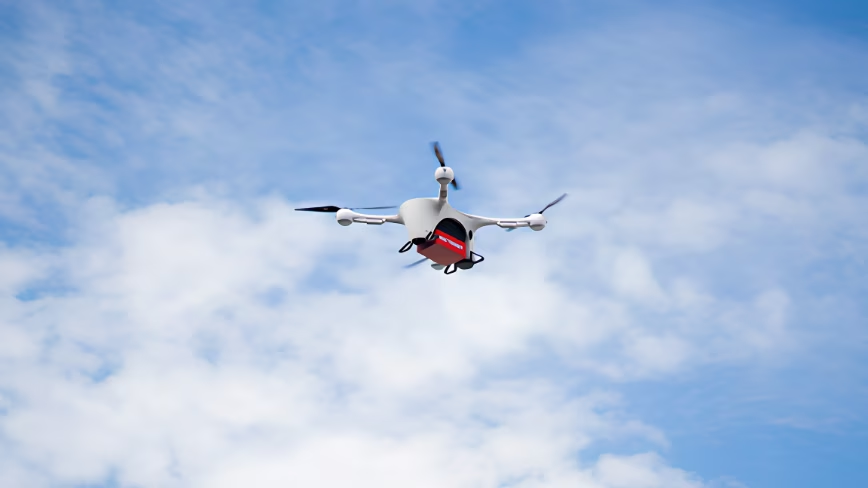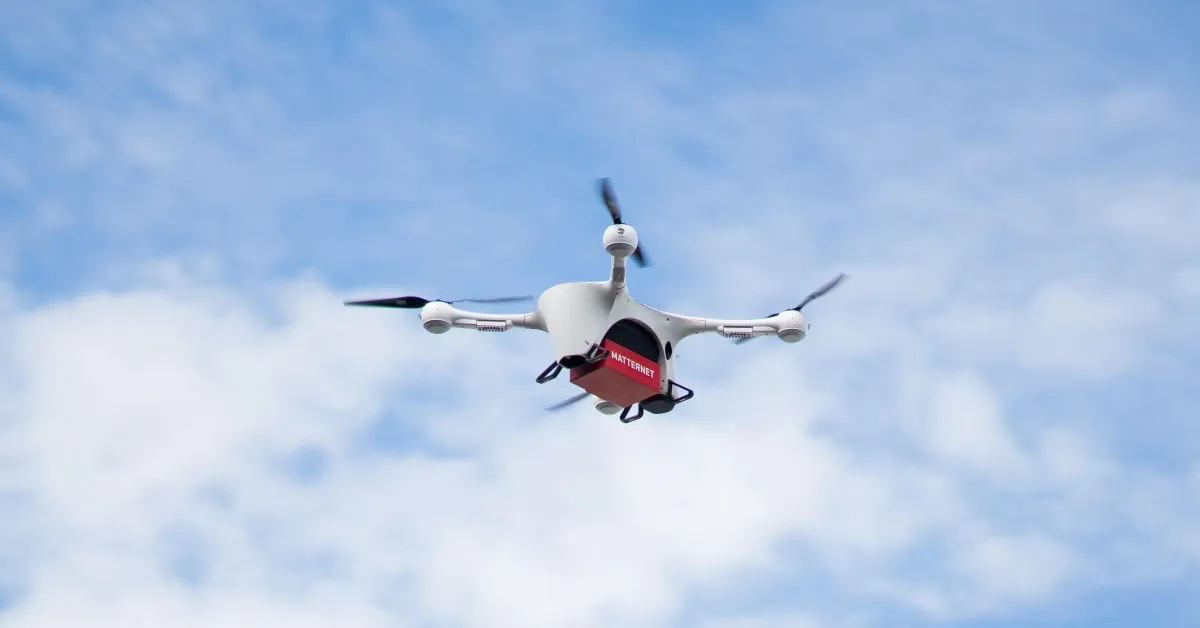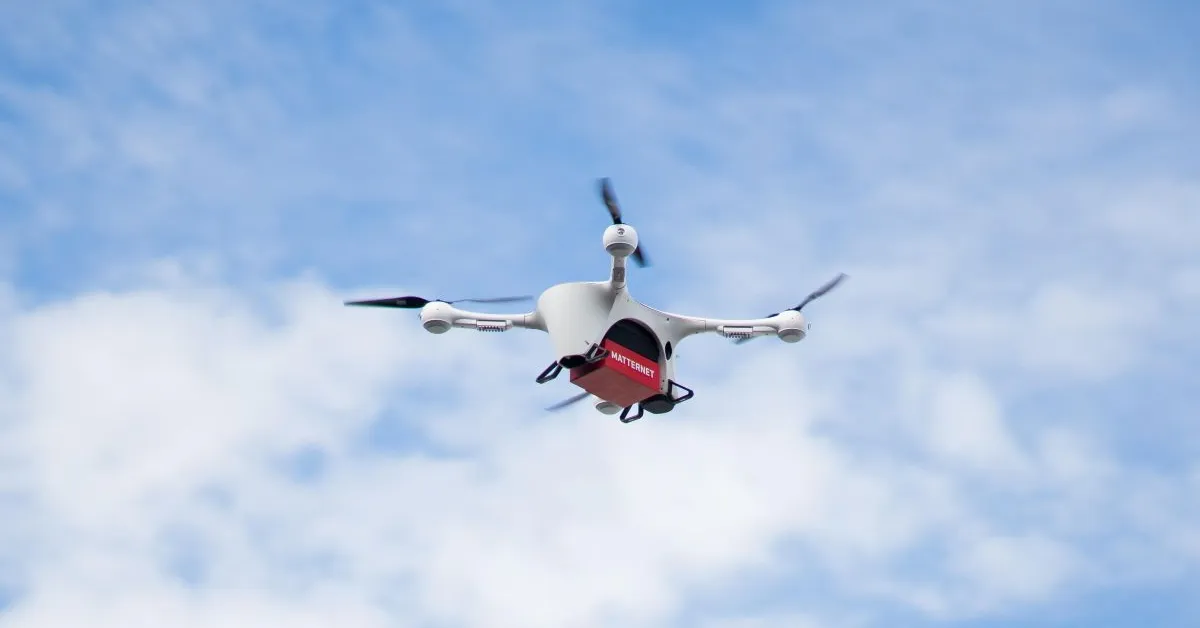
As drone delivery companies race to expand across American cities, one thing is becoming increasingly clear: better batteries may matter just as much as better drones. That’s the idea behind a new partnership between Matternet and Amprius Technologies, which aims to improve the range, efficiency, and economics of autonomous aerial delivery using advanced silicon-anode battery cells.
The companies announced that Amprius batteries are already powering Matternet’s FAA Type Certified M2 delivery drone, with deeper collaboration now underway for Matternet’s next-generation aircraft platform expected to scale beginning in 2027.
For drone delivery operators, battery performance affects nearly everything. More range means larger delivery networks. Faster charging increases how often drones can fly each day. Lower battery weight can free up additional payload capacity. All of that directly impacts the cost of running commercial drone delivery operations.
Matternet founder and CEO Andreas Raptopoulos says the company sees battery technology as a major competitive advantage as urban drone delivery expands.
Amprius says its silicon-anode lithium-ion cells can deliver up to twice the energy density of traditional graphite-based batteries. In practical terms, that could translate into longer flight times and improved operational efficiency for delivery drones.