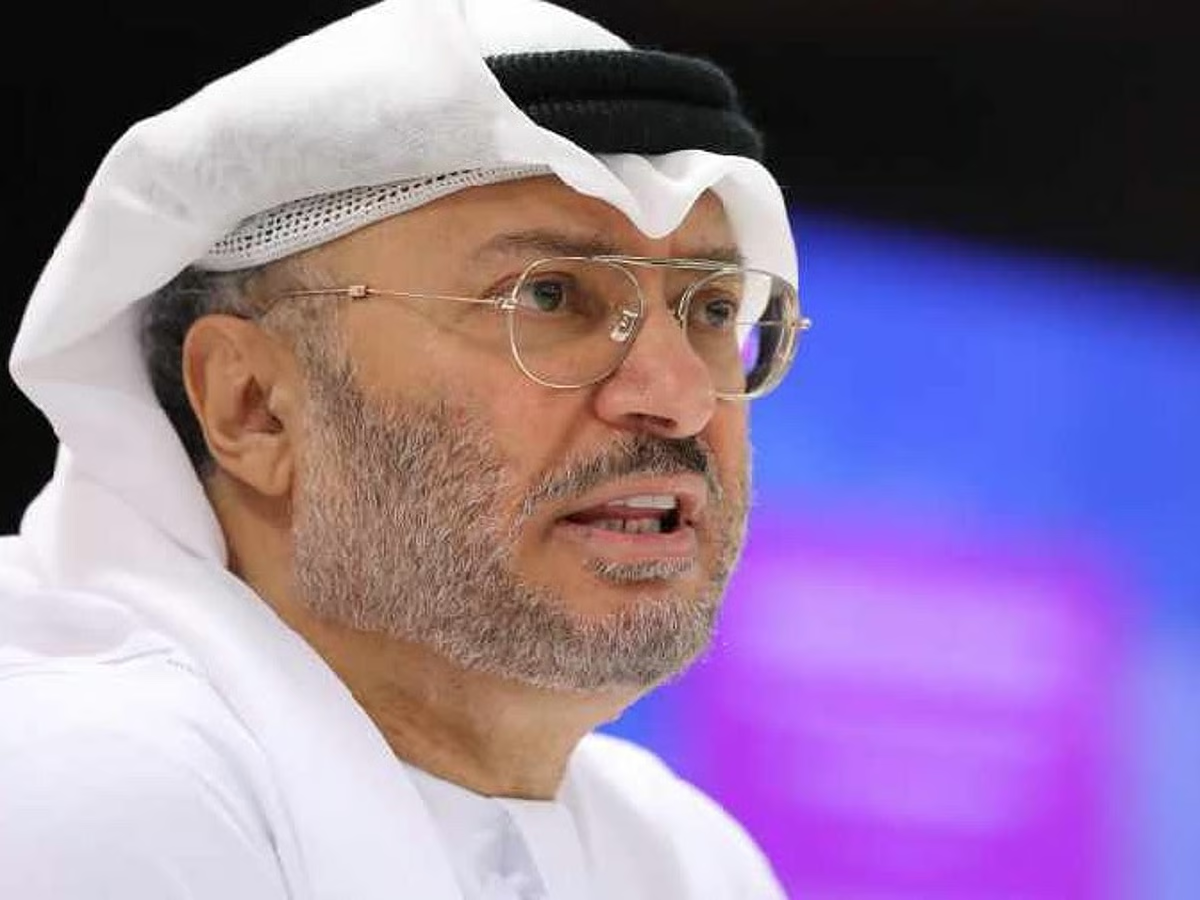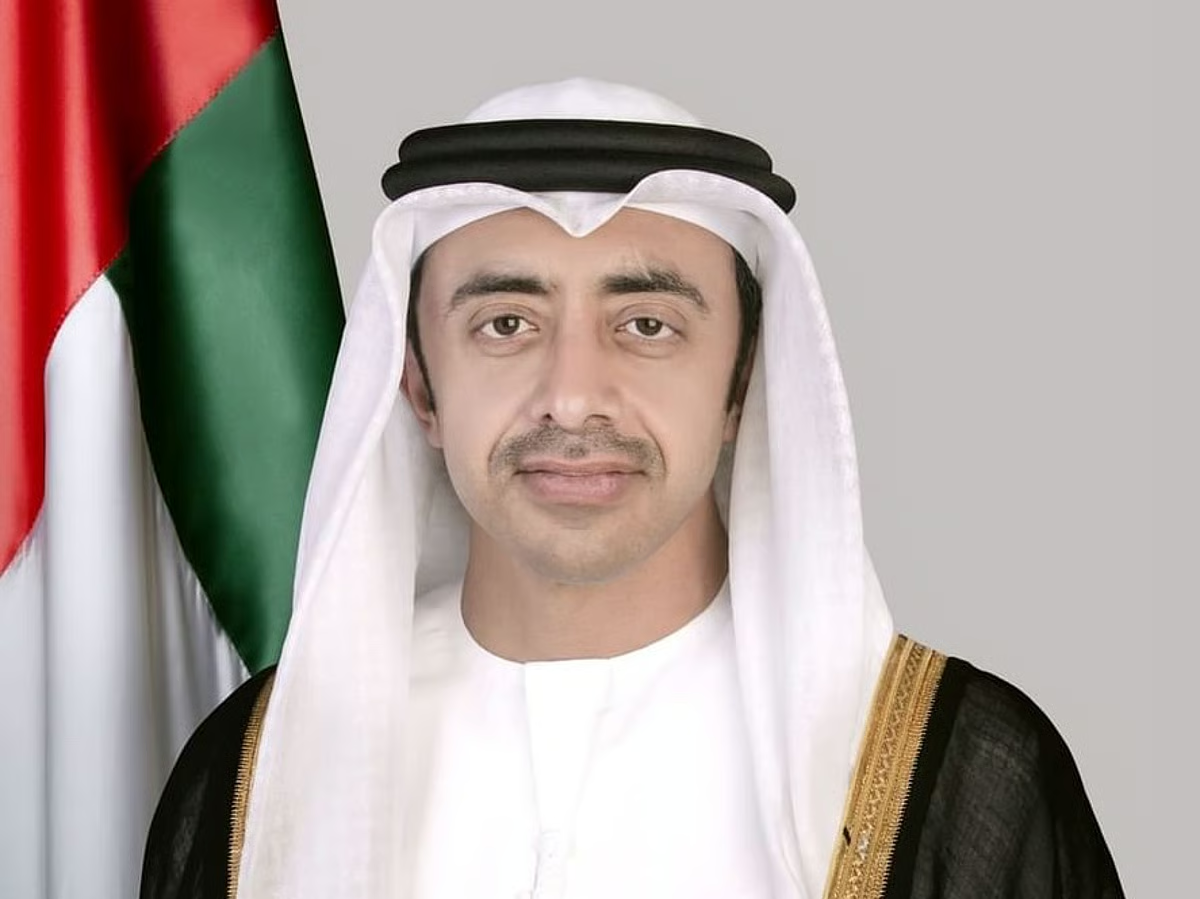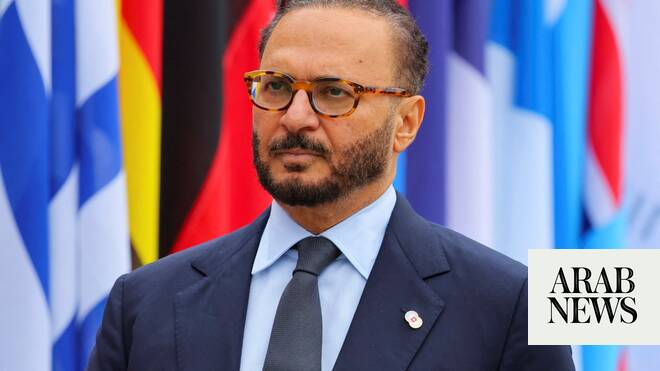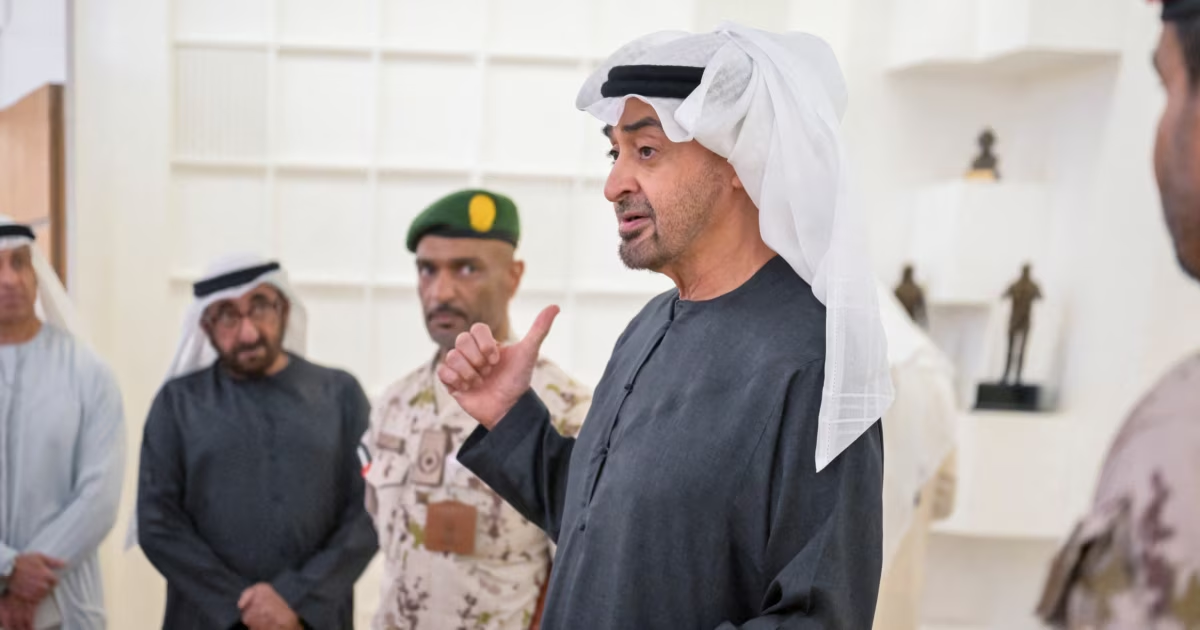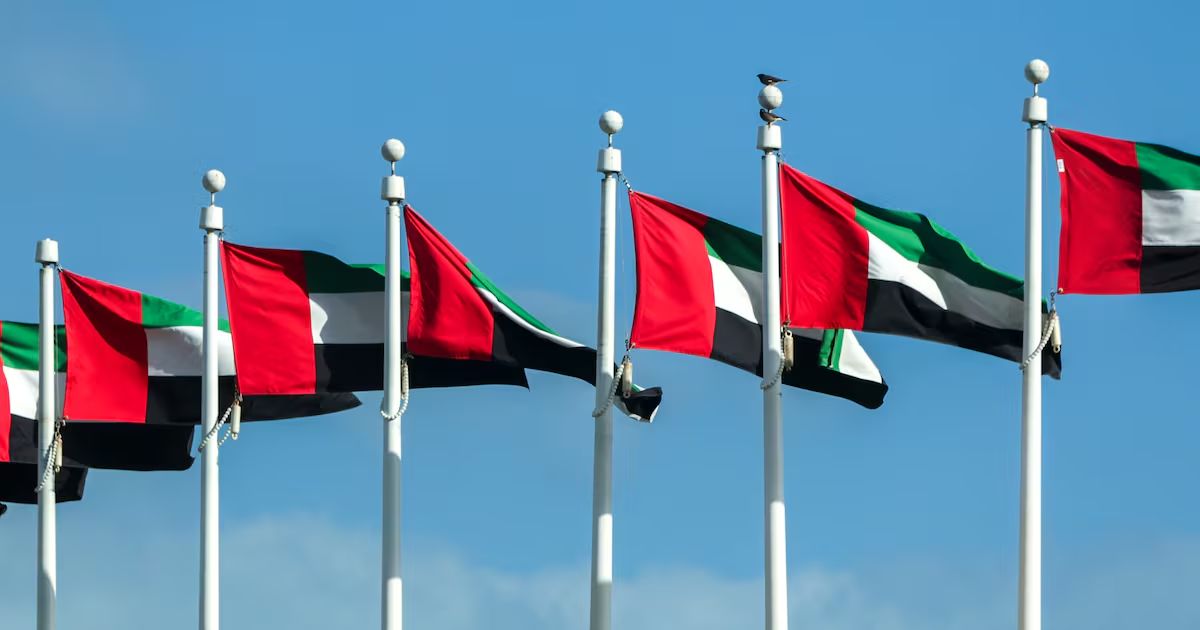
The UAE remains committed to "supporting regional security and stability", an Emirati official told The National, amid concerns of renewed conflict in the Middle East. “The UAE reaffirms its steadfast approach to supporting regional security and stability, in co-ordination with regional and international partners," The National was told. This reflects the country's "commitment to protecting the peoples of the region from the repercussions of conflicts," the official added. US President Donald Trump said on Monday that the leaders of Qatar, Saudi Arabia and the UAE had persuaded him to call off renewed attacks against Iran to give negotiations a chance. There was no official confirmation from any of the Gulf states on speaking to Mr Trump."The UAE expressed hope for achieving sustainable peace for all countries in the region," the Emirati official told The National. The country "continues its close co-ordination and consultation with member states of the Gulf Co-operation Council (GCC), alongside regional and international partners, in support of regional security and stability and to further strengthen joint Gulf co-operation", they said. The US and Iran are engaged in backdoor diplomacy mediated by Pakistan. A fragile truce is on the brink of collapse amid fears of renewed fighting in a conflict that has engulfed the Middle East. Mr Trump also threatened to launch a “full, large-scale assault of Iran, on a moment’s notice", if "an acceptable deal is not reached".The Iran war has had far-reaching consequences, including on Gulf states, which bore the brunt of Tehran's response to US-Israeli attacks, despite their efforts to avoid military escalation. The UAE has been the target of more than 2,500 missiles and drones launched by Iran since February 28. "The UAE has condemned in the strongest terms the unprovoked Iranian attacks and threats targeting the UAE and countries across the region, constituting a clear violation of state sovereignty and a direct threat to the security and stability of the region," the UAE official said. They added that the Emirates has "emphasised the need for a comprehensive and sustained approach that addresses Iran’s full range of threats, including its nuclear capabilities, ballistic missiles, drones, military capabilities, and affiliated proxies and terrorist groups, while ending threats to freedom of navigation, as well as economic warfare and piracy in the Strait of Hormuz".The UAE said a drone strike that caused a fire near the Barakah Nuclear Energy Plant on Sunday and two other drones that were intercepted on the same day were launched from Iraq, where Iranian-backed armed groups have launched several attacks since the start of the conflict.Saudi Arabia also reported on Sunday that its air defences intercepted and destroyed three drones from Iraqi territory. Dr Anwar Gargash, diplomatic adviser to President Mohamed, said the targeting of the power plant, by what he described as Iranian militias, was a “dangerous indicator” of the scale of threats facing the region.In a post on X, Dr Gargash said the attack constituted a “deliberate criminal act” and a direct violation of international law, comparing it to what he described as the “hijacking and piracy” of the Strait of Hormuz.Global trade and energy have also taken a hit, with Iran effectively closing the Strait of Hormuz after US-Israeli attacks on Tehran. The US later enforced its own naval blockade on Iranian ports on April 13, after talks in Pakistan failed to yield an agreement. The Strait of Hormuz, a narrow stretch of water between Iran and Oman at the entrance to the Arabian Gulf, is one of the world’s most strategically important energy chokepoints and a vital route for global trade. About a fifth of the world’s oil and liquefied natural gas usually crosses the strait.Mr Trump told lawmakers at the White House on Tuesday that the US will “end the war very quickly”, adding that the regime in Iran "want to make a deal so badly, they’re tired". "It's going to happen, and it's going to happen fast," he said.
UAE committed to 'supporting regional security in co-ordination with partners', official says | The National
The Emirates has emphasised the need for a comprehensive and sustained approach that addresses Iran’s threats
653 words~3 min read