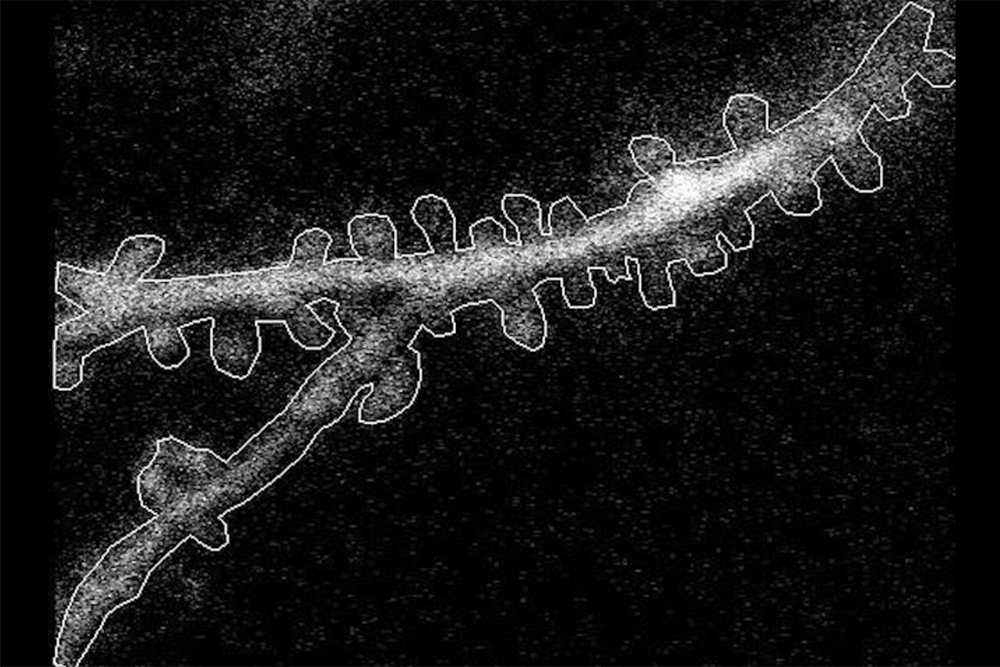
It is a dogma in neuroscience that certain brain cells respond in the same way to the same thing. Specific neurons always fire, for example, when we see particular shapes and colours; other neurons activate to swing an arm or wiggle a nose. The brain needs this stability, the theory goes, to respond to the outside world in a consistent way.So, when neuroscientist Laura Driscoll began her doctoral research at Harvard University in Cambridge, Massachusetts in 2012, her first task was to establish this baseline by tracking the activity of individual mouse neurons over time.Brains of ‘super agers’ are strong producers of new neuronsTo Driscoll’s surprise, the baseline kept moving. Over the course of several days, many of the cells’ responses had shifted noticeably. Neurons that had fired when a mouse was in a specific location on day one were barely responding in the same spot after a few weeks. “It absolutely defied all of our expectations,” recalls Driscoll, who is now at the Allen Institute in Seattle, Washington. “This was so surprising that my whole project changed.”In 2017, she and her colleagues reported findings from that project that flew in the face of neuroscience dogma. Over a single day, neurons in the parietal cortex, a hub for processing sensory information, fired predictably in response to specific things, such as the position of the mouse in a virtual maze. But over the course of a few weeks, even though the task of navigating the maze remained the same, these activity patterns underwent major reorganization1. Some of the neurons stopped firing in response to stimuli that had previously activated them; others did the reverse. In groups of cells, however, patterns of neuronal activity remained more consistent over time. The results suggested that individual neurons might not have fixed roles, and that the response of single cells might be less important than the activity of whole populations.When Driscoll published that work, there had already been a handful of papers describing similar observations in different parts of the mouse brain. But many in the neuroscience community were sceptical: researchers questioned whether these findings might be the result of an experimental quirk, such as imprecise tracking of single cells or subtle changes in the animals’ behaviour that the experimenters hadn’t accounted for.Since then, many more researchers have reported evidence for neurons changing how they respond to certain stimuli or behaviours over time, a phenomenon that neuroscientists have dubbed representational drift (see ‘How neuronal activity drifts over time’). Evidence has been found for it in various brain regions and when using several different techniques. Generally, the community is coming to accept that drift is real, but some scientists remain unconvinced — in part because of some studies that have failed to find this effect.Source: M. E. Rule & T. O’Leary Proc. Natl Acad. Sci. USA 119, e2106692119 (2022).And debates swirl around other questions, such as: how is the brain able to generate stable behaviours when neuronal representations are in constant flux? What purpose, if any, does drift serve? And how does drift relate to plasticity, in which the brain changes its connections to learn new things?Understanding drift could have far-reaching implications, from deciphering how memories are formed and updated to informing the design of brain–computer interfaces and neural networks for artificial-intelligence tools, say researchers.“When people talk about this phenomenon, it’s exciting because it’s just so full of possibilities,” says Andrew Fink, a neuroscientist at Northwestern University in Evanston, Illinois. “It raises really deep questions about what’s going on in the brain.”Unexpected changesThe idea that certain neurons always fire in response to the same cues can be traced back to landmark discoveries in the field. In the 1950s and 1960s, the neuroscientist duo David Hubel and Torsten Wiesel proposed that neurons preferentially fire in response to certain stimuli2. Years later, the neuroscientist John O’Keefe identified place cells, neurons that become active when animals are in specific locations3.Stable representations also formed the foundation for leading models of memory. Over decades, neuroscientists gathered evidence for ‘engrams’, enduring changes in brain-cell populations that are used to store and recall past experiences4. Studies have shown that stimulating particular neurons in the hippocampus can reawaken the same memories and that, conversely, inhibiting those cells can suppress them.Numerous studies have found representational drift in the hippocampus, a brain area involved in memory and learning.Credit: Dr. Chris Henstridge/Science Photo LibraryBut, in the early 2000s, signs began to emerge that the way the brain represents information might be more flexible than scientists had realized, as researchers began to transition from recording cells at single time points to tracking them over longer periods. For many, these signs came as a surprise. Clifford Kentros, a neuroscientist at the Kavli Institute for Systems Neuroscience in Trondheim, Norway, remembers that when he first saw significant shifts in the activity of cells in the mouse hippocampus, he thought there had been an experimental error. But even in repeated experiments, that instability didn’t disappear5. “Nature will throw you curveballs,” he says. “The brain doesn’t work like you expect it to.”This finding, it turned out, was no fluke: a few years later, two other groups reported similar changes in hippocampal place cells in rats and mice. Over time, evidence that this type of change also occurs in other parts of the brain began to emerge.Early studies were met with questions around methodology, such as whether scientists could truly be sure that the cells they were recording on one day were the same as those tracked on the next. But advances in imaging and recording technologies alleviated some of those concerns.Drift kept turning up in more areas, including some unlikely places, such as the visual cortex and the olfactory cortex. For instance, finding representational drift in the piriform cortex6, a key region for processing olfactory information, was “completely contrary to how we and all of our colleagues had thought about that cortex”, says Fink. Scientists had thought that activity in the neurons in this region would have to be fixed to enable animals to identify smells, but Fink and his colleagues discovered that such activity patterns were almost completely unrecognizable one month after the original recordings.As evidence piled up, some early sceptics of drift came around. Simon Rumpel, a neuroscientist at Johannes Gutenberg University Mainz in Germany, says that he was initially opposed to the idea, because it completely upended the way that he was taught to think about the brain. However, he adds, the body of evidence for drift eventually became “too big to ignore”.What does drift do?If representational drift does occur, what is its function? Is it something useful, key to the way the brain works? Or is it a bug, something the brain has to work around?One hypothesis is that representational drift, at least in the hippocampus, helps the brain to keep track of time. In fact, years before the word ‘drift’ was widely used, Jill Leutgeb, a neuroscientist at the University of California, San Diego, and her colleagues observed shifts in the activity of groups of neurons in the hippocampus over time and suggested that they might encode the passing of time between events7.Other have posed similar ideas: Yaniv Ziv, a neuroscientist at the Weizmann Institute of Science in Rehovot, Israel, suggests that drift is required for the “time stamping” of events for long-term memories. And Denise Cai, a neuroscientist at the Icahn School of Medicine at Mount Sinai in New York City, says that drift might enable the brain to link memories that are formed close together in time. This idea is supported by work from Cai and her team, who looked at the activity of neurons in the hippocampus when mice were introduced to distinct locations. When the mice visited two locations within hours, the same set of neurons encoded both locations in memory, but when there was a week between visits, the groups of neurons used to encode the memory of each location were different8.In addition to anchoring memories in time, drift might enable the brain to update memories with new information. “We have experiences every day and we have to integrate what we learn with our past,” Cai says. “If we always have the same cells act in the same way, there’s no brain space to take on new information.” Understanding the factors that control whether drift occurs, and to what extent, might help researchers to understand how memories get disrupted in psychiatric and neurodegenerative disorders, as well as how to fix them, says Cai.Dopamine takes a hit: how neuroscience is rethinking the ‘feel-good’ chemicalDrift seems to happen at different rates in different brain regions — more change seems to occur in the hippocampus, for instance, than in the visual cortex — and these differences might reflect the capacity of each region to integrate new information into existing neural circuits. By contrast, some researchers have proposed that drift could be the outcome of random physical changes that occur in the brain, such as the turnover of synapses, teamed with normal neural plasticity, in which connections between neurons are modified as animals learn.Questions about function aside, neuroscientists are also grappling with the mystery of how behaviour and perception remain stable if the neuronal codes underlying them are in flux. According to Fink, there are two main ideas: perhaps the neuronal population drifts, but there are features in it that are stable, or maybe the brain has mechanisms that enable it to extract a stable picture from shifting representations.Drift might end up being a catch-all term for a lot of things. “There’s probably going to be a whole host of mechanisms that underlie this,” says Christopher Harvey, a neuroscientist at Harvard Medical School in Boston, Massachusetts. “Maybe in 10 or 20 years, we’ll realize that representational drift is one big umbrella term, but there’s many different things that are going on.”
The brain’s code seems to be in constant flux. Neuroscientists are baffled
Neurons fire much more erratically than researchers thought. What does that mean for how the brain works?
1,635 words~7 min read