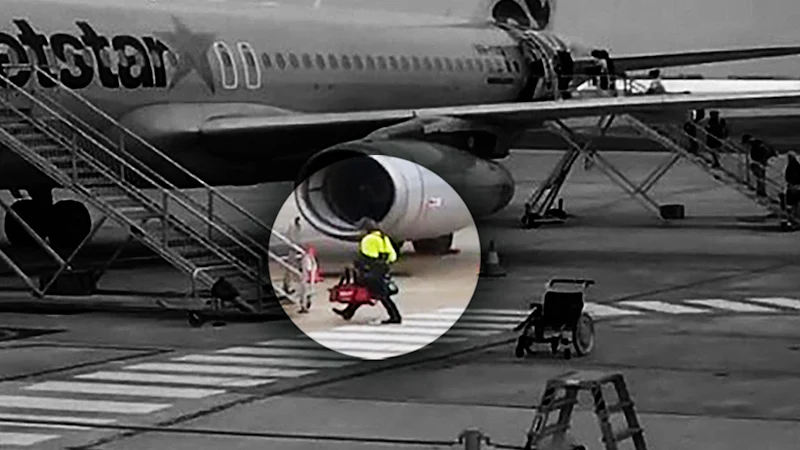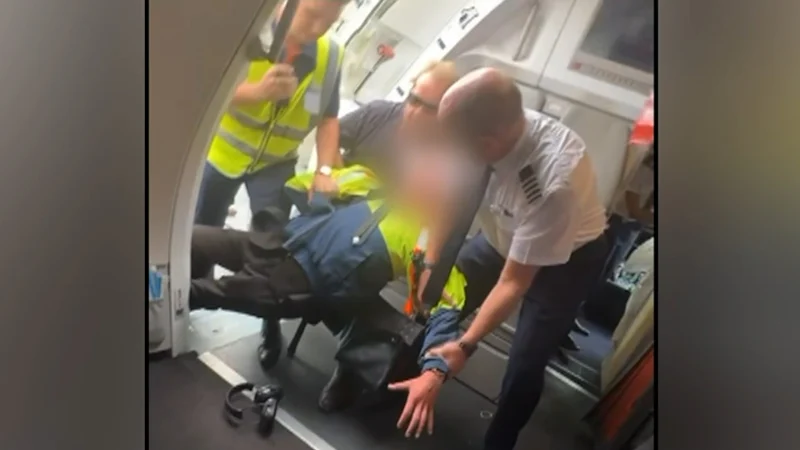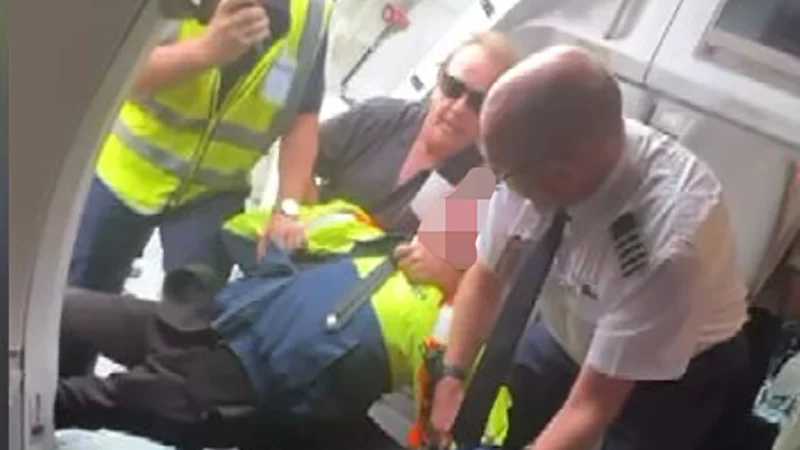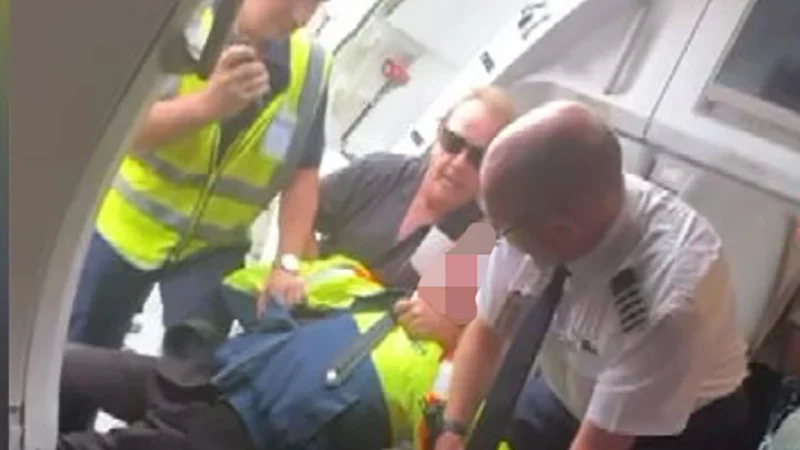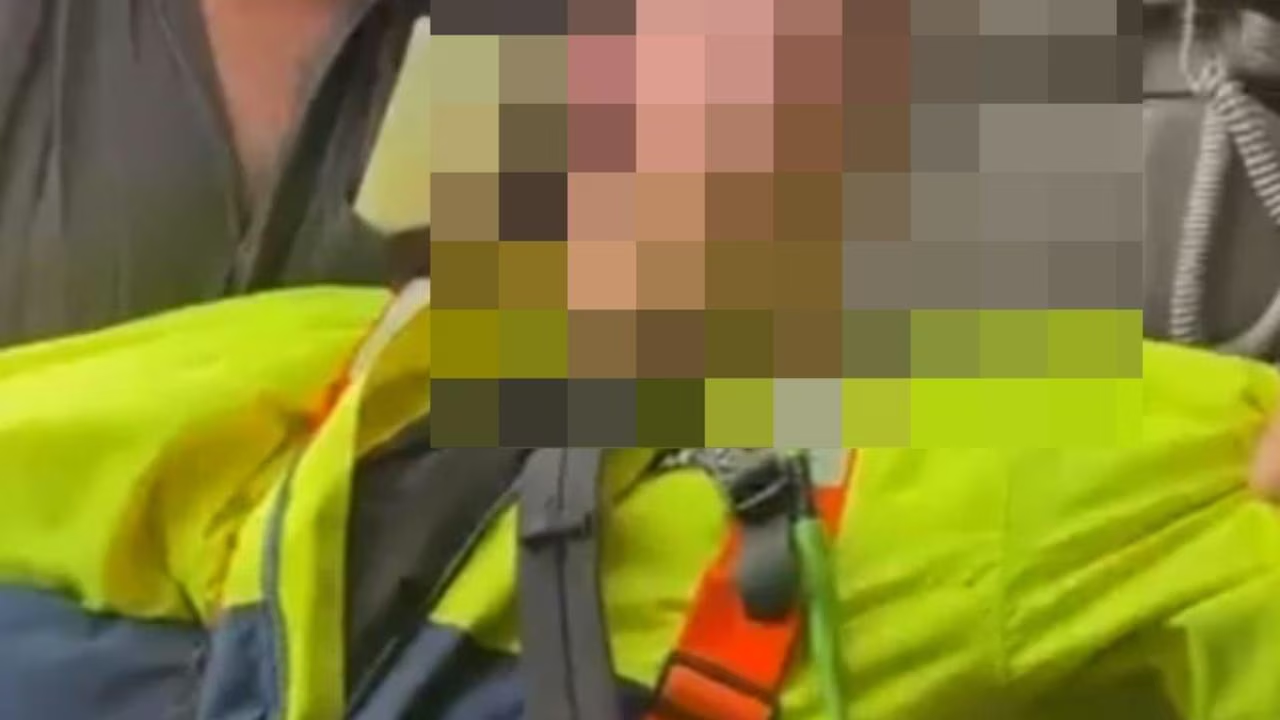
Lawyers acting for a teenager accused of attempting to hijack a Jetstar flight have revealed plans to argue he was suffering a mental impairment at the time – telling a court the child later told police the people on the plane were “heroes” and he wanted to thank them.The now 19-year-old boy, who cannot be named for legal reasons, appeared in a Children’s Court on Wednesday morning as prosecutors launched a bid to have the case sent to a higher court. The teenager is accused of attempting to take control of a commercial flight at Avalon Airport in Geelong on March 6 last year, armed with a fake bomb and shotgun. Wearing a high-vis vest and tool belt, it’s alleged the then-17-year-old entered the airport through a hole in a fence and boarded the plane – where he was tackled and restrained by a passenger.New details about the alleged offending were aired in court on Wednesday as prosecutor Paul Holdenson KC argued there were good reasons for the case to be sent to a higher court for a jury trial.These included allegations the boy had been “clearly committed” to the hijacking for some time and possessed “some sort of ideological and political motivation to do what he did”. In response, defence barrister Patrick Doyle SC argued it was in the interest of justice for the Children’s Court to determine whether the boy was not guilty by way of mental impairment.He said a neuropsychologist had concluded he was suffering from a mental impairment, arguing the evidence was clear the boy was “not thinking clearly at the time”. “He was a young man under tremendous mental strain,“ Mr Doyle said. The court was told the boy had given an “extraordinary” account to a forensic psychiatrist about the lead up to the alleged offending but it was unclear if this had actually happened or whether he was suffering a complex delusional disorder. Mr Doyle said there was an “unusual combination of factors in his mental state” and suggested it would be difficult for a jury to decide the question of mental impairment.“We do say this case presents an unusual combination of difficulties for a jury attempting to decide this case impartially,” he said. If a defence of mental impairment was not made out, Mr Doyle said, there was evidence his client had a firmly held belief that his “situation was desperate”.The barrister said his client had co-operated with authorities from the outset and made full admissions that “went beyond admissions of the facts of the offending”. As for the alleged political motivations, Mr Doyle said the prosecution had been unable to articulate what these allegedly were.“What the background evidence of (the boy’s) political thinking indicates is the level of confusion in his mind,” he argued.“What he says on this topic to the police is incoherent, with respect.”The boy’s defence argued these “vague” statements cannot be treated as a “recognisable political motive”.Mr Doyle said evidence from the boy’s friends and family supported the conclusion he was experiencing a significant deterioration in his mental state around the time of the alleged offending.This, he said, included the boy pushing away his friends before telling one, a day before the alleged hijack attempt, he had “found a great path” and calling it “joyous news”. Mr Doyle said the boy described feeling an intense sense of calm and relief” after allegedly being apprehended on the plane by the passenger.“Good man, you know what you’re doing and I respect you,” the boy allegedly said. The barrister said the boy later told police the people on the plane were “heroes” and said he would like to thank them. “This is not the sort of thing you hear from offenders that actually want to do harm to other people,” he said. Mr Doyle said his client had allegedly told police he’d “whispered” his demands to the plane’s crew and didn’t want to alarm passengers. In footage, Mr Doyle said, the boy appeared to show clear relief and gratitude he’d actually been stopped. “You can see it play out, it must have been there was acute distress otherwise there wouldn’t be relief,” he argued.The court was told the boy’s defence had argued in written submissions that details of the case could generate “significant antipathy which would be difficult to overcome” if the question of mental impairment was left to a jury.This allegedly included a typed note prosecutors have pointed to as evidence of a political motive. “It’s the worst possible time to get a jury to try and consider the facts of this case given that type of evidence,” Mr Doyle submitted. Mr Holdenson quibbled with the suggestion, arguing it is well established that a properly-instructed jury can perform their task in an “objective and unbiased manner”. The court was told prosecutors allege the boy’s internet history provides evidence he was planning a hijacking as far back as October 2024, which the defence disputes.This allegedly included searching for maps of Avalon Airport on October 13. Mr Doyle suggested the alleged internet history showed an “interest in aviation and airports more generally”, pointing to searches for Bassel al-Assad International Airport in Syria, the topic of long range aviation in a museum and shooting down of Russian and Turkish military aircraft around the same time. Children’s Court president Judge Jack Vandersteen will hand down a decision on whether the matter should be uplifted to a higher court at a later date.According to Mr Holdenson, if the matter remains in the Children’s Court and the boy is found guilty he could be sentenced to detention in a youth facility for up to four years. If he is found not guilty by way of mental impairment, Mr Holdenson said, he could be placed on a maximum two-year supervision order. The prosecutor suggested these dispositions may be insufficient for the case, arguing a higher court would have “more flexibility”.
‘Heroes’: Alleged hijacker’s court claim
Lawyers acting for a teenager accused of attempting to hijack a Jetstar flight have revealed plans to argue he was suffering a mental impairment at the time – telling a court the child later told police the people on the plane were “heroes” and he wanted to thank them.
982 words~4 min read