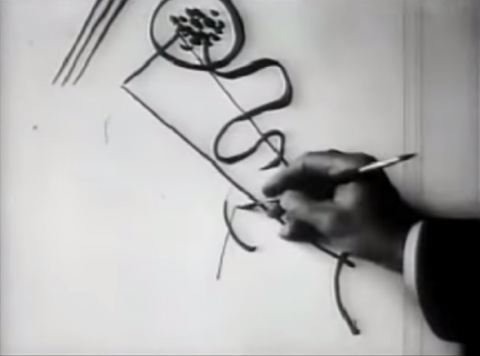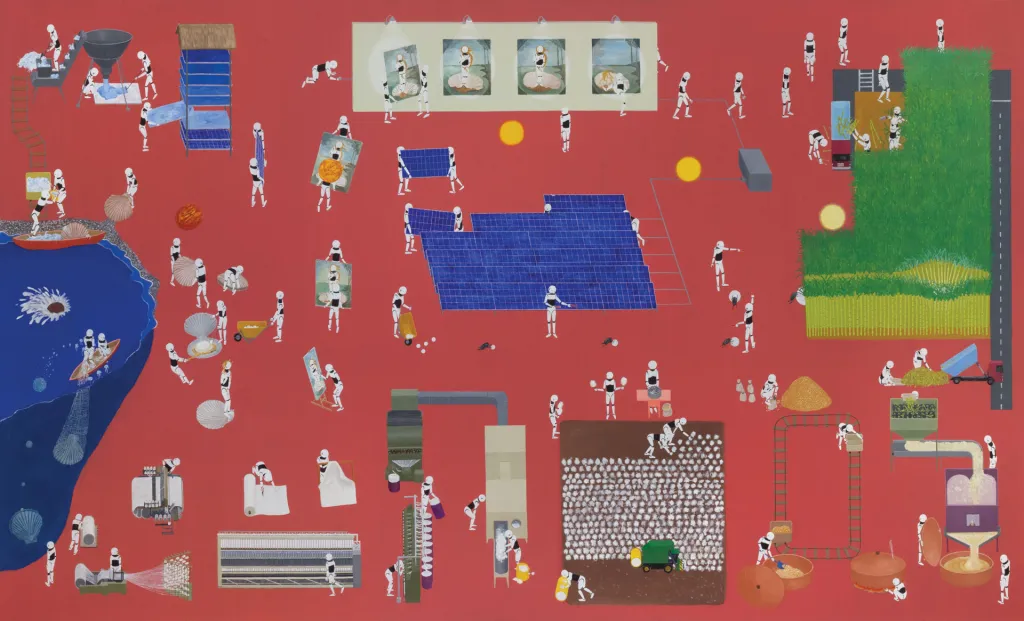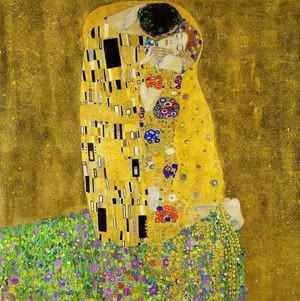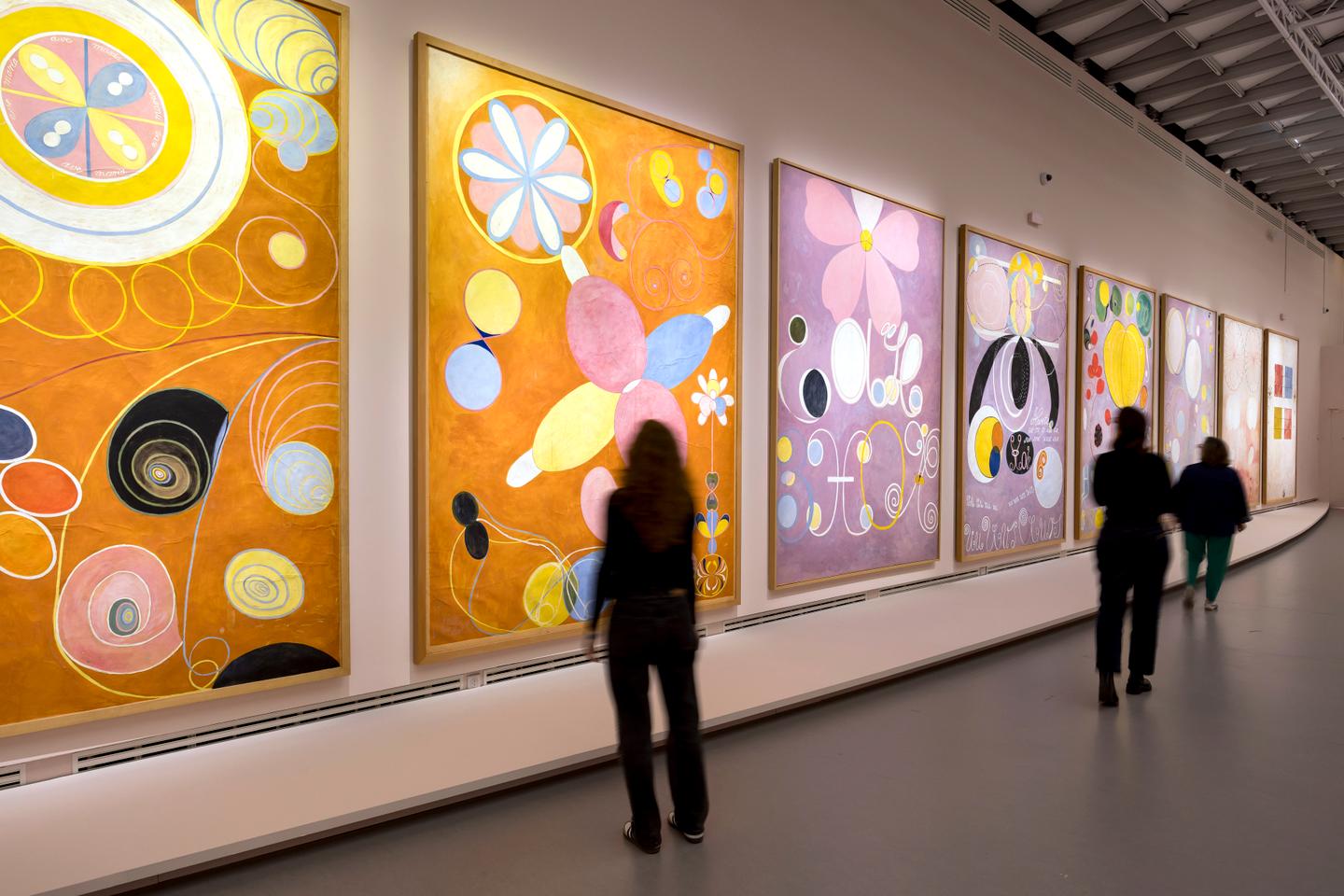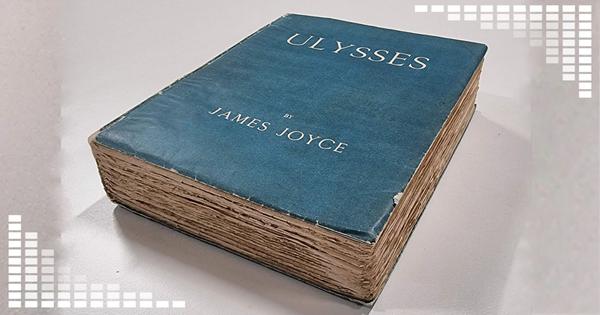
In the interwar era, modernist art continued to challenge prevailing morality and convention. Wassily Kandinsky championed abstraction, using colour and form to convey emotion. Marcel Duchamp’s conceptual works – such as Fountain, an upside-down urinal signed “R Mutt” – defied conventional definitions of art. Joan Miró created whimsical compositions filled with playful shapes and vivid colours that evoked the subconscious. Salvador Dalí, by contrast, produced nightmarish scenes that drew heavily on Sigmund Freud’s ideas about dreams and desire, such as ants and melting clocks in The Persistence of Memory.Modernism shaped other disciplines too, driven by a desire to break with tradition and reflect a world left spiritually and socially fractured by the carnage of the First World War. This dislocation was compounded by rapid industrialisation and urbanisation, the rise of mass media and machine aesthetics, and new explorations of the subconscious. Modernism’s leading figures were often brilliant and broken – drawn to innovation not just by intellect, but also by inner restlessness.In literature, 1920s writers mirrored cubism’s fragmentation, abandoning conventional narrative structures to explore the fluidity of time and consciousness. Set over a single day, James Joyce’s Ulysses and Virginia Woolf’s Mrs Dalloway each use stream-of-consciousness narrative to explore the inner lives of their characters, presenting thoughts and emotions in a way that mimics the erratic rhythm of the human mind – unfiltered, unstable and often deeply wounded. TS Eliot’s poem The Waste Land captured the disillusionment and cultural rupture of post war Europe, assembling a collage of allusions from Virgil’s Aeneid to the Hindu Upanishads, as if no single tradition could explain the wreckage of the modern world. Eliot, grappling with a breakdown and a collapsing marriage, found in fragmentation both a literary technique and a survival strategy. This experimental spirit also reached Arabic literature, the trade in ideas influencing writers such as Taha Hussein, who blended Western modernist techniques with Middle Eastern traditions.The same rejection of harmony and unity played out in other forms, often led by artists who challenged not only conventions but also themselves. In music, composers such as Igor Stravinsky and Arnold Schoenberg rejected classical expectations, introducing dissonance, atonality and unconventional rhythms. Stravinsky’s The Rite of Spring caused a riot at its 1913 Paris premiere. Schoenberg, isolated and often dismissed by critics, translated that sense of alienation into musical form. In cinema, narrative coherence gave way to dream imagery and provocative visuals. Filmmakers such as Luis Buñuel and Fritz Lang employed surreal or expressionist techniques, creating movies that disoriented as much as they dazzled. Lang’s dystopian cityscapes and Buñuel’s dreamlike sequences blurred the line between imagination and anxiety, revealing the psychological unease beneath modern life.In architecture, modernists took this experimental spirit into the built environment, reshaping cities and the way people inhabited space. Walter Gropius founded the Bauhaus school in Weimar, Germany, in 1919, championing a sleek, minimalist aesthetic defined by geometric forms and functional design. The Bauhaus building in Dessau, designed by Gropius himself, epitomised these ideals with its asymmetrical layout, curtain walls of glass and integration of art and industry.This approach aligned closely with the philosophy of French architect Le Corbusier, who asserted that “form follows function” in his pursuit of modernist ideals. Le Corbusier’s key buildings, such as the Villa Savoye (1931), demonstrated these principles through open floor plans, ribbon windows and “pilotis” – slender columns lifting the structure above the ground. This approach influenced architects such as Japan’s Kenzō Tange and India’s Balkrishna Doshi. The same drive for purity that inspired these designs often left little room for warmth or human scale. For some, modernist buildings offered a vision of rational progress. For others, they felt like machines for living in – but not for living well.Excerpted with permission from The Shortest History of Innovation, Andrew Leigh, Pan Macmillan.
A new book details innovations in literature, art, music, and architecture in the interwar era
An excerpt from ‘The Shortest History of Innovation’, by Andrew Leigh.
628 words~3 min read