TOEFL's reading and listening sections have adjusted their difficulty in real time to match each candidate's performance since January, the Educational Testing Service said.
Under the multistage adaptive design, the reading and listening questions get harder or easier depending on how a test-taker handles earlier questions in the same section. Speaking and writing are not adaptive. Because the exam adjusts to each candidate, the number of questions can vary slightly from one test-taker to the next, though everyone sits a test of comparable overall length.Sidnei De Souza, ETS's executive director of global partnerships and sales management, said at an event on May 17 many test-takers have welcomed the format because it eases pressure and better reflects how they use English in real situations.A candidate assessed at the B1 level would not be confronted with C1-level questions meant for far stronger users, he said. B1 (intermediate) and C1 (advanced) are bands on the Common European Framework of Reference for Languages, or CEFR.
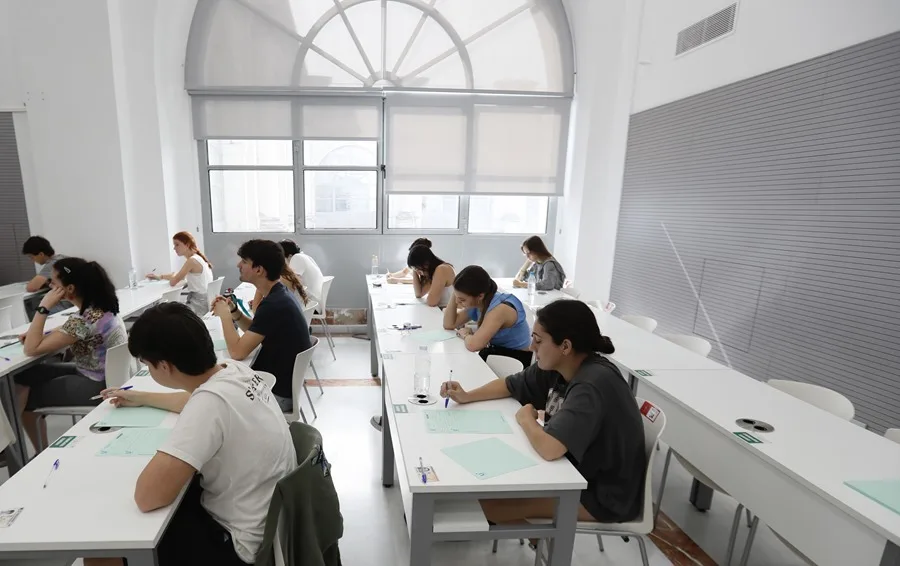
An English-language certification exam room. Photo courtesy of IIG Vietnam
The adaptive sections are one piece of the broadest TOEFL redesign in years. The same overhaul replaced the test's longstanding 0-120 score with a 1-6 band scale aligned with the CEFR, and shortened the exam by cutting older academic tasks, including the integrated tasks that had candidates answer using information drawn from reading passages and audio recordings, in favor of shorter tasks based on everyday and campus situations.According to ETS, score reports will show both the new and old scales until 2028 so universities can adjust.The changes reach a large pool of candidates in Vietnam, which ranks alongside Indonesia as the busiest TOEFL market in Southeast Asia.Chuong Nguyen, ETS's director of channel management for Southeast Asia, said demand for the certificate in Vietnam has been rising as students use it for university admission, study abroad and jobs overseas, though he did not release figures. More than 50 universities in Vietnam currently accept TOEFL scores for admission.The TOEFL assesses English across reading, listening, speaking and writing. Results are released three days after the test, scores stay valid for two years, and the exam costs $182 in Vietnam.