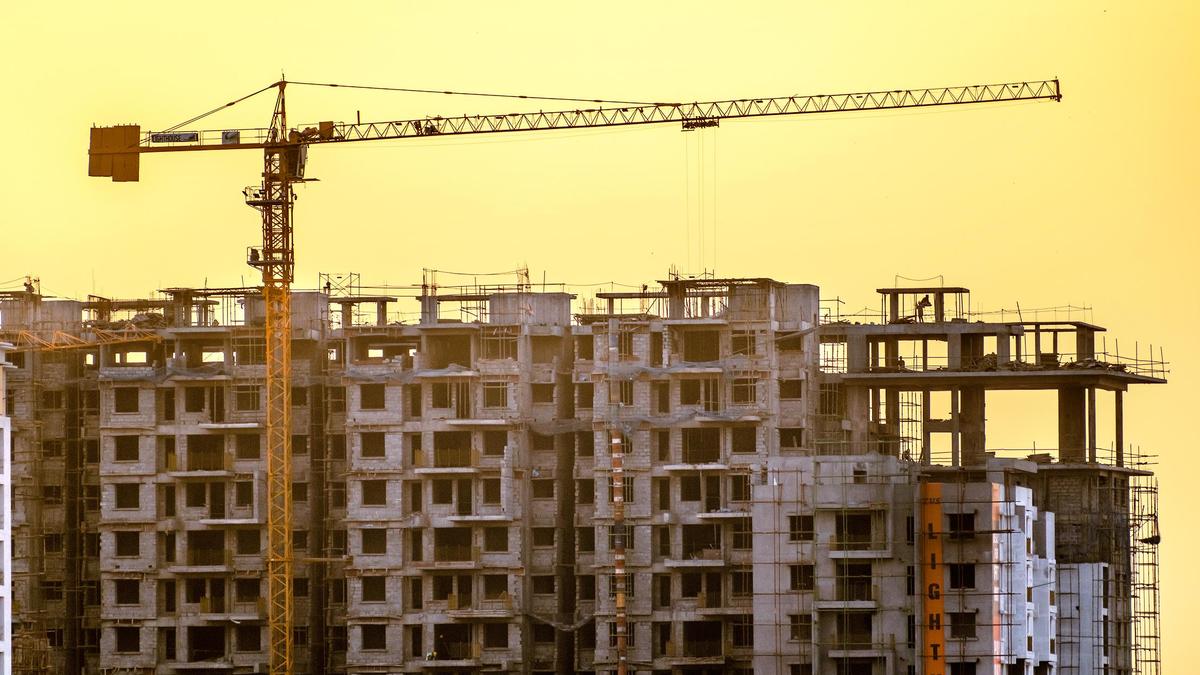
Global building floor area grew by 1.7% in 2024 alone, adding space equivalent to five Nairobi or two Delhi, four times Berlin and New York, or three times Rio de Janeiro, driven largely by construction in emerging economies, including India and Southeast Asia, according to a United Nations Environment Programme (UNEP) report.The building sector has the largest material footprint of any sector. (X)The report titled “Building Fast. Falling Short” said growth in buildings in Europe and China has slowed down, but remains robust in India and Southeast Asia. In India, construction grew from 2024 to 2025 with an annual rate of 11%, reaching a valuation of around $210 billion, driven by strong public and private investment.The building sector has the largest material footprint of any sector, driving nearly half of global raw material extraction. Decarbonisation of the buildings and construction sector has slowed, leaving it both a major emissions source and increasingly vulnerable to climate impacts and energy price shocks, the report said.The 10th edition of the report on the global status of buildings assesses progress across the sector using seven key indicators covering policies, finance, technologies, and investment aligned with global commitments towards a 2050 net-zero emissions pathway. Published amid a global housing and energy affordability crisis, the report highlights how climate action in buildings can reduce energy bills, improve living conditions, and strengthen resilience to climate impacts, while cutting greenhouse gas emissions.“Buildings can either lock in climate risks or deliver safer, healthier, and more affordable living conditions. With half of the world’s buildings yet to be built or renovated by 2050, governments have a critical opportunity to drive zero-emission, resilient construction through better policies, codes, and investment,” said UNEP executive director Inger Andersen.Every day, the world builds an estimated 12.7 million square metres of floor area—roughly the equivalent of adding the entire city of Paris in new floor space nearly every week.In 2024, the global building floor area expanded by 1.7%, reaching 273 billion square metres. “This rapid growth was driven largely by construction in emerging economies, including India and Southeast Asia. The buildings and construction sector now accounts for nearly 50% of global material extraction, 37% of global emissions, and 28% of global energy consumption,” the report said.The report notes that since 2015, global building energy intensity – measuring a building’s annual energy consumption relative to its size – reduced by 8.5%. Green building certifications have nearly tripled, and have seen a rise in certifications in India as well.In 2024, renewables supplied just 17.3% of buildings’ energy demand, far below what is needed for a net-zero pathway, the report said, while adding that investment in energy efficiency reached $275 billion in 2024, contributing to cumulative investment of $2.3 trillion since 2015.“Since 2020, however, progress has slowed, as the green transition has not kept pace with the rate of construction. To align the sector with a net-zero pathway, policymakers should accelerate energy efficiency improvements and the fossil fuel phase-out, while investment in building energy efficiency must reach $5.9 trillion by 2030, equivalent to $592 billion annually,” the report said.In India, the use of renewables in buildings is growing. India has rapidly expanded rooftop solar through targeted incentives, including through the PM Surya Ghar initiative, which provides households with subsidies and loans to install rooftop solar, the report said.
Growth in buildings remains robust in India, Southeast Asia: UNEP report
In India, construction grew from 2024 to 2025 with an annual rate of 11%, reaching a valuation of around $210 billion | India News
550 words~3 min read