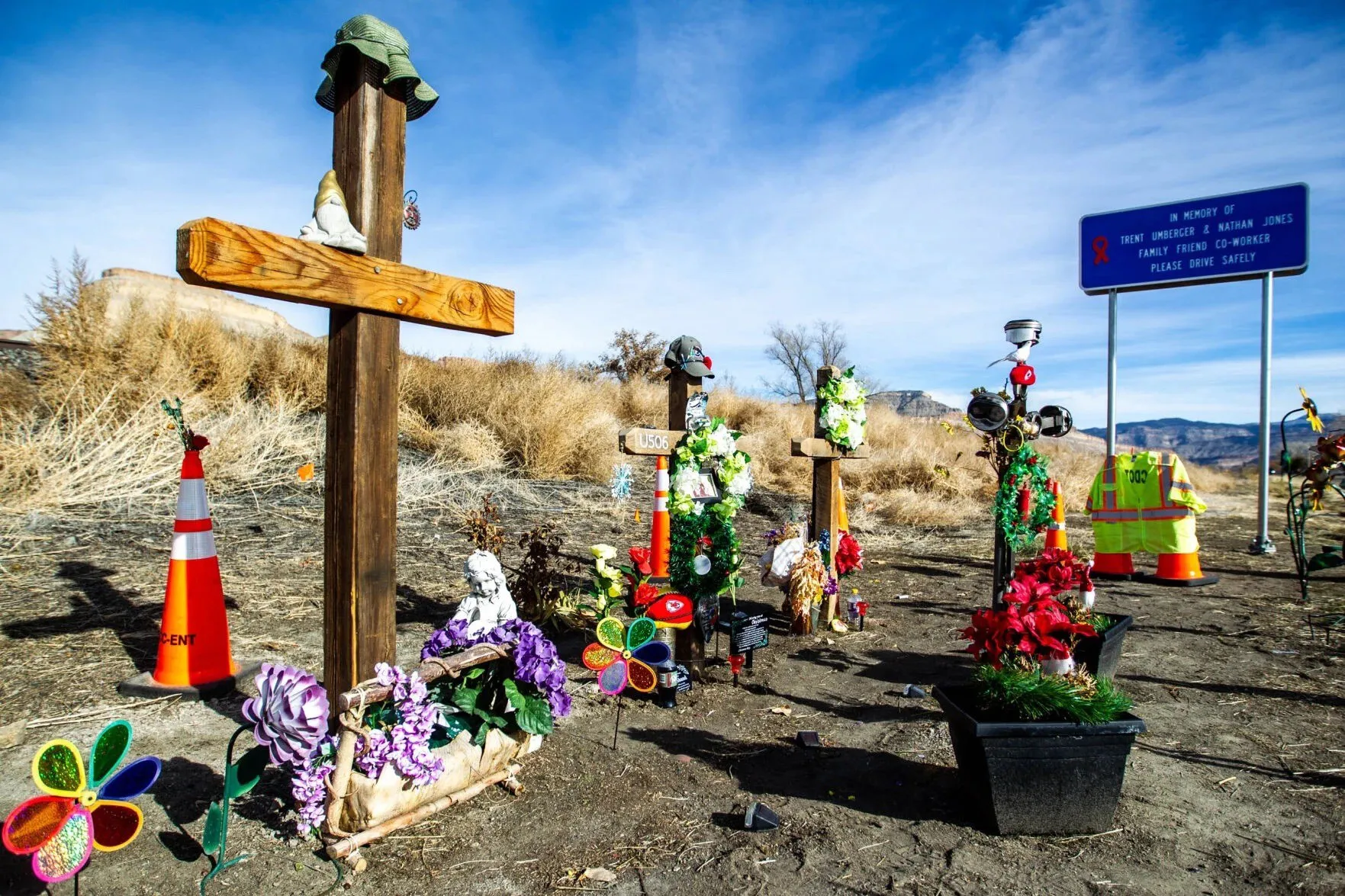
GRAND JUNCTION, Colo. — Two state transportation workers were replacing a sign on the shoulder of U.S. Highway 6 in western Colorado one morning when a Jeep Grand Cherokee swerved off the road and struck them.
The workers, Nathan Jones and Trent Umberger, died in the September 2024 crash, as did a passenger in the Jeep. Tests found that the driver, Patrick Sneddon, then 59, had oxycodone and six times Colorado’s presumed impairment threshold for THC — the psychoactive compound in cannabis — in his blood. He pleaded guilty and is serving 30 years in prison on three counts of vehicular homicide and other charges.
“Our four children are completely crushed without their Dad,” wrote Kristine Umberger, the wife of Trent, in a victim impact statement for the local district attorney. “We have lost our ability to live life like we used to.”
Federal highway safety officials have long tracked the role of alcohol in fatal crashes, but they don’t track deaths that involve a driver under the influence of drugs or a combination of drugs and alcohol.
That discrepancy is partly due to the challenges of proving impairment, since some drugs remain detectable for weeks after use. Sneddon’s attorney, Jennifer Gregory, said a driver can be presumed impaired under Colorado law if their blood contains 5 nanograms of THC or higher per liter. But that “permissible inference” threshold is different from a legal limit — such as the 0.08% blood alcohol content limit — and the level set by Colorado is not supported by published scientific studies, Gregory said.