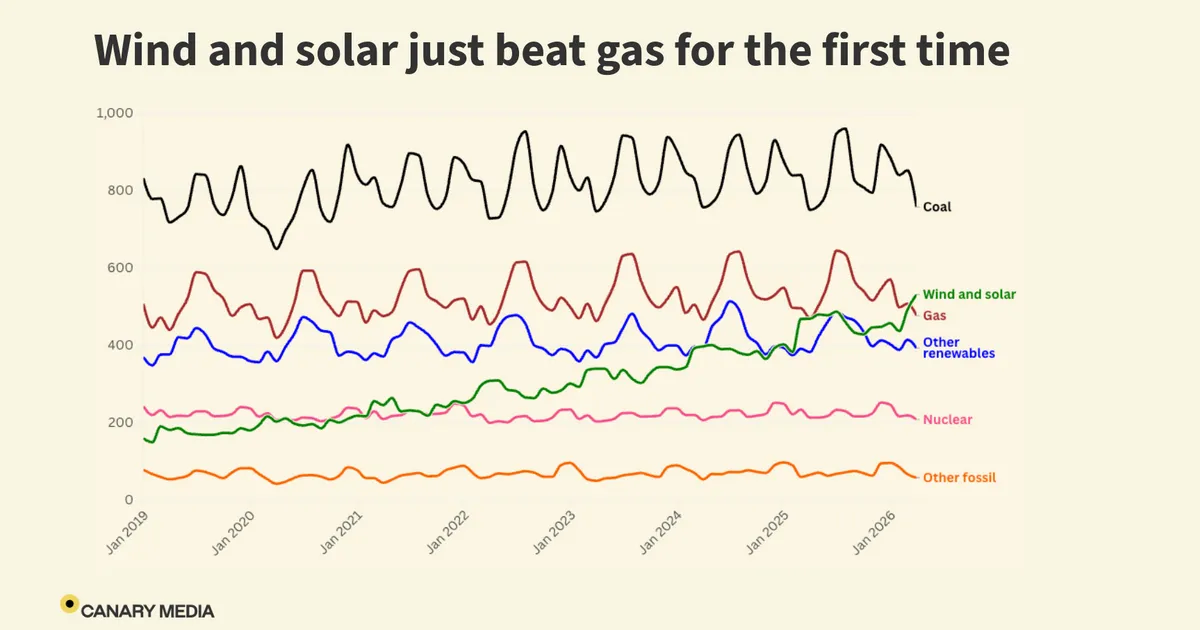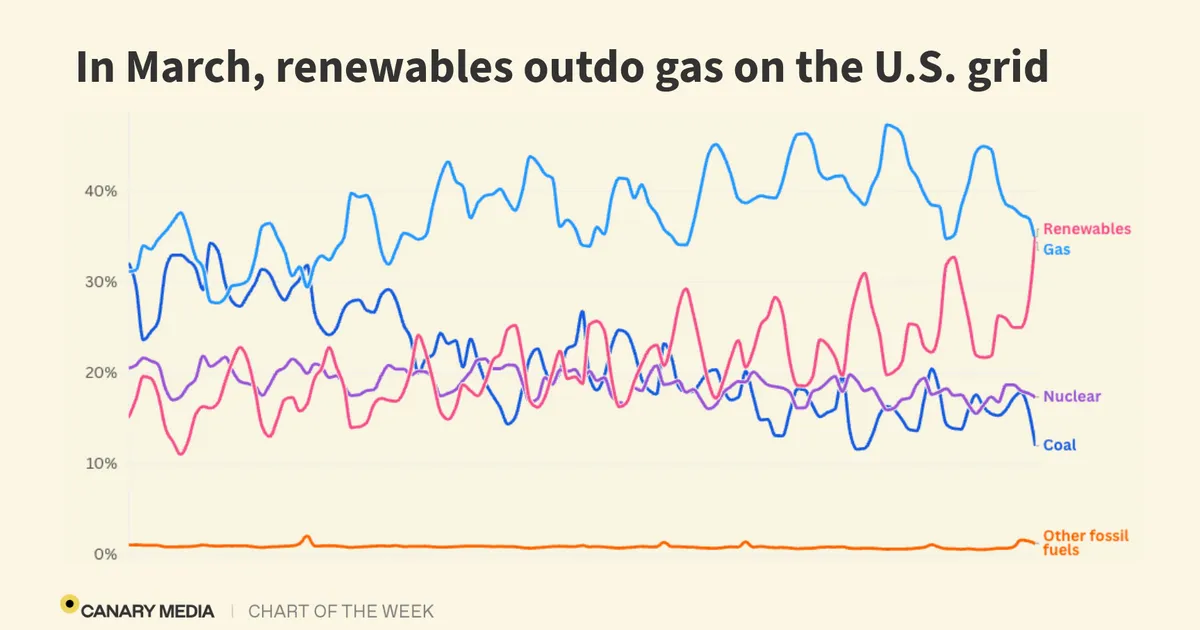
Just look at what happened last month: Over the course of March, the nation got more electricity from renewables than it did from natural gas, which is typically the single-largest source of energy on the U.S. grid.
It’s the first time renewables have bested the fossil fuel in the U.S. across an entire month, per data pulled from the think tank Ember. Meanwhile, emissions-free sources, a category that includes both renewables and nuclear, produced more than half of the nation’s electricity. It’s just the third time that’s happened across an entire month, the first instance being last March.
Sure, renewables only beat gas across a short time frame. And, yes, March is the start of the spring shoulder season, when electricity demand falls a bit from its winter highs and renewables tend to outperform.
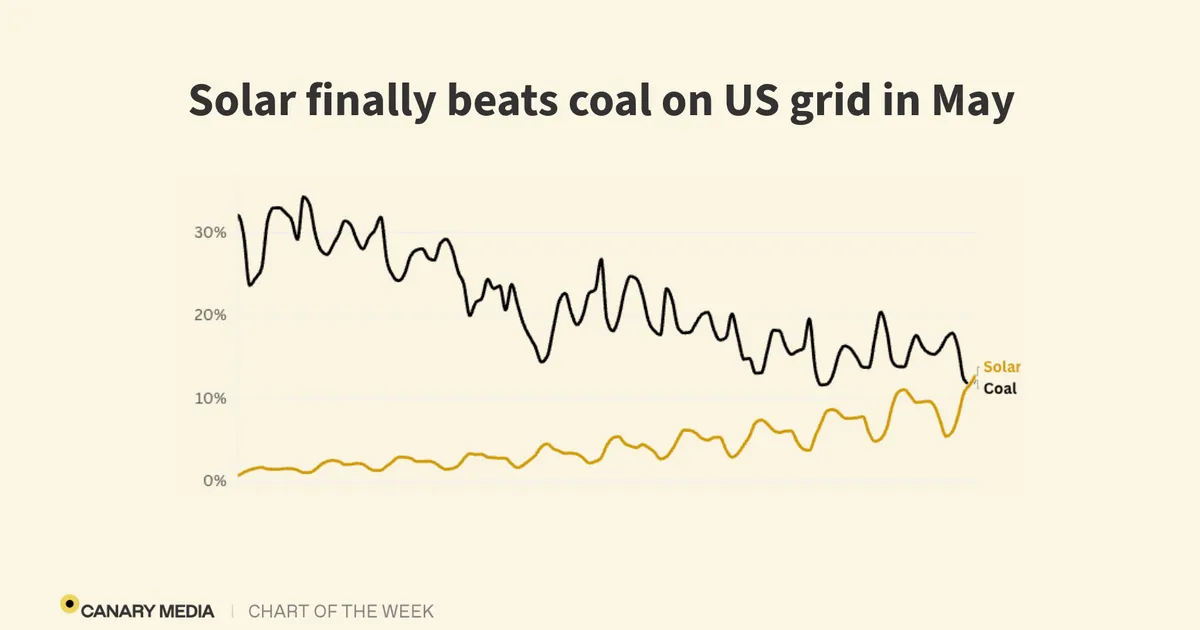
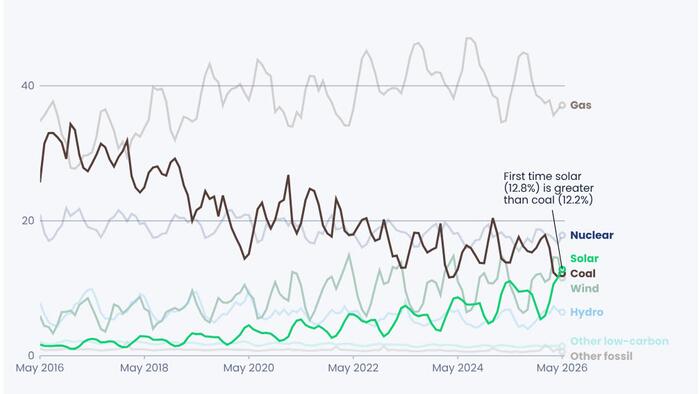
But it’s a major milestone despite these caveats. Just five years ago, the gap between gas and even the best months for renewables was yawning. Since then, that gap has narrowed, thanks in large part to the rapid expansion of solar and the steady growth of wind power. Hydropower, bioenergy, and other sources of renewable energy have seen their combined share of electricity production slowly decline over the same time period.