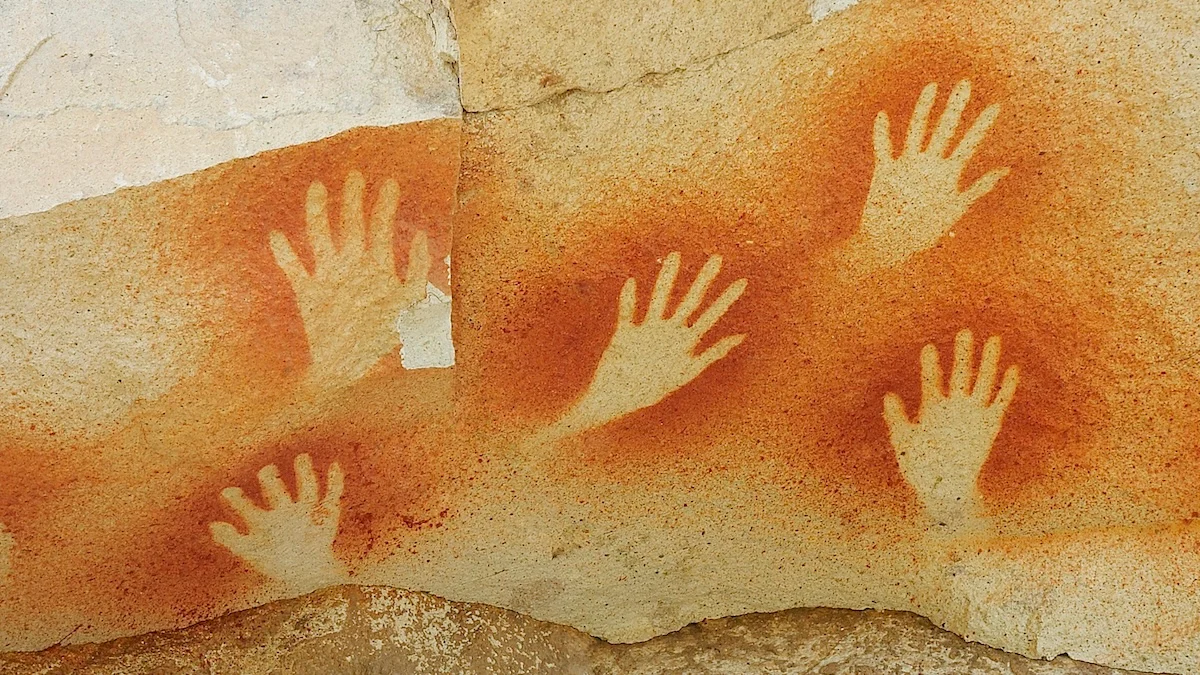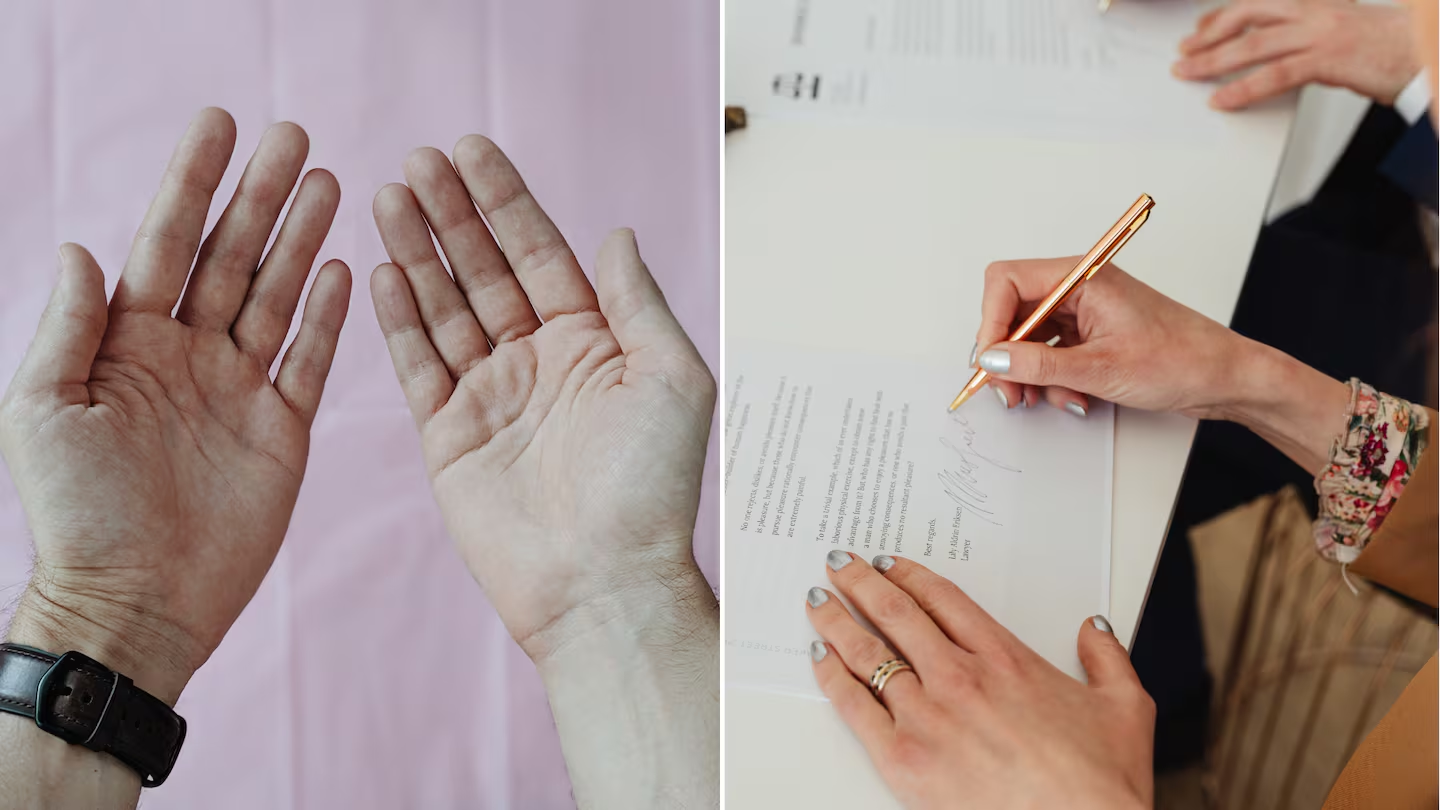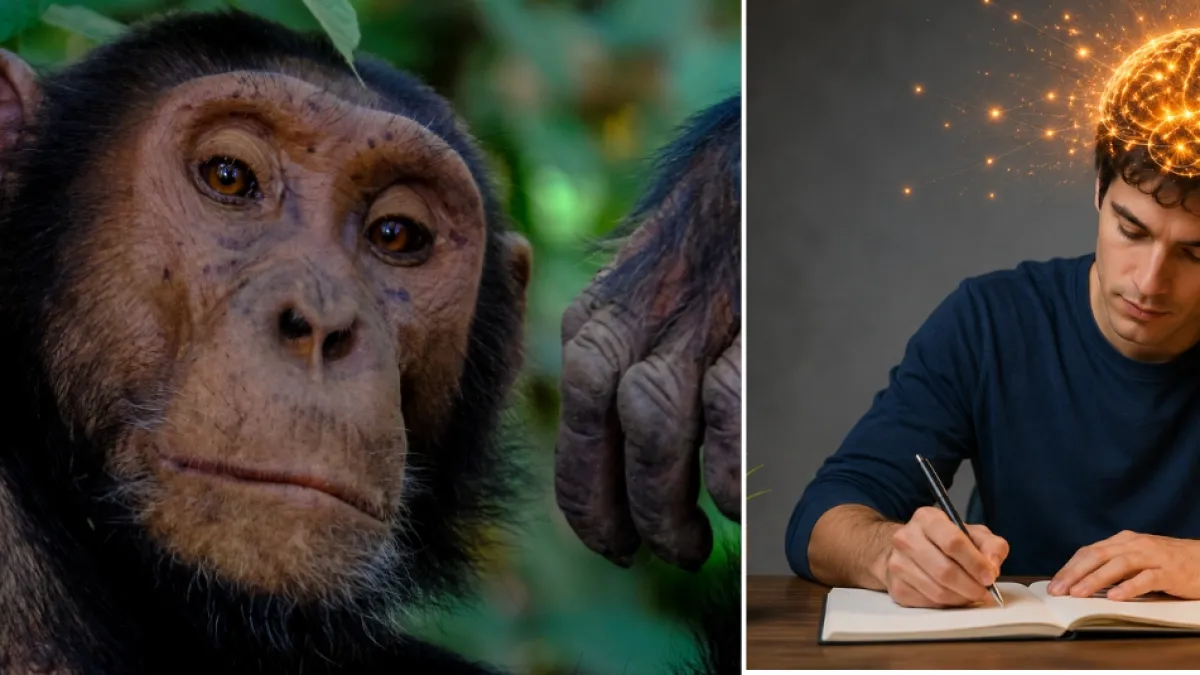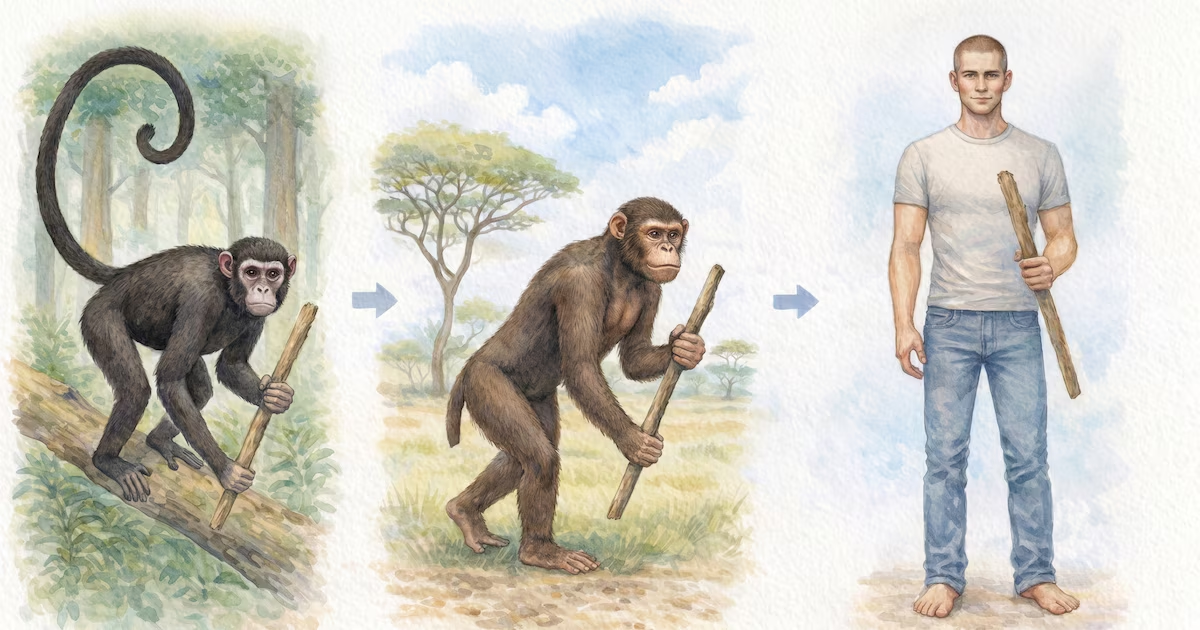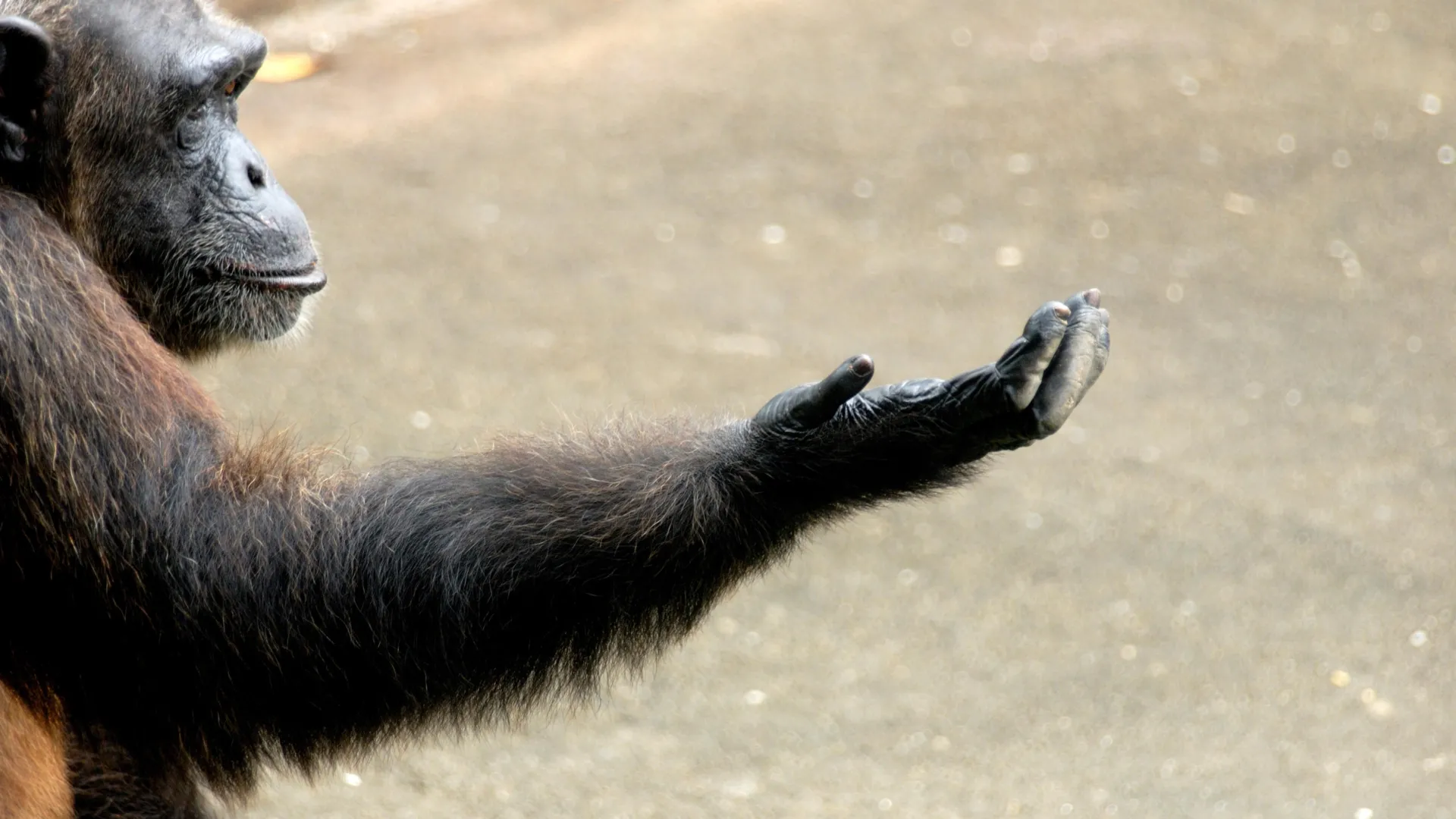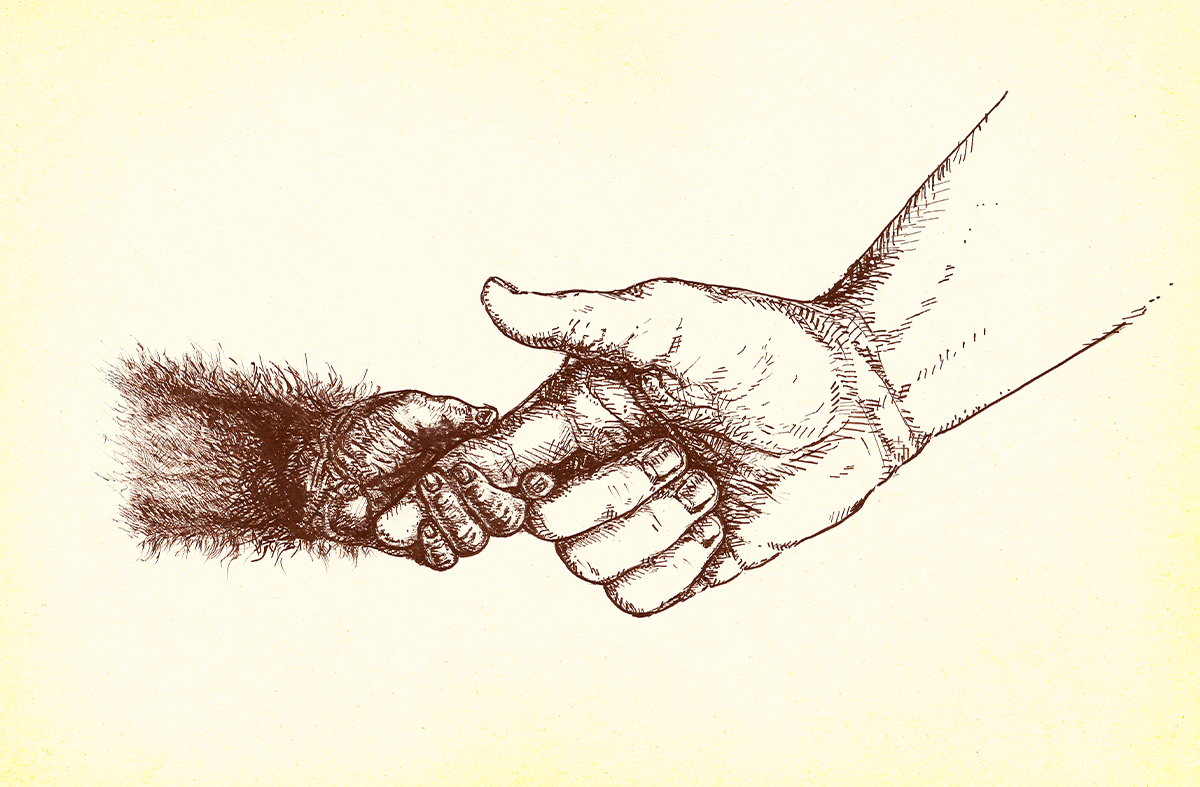
If you’re reading this right now, odds are you’re right-handed. In fact, 90 percent of people across all human cultures prefer using their right hand. Strangely, handedness is a unique quirk of Homo sapiens—no other primates favor one hand (or handlike foot) over the other. But why? New research published in PLOS Biology is shedding light on the mysterious phenomenon. Featured VideoA team of evolutionary anthropologists compared data from humans with more than 40 species of primates to test leading hypotheses for handedness, including tool use, diet, habitat, body mass, and social system. Unfortunately, none of these could explain our very human preference for favoring one hand. Things changed when they added two more factors to their model: cranial volume and intermembral index (the ratio of the length of our arms to our legs). By parsing the data using these two measurements, humans were no longer outliers. Basically, we can thank our big brains and long legs for our hand preference. Read more: “Mirror-Image Life”According to the researchers, evolving the ability to walk upright on our long legs freed our hands for other tasks, like tool use and gestural communication, where handedness could give individuals a competitive advantage. At the same time, our larger brains allowed for the kind of cortical reorganization that could make these asymmetric behaviors more efficient. “This is the first study to test several of the major hypotheses for human handedness in a single framework,” study author Thomas A. Püschel of the University of Oxford said in a statement. “Our results suggest it is probably tied to some of the key features that make us human, especially walking upright and the evolution of larger brains. By looking across many primate species, we can begin to understand which aspects of handedness are ancient and shared, and which are uniquely human.”Using the new model, the team estimated handedness in ancient human ancestors. Our earliest forebears, like Australopithecus, likely only had slight hand preferences, similar to the great apes we shared an ancestor with. As human evolution progressed, handedness became stronger, culminating in Homo sapiens. There was one exception, however—the mysterious Homo floresiensis of Indonesia. The model showed these small “hobbit-like” hominins, who died out around 50,000 years ago, had only a mild hand preference. The researchers say this fits with the Homo floresiensis’ relatively small brain size and curved finger bones, suggesting they weren’t as strictly bipedal as other hominins. In fairness, every family has that one oddball relative. Enjoying Nautilus? Subscribe to our free newsletter.Lead image: velazquez / Adobe Stock
Why Did Humans Evolve to Favor One Hand Over the Other?
Why Did Humans Evolve to Favor One Hand Over the Other?: Whoever heard of a right-handed monkey?
423 words~2 min read