If you’ve ever had a medical team investigating cardiac issues, you’ve probably had a bunch of electrodes stuck all over your chest and been hooked up to an electrocardiogram. This is the gold standard when it comes to understanding electrical activity in the heart and can diagnose a great many conditions. However, sometimes doctors just need the basic information—your pulse rate, and whether or not there’s actually any oxygen in your blood.
Thankfully, there’s a cheap and simple device that can offer that exact information. It’s the pulse oximeter, and it’s a key piece of equipment that’s just about vital for monitoring vitals. Let’s learn how it works!
Pump It
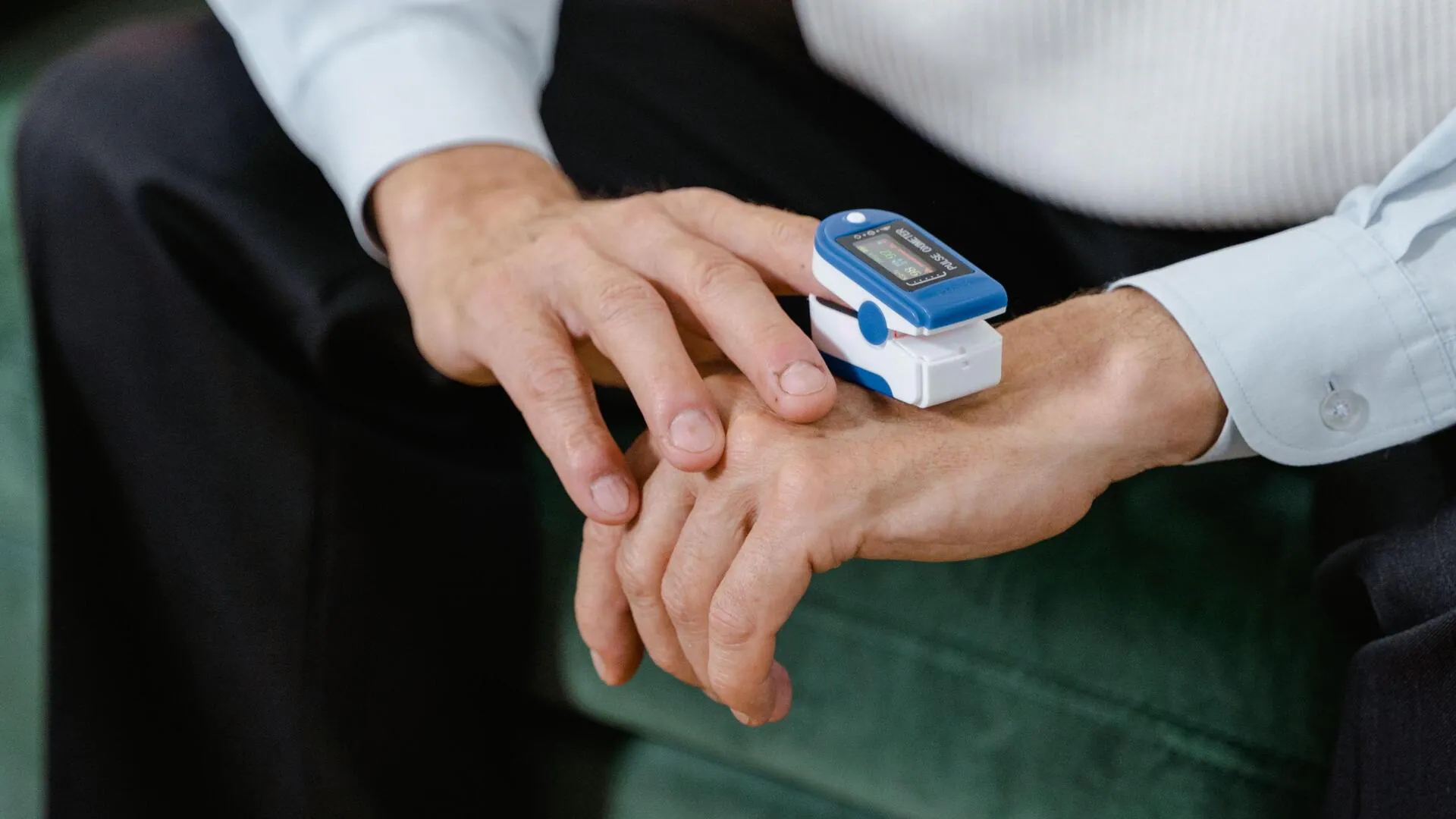
If you’re unfamiliar with pulse oximeters, they’re that little plastic thing that clips on your finger at the doctor’s office. The device places two LEDs on one side of your finger, and a photodiode on the other. With just these simple components, it’s possible to determine the percentage of your blood’s hemoglobin that is currently carrying oxygen. It’s also possible to discern pulse rate, which also comes in handy when you’re trying to determine a patient’s current status at a glance.
A pulse oximeter is a small device typically worn on the finger. This example feeds a signal to a remote display, while some units will put the screen directly on the finger clamp itself. Credit: UusiAjaja, CC0