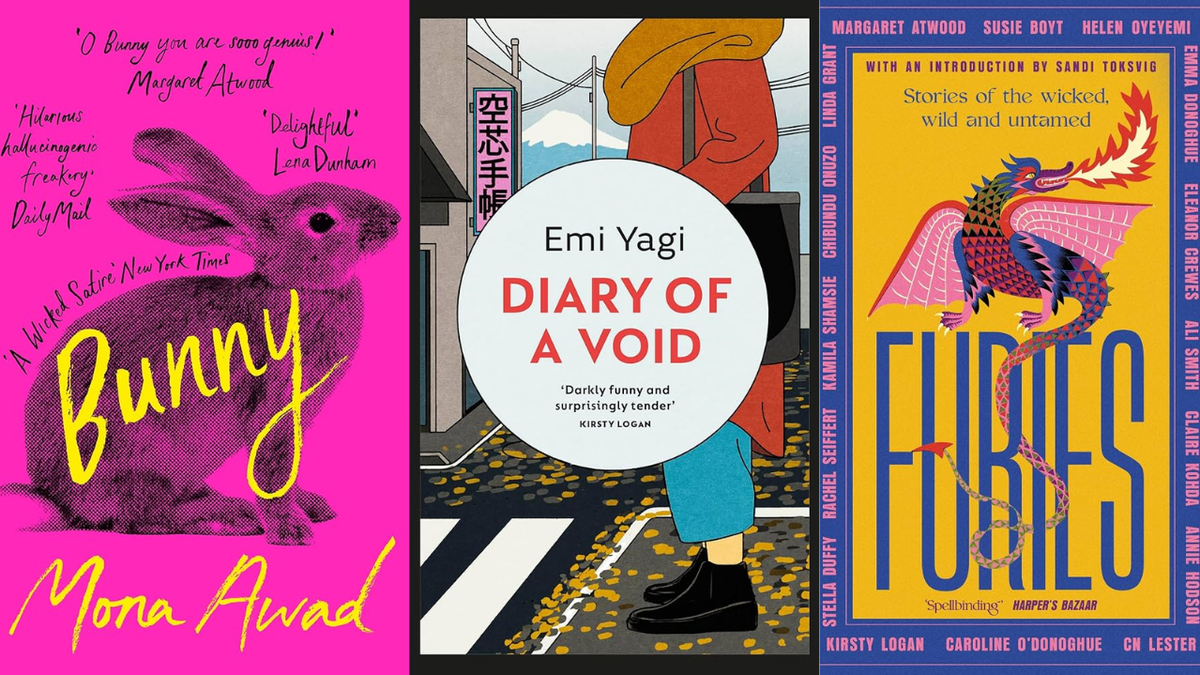
(This story is part of The Hindu on Books newsletter that comes to you with book reviews, reading recommendations, interviews with authors and more. Subscribe here.)Dear reader,I have a confession to make. At times when I have a reading slump or feel horrified by how long I have spent with my head buried in my phone, I pick up a slim book to read. It is an act of resistance, a bite-sized joy, an easy way to finish a book quickly without yielding to other temptations.Last year, I remember spending the first of January reading Claire Keegan’s Small Things Like These. It remained one of my most favourite books of the year. I would not stop talking about it: it was a perfect example of how great things come in small packages.Since this is an age of excess, where various social media platforms give you the freedom to write as much as you want — brevity, clarity, and precision be damned — I love slim books that pack a punch. Perhaps, it also has something to do with my job as an editor: chopping, cleaning up, and shaping copy is what I do every day.Over the last few years, the Indian publishing landscape is catering more and more to people like me (and perhaps you) given our relatively short attention spans. Aleph Book Company’s ‘Essential India Editions’ series, launched in 2025, includes titles such as Shashi Tharoor’s Our Living Constitution and Valmik Thapar’s The Mysterious World of Tigers. Pan Macmillan India continues to publish ‘The Shortest History’ series, which it started in 2022. Its titles include Ross King’s The Shortest History of Ancient Rome and David Baker’s The Shortest History of Sex. In January this year, the publishing house also introduced the ‘Edible Series’, with condensed histories of civilisations and food.All these books under 200 pages seem to have an audience: readers who have little time, little patience, and little money to buy or read sprawling non-fiction volumes.Pranavi Sharma writes for us this week about this growing trend, exploring why compact books are carving out a larger place in Indian publishing. Read her essay here. And while you’re at it, tell me: what is the best compact book you’ve read recently?Books of the weekIn non fiction, we have Ameer Shahul reviewing Vandana Shiva and Shreya Jani’s book, Slow Living: What You Can Do About Climate Change (Roli). The book, writes Shahul, is “a manifesto for a new way of living through a call for individual transformation in a changing world.” But while it calls for individual action, it “underestimates the structural constraints within which individuals operate,” he says. Read the review here.In fiction, we have Akila Kannadasan examining two of Jeyamohan’s books — The Daughter of Kumari and One Million Footsteps (both Juggernaut). The first is the translation of Kumarithuraivi, the story of the grandest wedding of all time, of Lord Sundareswarar and Goddess Meenakshi. The second, a translation of Pathu Latcsham Kaaladigal, is a collection of detective stories. Read the review here.It’s awards season It’s that time of the year again, bibliophiles! The International Booker Prize will be announced on May 19. If you are in India, you will have to stay up late (2:35 a.m.) to watch the ceremony, but it’ll be worth it. Here are the shortlisted books:The Director by Daniel Kehlmann and translated by Ross Benjamin (Riverrun). Saurabh Sharma speaks to Benjamin on working with the German author, Kehlmann, for The Director. The novel fictionalises the life of G.W. Pabst, the pioneering German filmmaker who not only broke new ground in the art of film editing but also discovered actors Greta Garbo and Louise Brooks. When Germany’s borders close, Pabst finds himself trapped and forced to choose: collaborate with the Nazis to keep making films, or risk losing everything. I liked what Benjamin said about translators in the interview: “It may sound odd, but a translator is sometimes more explicitly aware of what an author is doing than the author is. The author may arrive there by intuition, whereas the translator has to ask, sentence by sentence, what kind of effect is being created and how.” Read the full interview here.The Nights Are Quiet in Tehran by Shida Bazyar and translated by Ruth Martin (Scribe Publications)This novel, published in 2016, begins in 1979. Its central figures, Behzad and Nahid, are communist revolutionaries forced to flee to West Germany while being hunted by Iran’s new Islamic regime. Two decades later, their daughter Laleh returns to Iran and is struck by how culturally different it feels from the Germany she grew up in. Spanning three decades, the story traces the lives of five family members — Behzad, Nahid, Laleh, Mo, and Tara. In his review, Vasudevan Mukunth writes that, in Bazyar’s telling, the revolution was “a step in the wrong direction.” Read his review here. The Witch by Marie NDiaye and translated by Jordon Stump (Vintage)First published by 1996, the book is about Lucie who can see glimpses of the past and future, and sheds tears of blood. She dislikes being a witch and is considered “mediocre” but still teaches witchcraft to her teenage daughters. Soon, her husband and daughters rebel against her and her powers don’t come to her help. Kanika Sharma writes, “The Witch is an enigma about disenchantment, a tragicomic tale of the struggle to belong, and a witch’s inability to become.” Read her review here.She Who Remains by Rene Karabash and translated by Izidora Angel (Peirene)This is a two-part novel set in Albania. Bekija escapes an arranged marriage by becoming a sworn virgin, effectively living as a man. Her decision has major consequences on her family and her first love and she recounts it to a journalist years later. “This fever-dream of a novel, told in an almost angelic voice, is nothing short of a masterpiece,” writes Saurabh Sharma here. Taiwan Travelogue by Yáng Shuāng-zi and translated by Lin King (And Other Stories)The novel begins in 1938. Aoyama Chizuko, a Japanese novelist, arrives in Taiwan, which was then a Japanese colony. With no interest in official events or in Japan’s imperialist agenda, she instead decides to explore Taiwan through its food. She befriends a Taiwanese woman, Chizuru, her interpreter and an exceptional cook. Chizuko become very fond of her companion, but Chizuru maintains a distance. Read Nitika Francis’s review here.On Earth As It Is Beneath by Ana Paula Maia and translated by Padma Viswanathan (Charco)Maia presents a haunting vision of human violence in this book. On the site of a former ground where slaves were tortured, the state builds a penal colony meant to reform prisoners but ultimately only traps them. As the prison nears closure, a ritual begins: on full-moon nights, inmates are released and hunted by the warden. “The boundary between man and beast melts,” writes Mukunth in this review. What makes this novel particularly interesting is that it is “entirely populated by men... yet, the architects of this narrative are women.”SpotlightThis year, the Sahitya Akademi award for literature (English) was presented to Navtej Sarna, writer and former Indian Ambassador to the U.S. and Israel and former High Commissioner of India to the U.K. In this essay, Ziya Us Salam writes about Sarna’s works, including Crimson Spring (Aleph Book Company) which won him the award, and what makes his craft special.NightstandI am just about finishing The Correspondent, so sadly I have nothing new to report this week. But what I would like to pick up next is Remarkably Bright Creatures (Bloomsbury), which has been adapted by Netflix. The book follows the tender bond between Tova and a Houdiniesque giant Pacific octopus, Marcellus. I enjoy stories on human-animal bonds and really liked My Octopus Teacher, which won Best Documentary Feature at the 93rd Academy Awards. Shelby Van Pelt, the author, speaks to Preethi Zachariah about the emotional pull of human-animal bonds, and why Oscar winner Sally Field always felt right for the lead role, here.And that’s all from me. Do write to me with suggestions, comments, and feedback to radhika.s@thehindu.co.in. Have a happy reading week!
The Hindu on Books newsletter: The joy of a slim novel
The Hindu on Books newsletter: The joy of a slim novel
1,342 words~6 min read