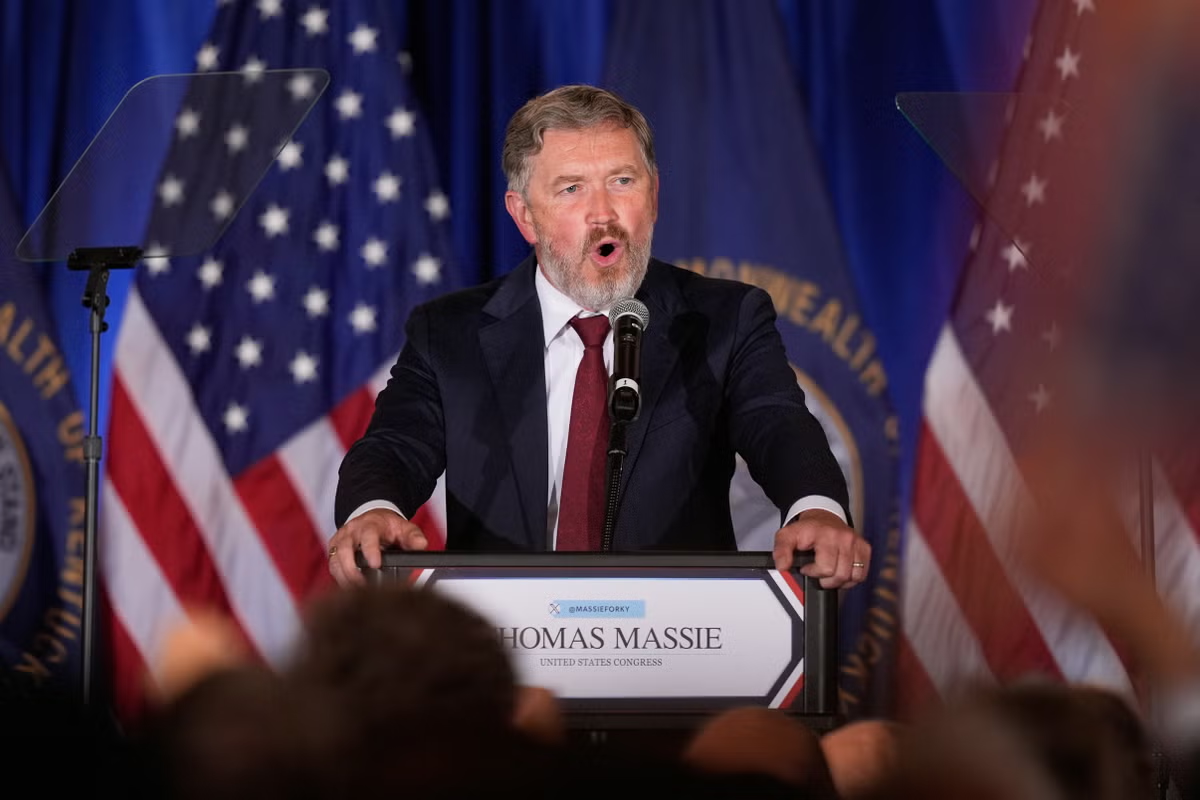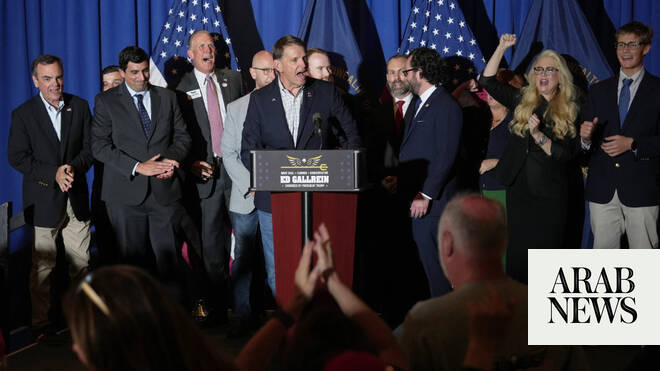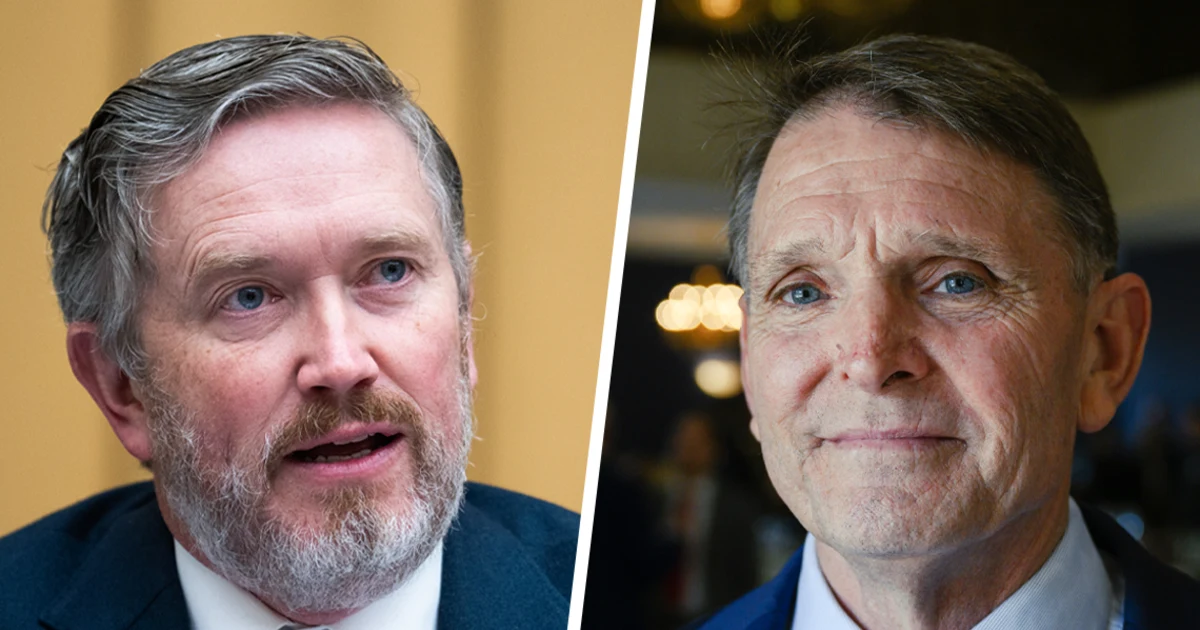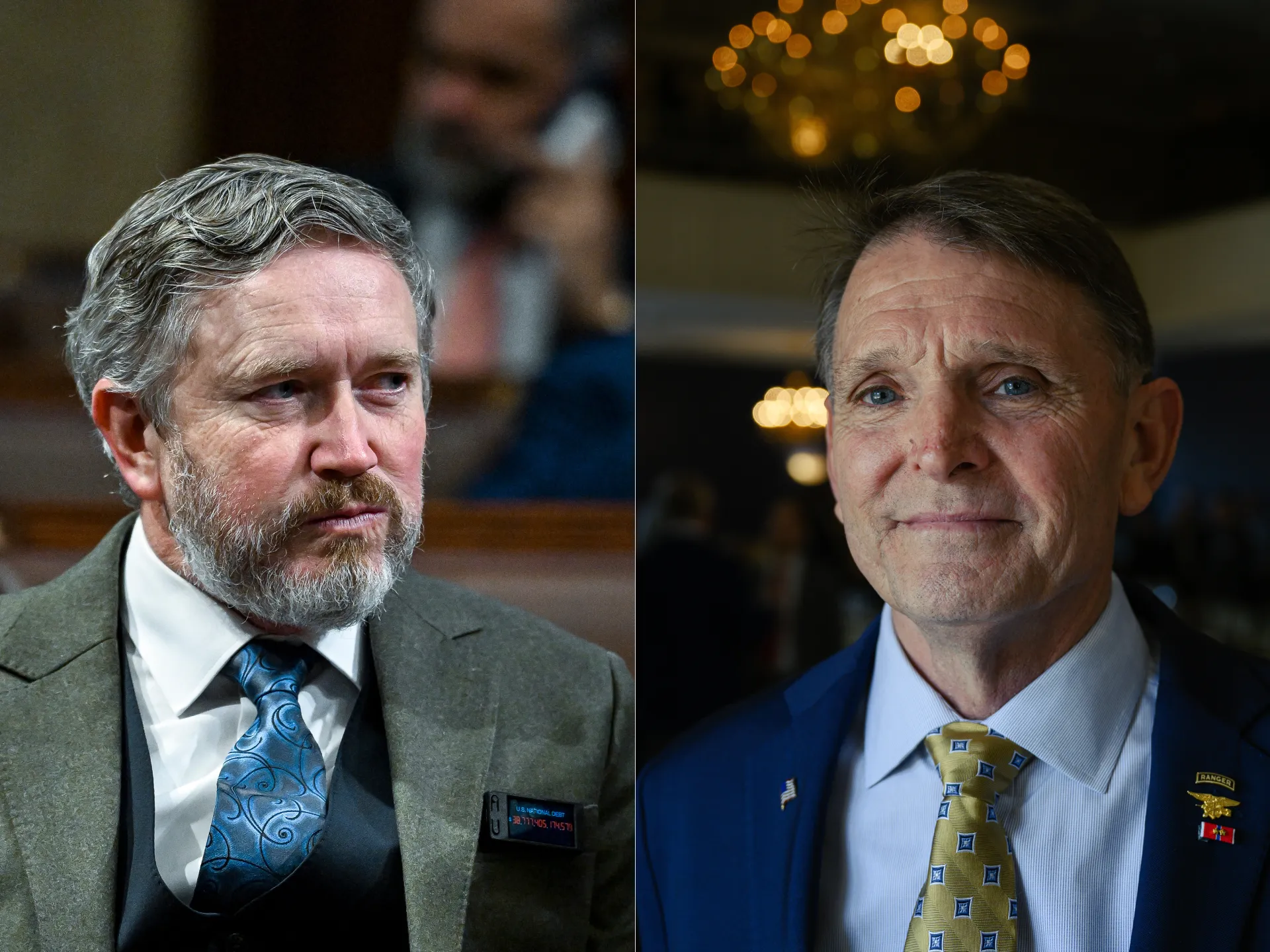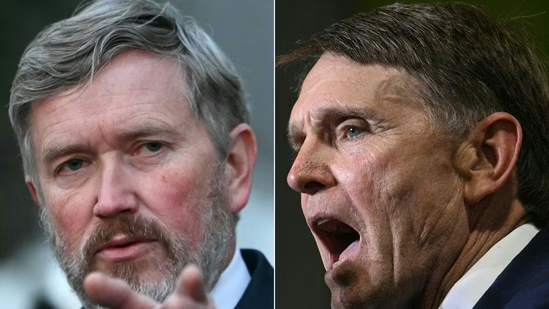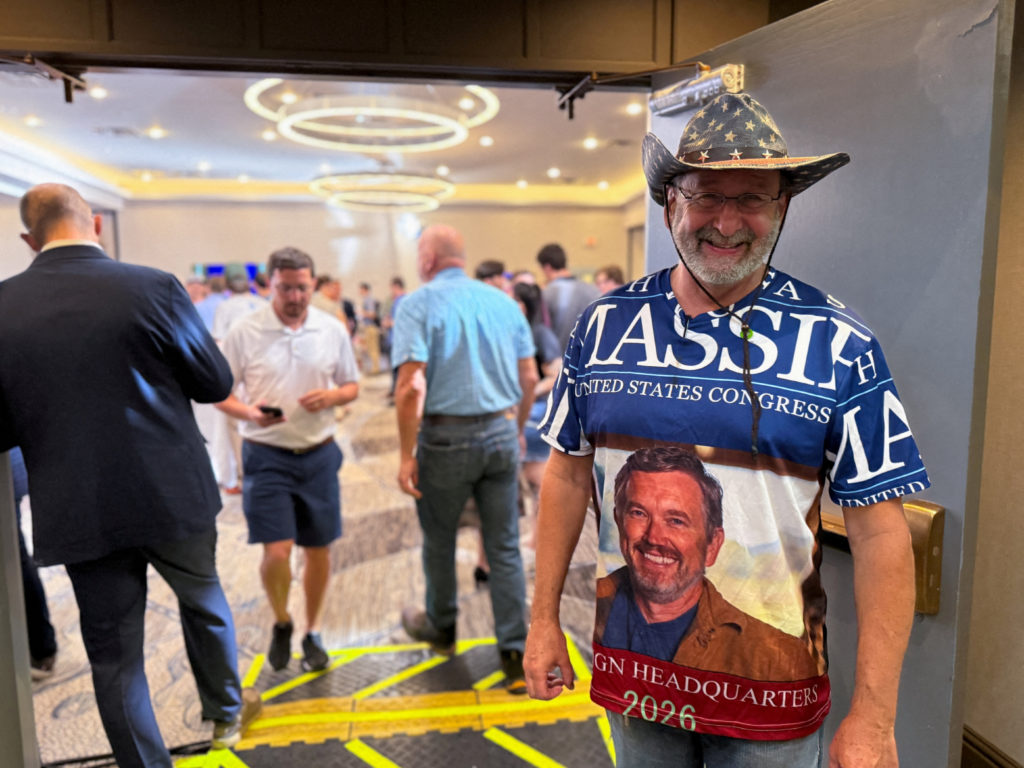
Last week, William Paul, the son of Kentucky senator Rand Paul, approached the Republican congressman Mike Lawler at a bar in Washington, D.C., and began berating him. The subject of Paul’s tirade was a House primary in Kentucky where Ed Gallrein, a former Navy SEAL endorsed by President Donald Trump, is attempting to take out Thomas Massie, an iconoclastic libertarian and occasional Trump apostate. Massie, Paul said, is one of only two members of Congress who actually care about America (the other being Paul’s father), and his defeat would be the fault of Lawler’s “people,” by which, it turned out, he meant “you Jews.” When Lawler pointed out that he isn’t Jewish, Paul said that he was “so sorry for calling you a Jew,” then continued to spew invective, advising Lawler, among other things, to “watch more Tucker Carlson,” before giving him the middle finger, acknowledging, “I’m just really drunk,” then knocking over his barstool and stumbling out. (The scene unspooled in front of a reporter from the news site NOTUS. Paul has since apologized and said that he has an alcohol problem.)The episode was one of a number of ugly—and increasingly ridiculous—story lines to have coalesced around Massie’s primary race, which takes place on Tuesday. During his antisemitic rant, Paul also attacked Paul Singer, a Jewish Republican donor who has helped fund the campaign to unseat Massie; a pro-Massie PAC ran an ad depicting Singer as part of an “LGBTQ MAFIA,” beneath a rainbow-tinted Star of David. (“SAY ‘NO’ TO THE FREAKS,” the ad continued.) Elsewhere, Cynthia West, a woman who dated Massie for a few months after his wife died, in 2024, alleged that Massie had offered her five thousand dollars in “cow money”—that is, supposedly untraceable cash that Massie, who owns a farm, raised from selling cattle—to drop a wrongful-termination complaint against Victoria Spartz, an Indiana congresswoman in whose office Massie had helped West land a job. Massie denied this and dismissed the story as part of a “dirty tricks” campaign against him. Outside groups, meanwhile, traded A.I. slop, including one ad in which an avatar loosely resembling Massie is shown in a “THROUPLE!” with Alexandria Ocasio-Cortez and Ilhan Omar. The small print clarified that this was satire, but at least one voter apparently thought that it was real.The “LGBTQ MAFIA” spot had sought to portray Singer as the one in league with “far-left, hard-core Democrats.” There was some irony in this, given that—satirical throuples aside—Massie recently has teamed up with progressive Democrats, principally the California congressman Ro Khanna, to successfully force the release of the Epstein files and, less successfully, to attempt to rein in Trump’s adventurism in Iran. (Khanna has endorsed Massie’s primary fight, declaring him a “man of character” and “the type of Congressman our founders envisioned.”) These moves irked Trump, and not for the first time; indeed, Massie has long had a frosty relationship with the President. In 2019, he was among a few Republicans who voted with Democrats to try to stop Trump from invoking emergency powers to build his border wall, warning that, “If we violate the Constitution to build a wall, then the wall protects nothing.” The following year, as COVID raged and people started to stay home, he invoked a legislative maneuver that forced many of his colleagues to travel to D.C. to vote through a stimulus package, leading Trump to dub him a “third rate Grandstander.” (“I take great offense to that,” Massie objected. “I’m at least second-rate.”)Trump also called for Massie to be kicked out of the Republican Party. That suggestion went nowhere, and during the Trump interregnum tensions seemed to thaw, despite Massie initially endorsing Ron DeSantis for President in 2024. When Massie’s wife died, Trump reportedly left him a kind voice mail. After Trump regained the Presidency, there was even some talk of Massie becoming Agriculture Secretary—cow money, on a much grander scale. Last year, however, Massie defied Trump on spending packages, including his One Big Beautiful Bill, and on Iran and Epstein; by June, Trump was back to labelling him a grandstander (a “simple-minded” one this time), and demanding his ouster. Massie, for his part, projected confidence, insisting that no candidate would be able to outrun him to the right, because he is “the original America-first congressman.” He even predicted that Trump, after seeing polling from his district, might not bother getting involved after all. But close Trump allies were already standing up a super PAC to unseat Massie, and, in October, Trump urged Gallrein to jump in. (Around the same time, Massie remarried, and Trump Truthed, “Boy, that was quick.”)The race is now the most expensive House primary of all time, fuelled, in no small part, by those who oppose Massie’s critical stance toward Israel. Polls have been scarce, but several recent ones have suggested that Massie might be in trouble, and reports from the trail suggest likewise. The campaign has become a circus, and Massie is an odd duck—unbelievably, it’s taken me five paragraphs to mention that he lives off the grid and wears a national-debt ticker on his lapel. But the race has turned into a proxy for a more prosaic question: Can a Republican defy Trump in this day and age and still expect to win?This isn’t a new question, and the answer, intuitively, would seem to be no. Since Trump returned to office, he has been particularly uninhibited in his assertions of power and desire to avenge those who cross him. And he has, indeed, been influential in shaping the midterms primary map, at the congressional level and below. Earlier this month, five state senators in Indiana who had rejected Trump’s heavy-handed efforts to redraw the state’s U.S. House districts for partisan advantage lost to Trump-backed challengers; on Saturday, in Louisiana, Senator Bill Cassidy, who earned Trump’s enduring ire for voting to convict in the post-January 6th impeachment trial, failed even to make the primary runoff in his reëlection bid. (This despite Cassidy, a medical doctor, having beclowned himself by voting to confirm Robert F. Kennedy, Jr., as Secretary of Health and Human Services.) National headline writers clearly saw both as a major flex. And yet this recent picture is nuanced. Some observers in Indiana, for instance, have noted that local issues—a casino project, property taxes—fed into the races there.Massie’s result will likewise be interpreted through the totalizing prism of Trump. But there, too, reality is a bit messier. In 2020, Massie easily won reëlection, despite Trump having attacked him. During the 2022 midterms cycle, Trump did back Massie, as part of a wave of endorsements across the map, from the critical Senate race in Ohio to Georgia’s election for Insurance and Safety Fire Commissioner. Pundits widely beheld the outcomes as a metric of Trump’s ongoing power, given that he was supposed to be in exile, and yet, as I wrote at the time, this framing obscured a more complex tangle of local factors, not to mention the likelihood that, in at least some races, candidates weren’t winning because of Trump’s endorsement so much as Trump had endorsed them because they were winning. As Massie noted last year, “Ultimately, the president hates to lose.” Then again, so does Massie, who has lately sought to stress that he agrees with Trump on most matters, and that he doesn’t see himself as running against him. (One recent pro-Massie ad took aim at “TRUMP TRAITOR WOKE EDDIE GALLREIN,” before showing an A.I. version of Gallrein fleeing Trump’s side in battle.) In the event of a Massie defeat, local disputes—from recriminations over funding for a bridge to Massie’s responsiveness to his constituents—will have played at least some role. Even a Massie win, as one strategist told Salon, wouldn’t necessarily justify clean conclusions about the President given the idiosyncrasies of Massie’s district, which stretches from the Cincinnati suburbs to the West Virginia border.The Massie-Trump feud may well remain the biggest factor—Trump has spent the past couple of days railing against him online, dubbing him the “worst and most unreliable Republican Congressman in the history of our Country”—and it’s true that, on Capitol Hill, no Republican has been quite as outspoken against the President’s agenda, at least since Marjorie Taylor Greene quit. Still, Congress, these days, isn’t entirely the supplicant rubber stamp of caricature; increasingly, its G.O.P. majorities look like unruly rabbles, especially in the House. (“You see dissent here every day,” Speaker Mike Johnson said, when asked whether Cassidy’s defeat showed that dissent was no longer permissible in the Party. “I mean, I deal with it all day long.”) And Trump’s vengeance has at least some limits. Earlier in the year, Trump threatened to primary five senators, including Rand Paul and Susan Collins, of Maine, who voted to advance a war-powers resolution focussed on Venezuela. More recently, Collins, who is up for reëlection this year, has voted similarly to constrain Trump’s actions in Iran—and yet, rallying in her state last week, Vice-President J. D. Vance extended a message of understanding, not retribution. “I almost wish that she was more partisan,” he said. “But the thing I love about Susan is she is independent, because Maine is an independent state. And, frankly, if she was as partisan as I sometimes wish that she was, she would not be a good fit for the people of Maine.”The result of Massie’s race will doubtless tell us something about the direction of the G.O.P. But, with primary days increasingly coming thick and fast, I think it’s best to avoid overinterpreting individual results and instead assess the bigger picture. Trump’s campaign against the state senators who defied his redistricting plan in Indiana, for example, may on the face of it have looked like a show of strength, but those officials felt free to defy Trump in the first place, mostly seem to have no regrets now, and were, ultimately, pathetically soft targets. Massie is closer to being someone of Trump’s own size, but is himself, ultimately, just one congressman; what does it say about Trump’s power that he doesn’t feel he can just turn the other cheek? Even if Trump gets his wish, many of Massie’s objections—around the interminable Iran conflict, above all—will continue to resonate. Trump is an unpopular President, waging an unpopular war. One primary in Kentucky won’t change that.If Trump’s batch of midterm endorsements in 2022 provided an answer, albeit an oversimplified one, to the question of how firmly he controlled the G.O.P., that question feels settled this time around, or, at least, of dwindling interest; despite the reams of media discourse that dissident voices like Massie’s generate, they remain relatively few, in the grand scheme of things. The truly unsettled question, now, is what will happen once these elections are done, and Trump (it must be hoped) enters his lame-duck era? Will the glue of Trumpism cure around another leader, as it has around him? Or will MAGA become unstuck? Massie has said that, if he loses, he will go back to his farm—Cincinnatus, returning to Cincinnati. (Well, close enough.) But the faction that he represents—those who believe, essentially, that Trump has sold MAGA out, at least in part, and not least to the interests of Israel—will have its word to say about the future of the Party, through Massie’s mouth or someone else’s. (We will, perhaps, all be watching more Tucker Carlson in the years ahead.) Already, Massie’s race may have thrown up a more telling indicator than its eventual result: William Paul’s unhinged tirade at Mike Lawler. That was about Massie, but, really, it wasn’t about him at all. ♦
What Thomas Massie’s Primary Says About Trump’s Influence
The race between Thomas Massie and Ed Gallrein in Kentucky asks the question: Can a Republican defy Trump in this day and age, and still expect to win?
1,927 words~9 min read