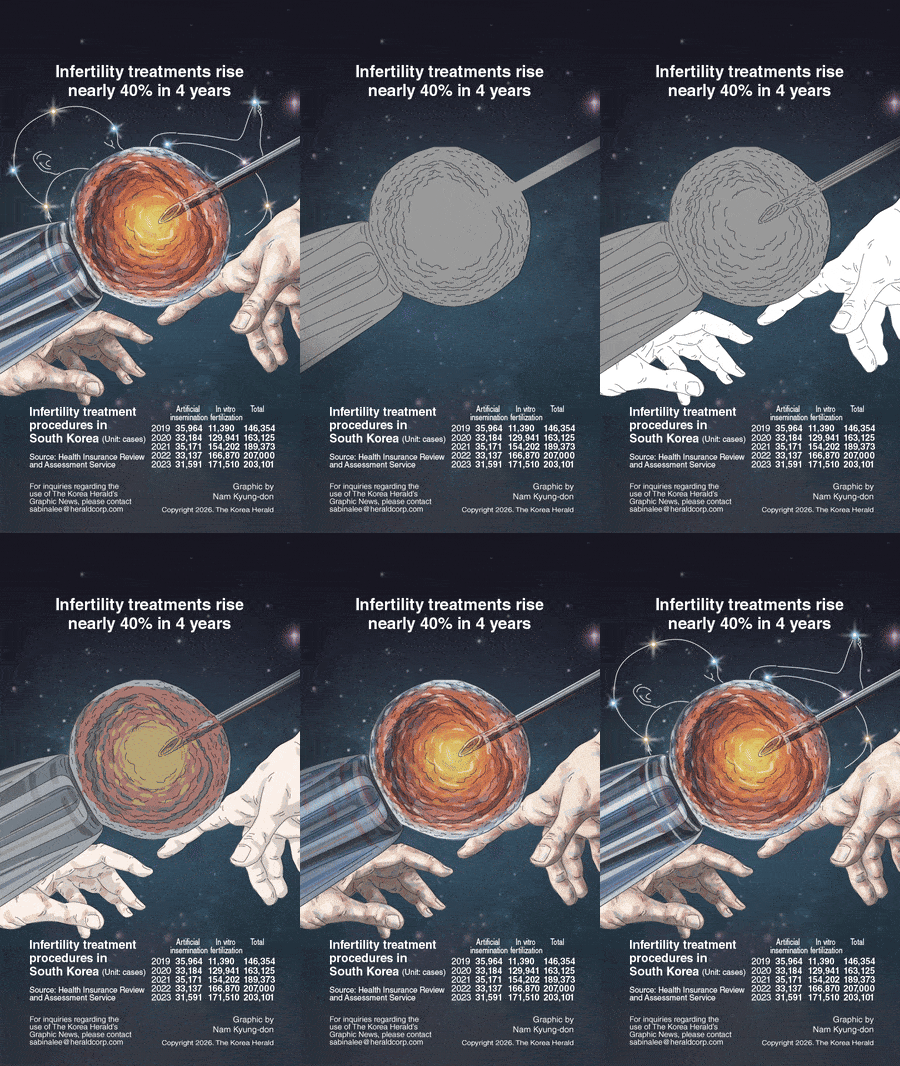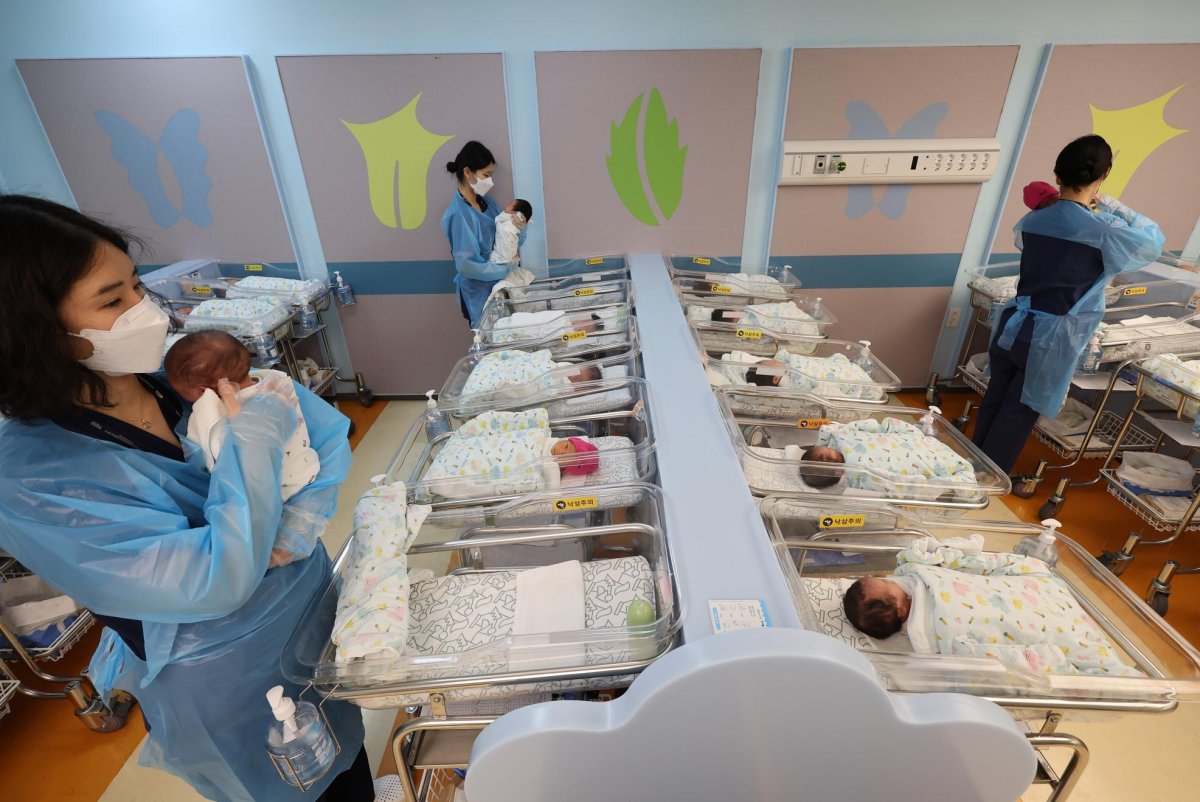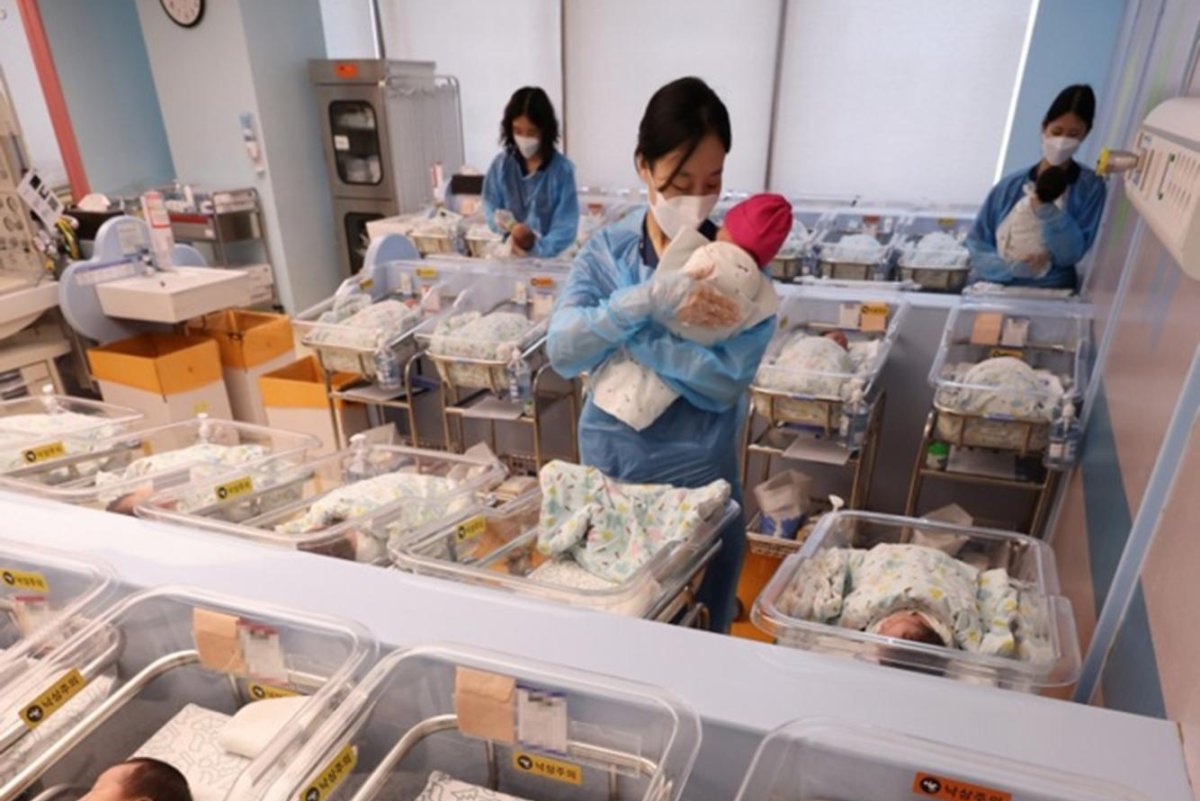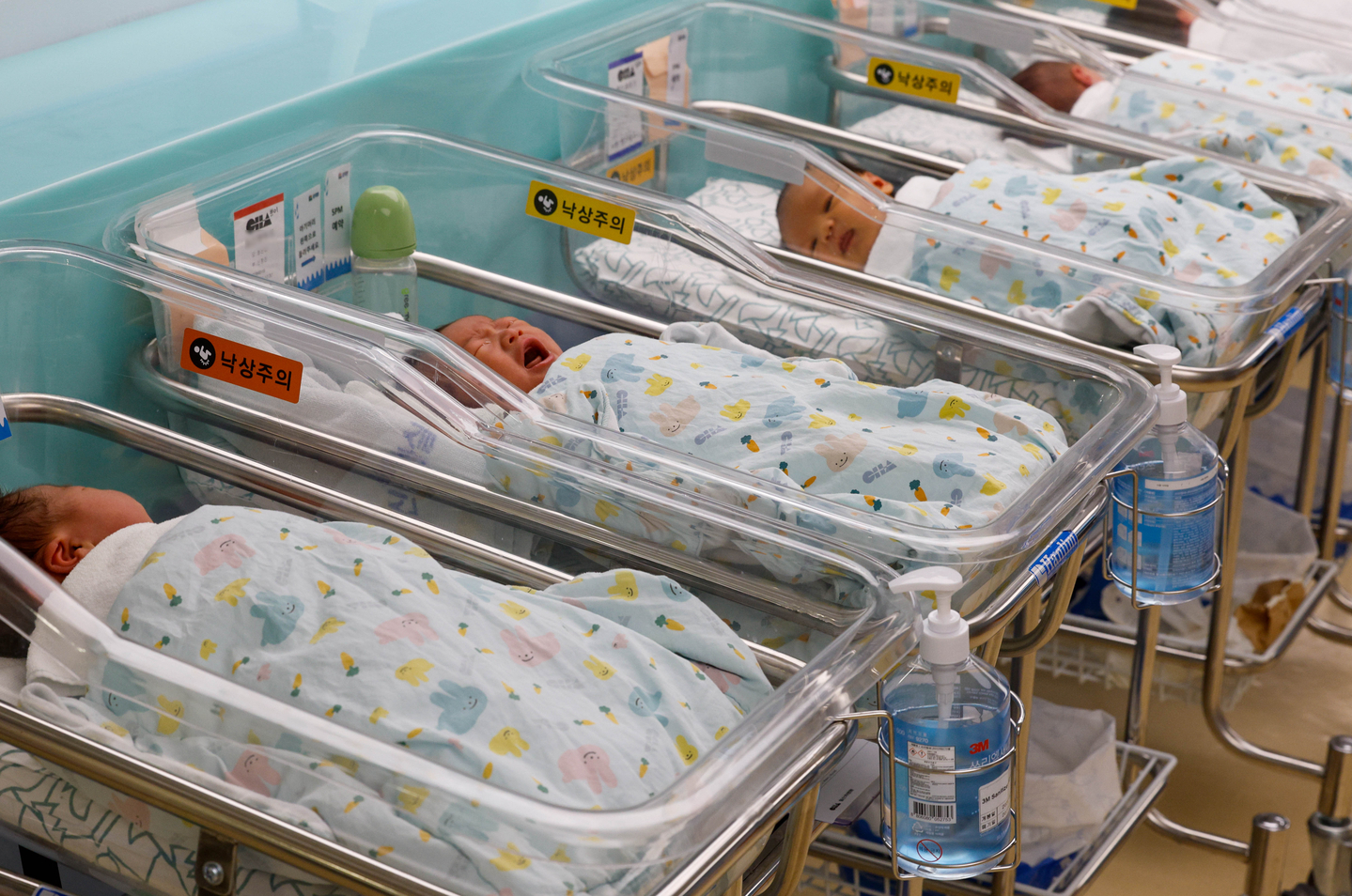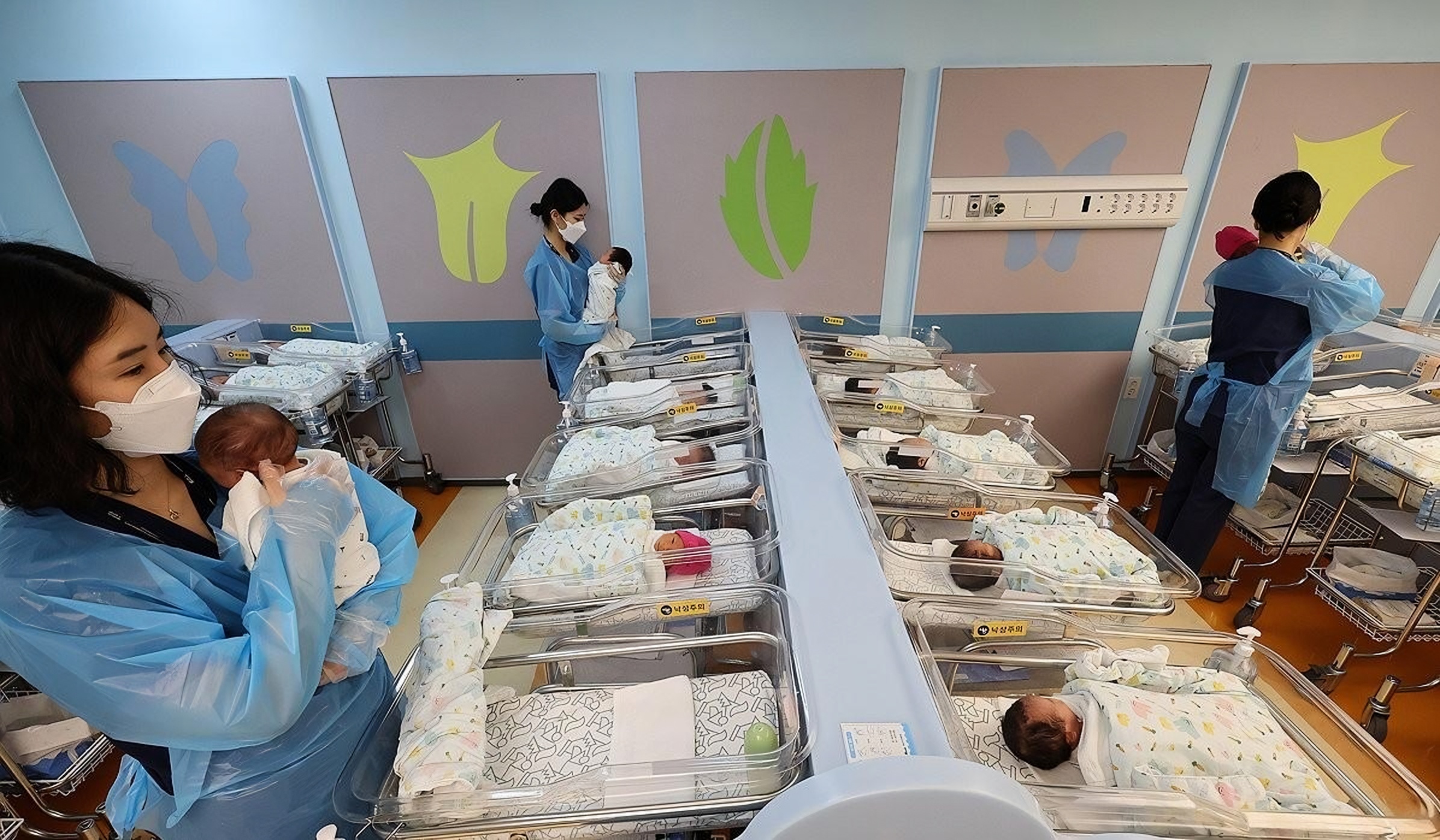
Nurses care for newborn babies at the Cha Ilsan Medical Center in Ilsan, Gyeonggi Province, on April 22. (Yonhap) Infertility treatment cases in South Korea rose nearly 40 percent over four years to reach 203,101 in 2023, according to data released Wednesday by the Health Insurance Review and Assessment Service.The HIRA data showed a particularly sharp increase in in vitro fertilization, which jumped 55.4 percent to 171,510 cases from 110,390 in 2019. Intrauterine insemination, on the other hand, decreased 12.2 percent over the same period to 31,591 cases.A total of 77,660 women received infertility treatment in 2023, 36.6 percent of whom were aged 35 to 39. They were followed by women aged 30-34 at 31.4 percent and those aged 40-44 at 23.4 percent.On average, women who received infertility treatment in 2023 were 37.3 years old. Of them, 39.1 percent had tried to conceive naturally for three years before seeking medical help, while 29.3 percent had tried for between one and two years.A total of 204 medical institutions provided infertility treatment in the surveyed year, with 64.3 percent of the treatments conducted at clinics. Clinics refers to smaller medical institutions that provide primary care mostly to outpatients and have fewer than 30 hospital beds.Nearly half of the institutions providing infertility treatment were in the greater Seoul area, comprising Seoul, Incheon and Gyeonggi Province, which accounts for slightly more than half of the country’s population.A total of 192,043 women and 108,358 men in Korea were found to have fertility issues, according to last year’s data from the National Health Insurance Service. The figures for both genders increased substantially from 2020, with the number of men rising 36.9 percent over the period.Infertility treatments have been partially covered by the state-run health insurance program since October 2017, with patients paying 30 percent of the medical fees.
Infertility treatment increases by 40 percent in 4 years: data
Infertility treatment cases in South Korea rose nearly 40 percent over four years to reach 203,101 in 2023, according to data released Wednesday by the Health I
303 words~1 min read