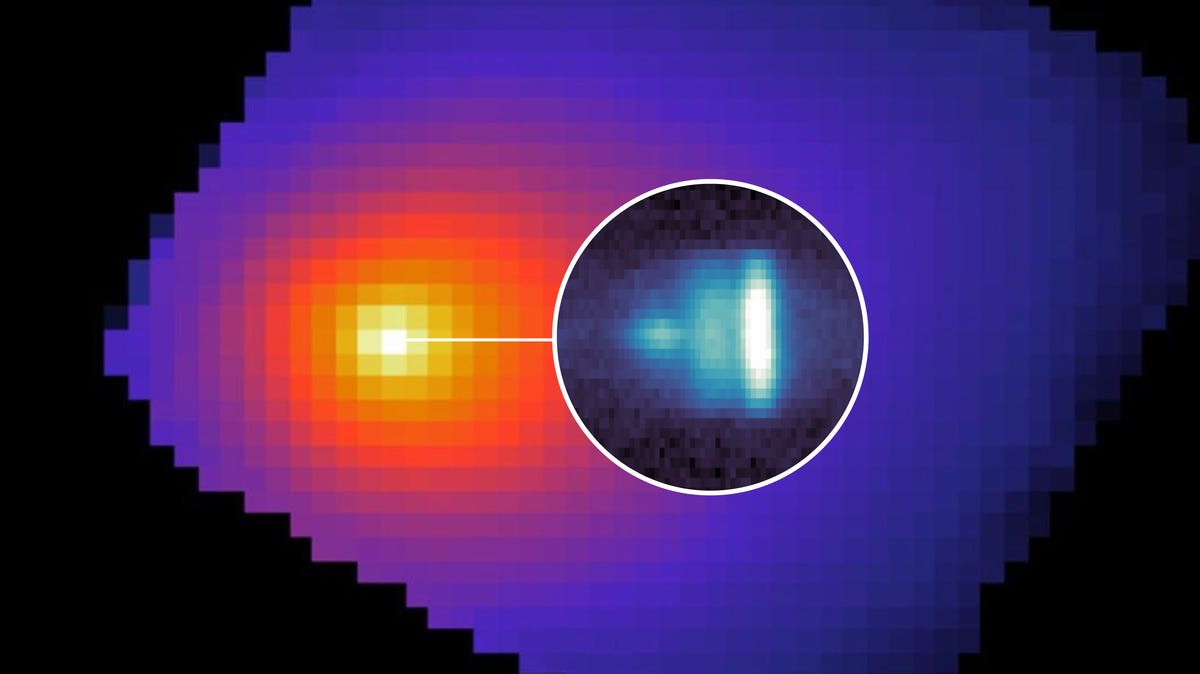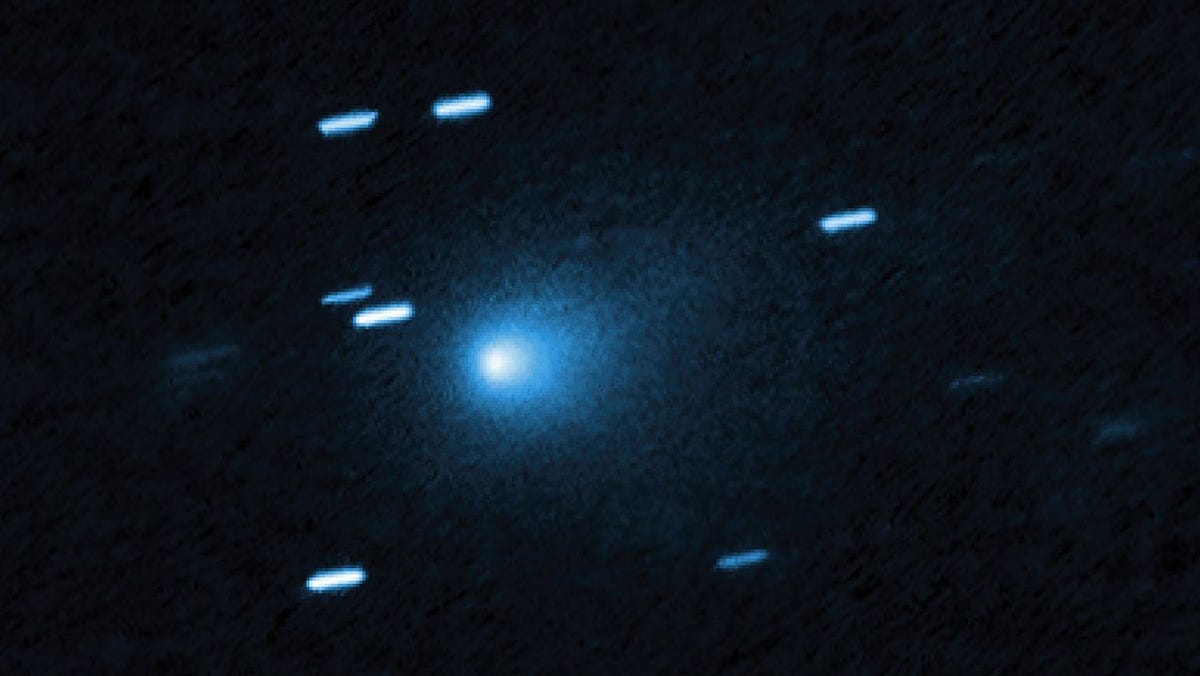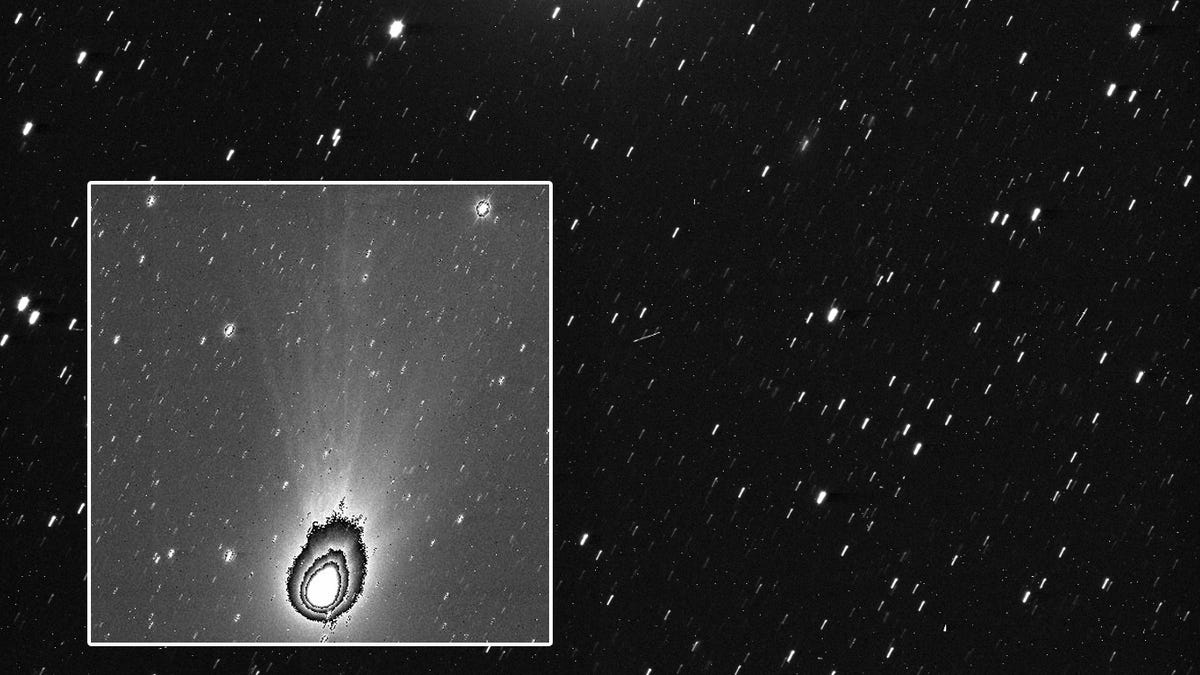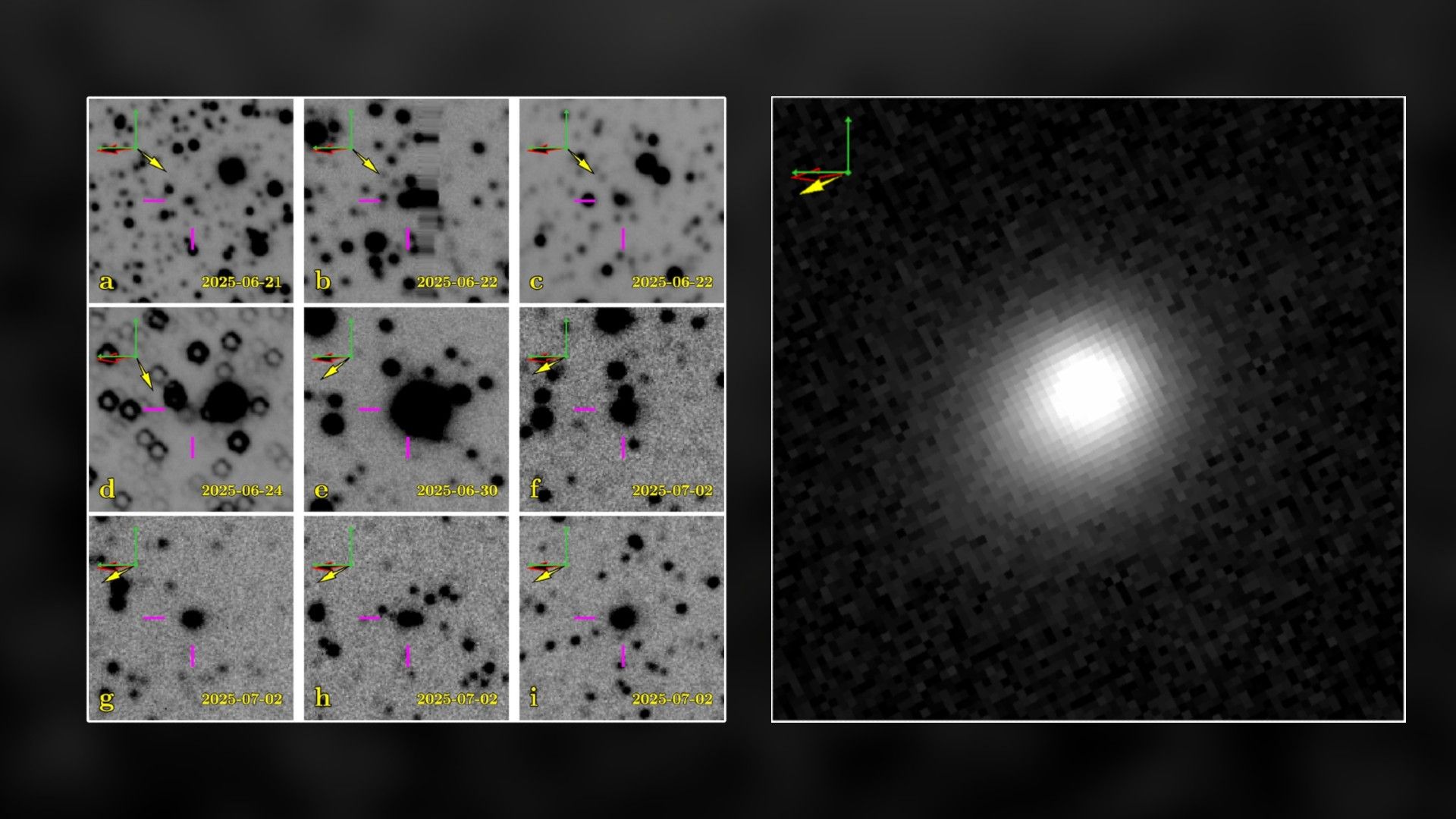
Images of interstellar comet 3I/ATLAS captured by the Rubin Observatory between June 21 and July 2, 2025 (left); 3I/ATLAS as seen by Rubin Observatory on July 3, 2025 (right).
(Image credit: Chandler et al. 2026)
It turns out interstellar comet 3I/ATLAS was almost called 3I/Rubin, after researchers found that the giant survey telescope coincidentally spotted this visitor from the stars over a week before it was officially discovered.3I/ATLAS was officially identified on July 1, 2025 by the Asteroid Terrestrial-impact Last Alert System (ATLAS), which is a network of robotic telescopes in Hawaii, Chile and South Africa. But ten days before, the Vera C. Rubin Observatory, which is also in Chile, began its science validation phase ahead of entering full operation later that year. The science validation phase was designed to calibrate the 27.6-foot (8.4-meter) telescope and its instruments, to ensure that they were working correctly.It wasn't an easy task. Today Rubin has a very well planned out routine — called a 'pipeline' — for taking data and processing it for astronomers, but back during the validation phase the pipeline was not in operation. This meant that Chandler and his team had to devise their own custom pipeline to access the data.Chandler estimates that if Rubin had begun its science validation phase a few weeks earlier, its data-handling pipelines might have been up and running in time to snag 3I/ATLAS before July 1.The researchers found that Rubin proceeded to image the interstellar comet a further nine times between June 21 and July 2, and several more times between July 2 and July 20. The images clearly show that 3I/ATLAS was active even before ATLAS detected it, with an obvious coma — a cloud of dust and gas around the head of a comet that is liberated from the comet's surface when it heats up as it nears the sun.Rubin is designed to find up to 10,000 new comets over the 10-year lifetime of its initial Legacy Survey of Space and Time, and Rubin's early detection of 3I/ATLAS bodes well for estimates that it could find, on average, one interstellar comet passing through our solar system each year. So while 3I/ATLAS doesn't bear Rubin's name, it's a good bet that future interstellar comets will.