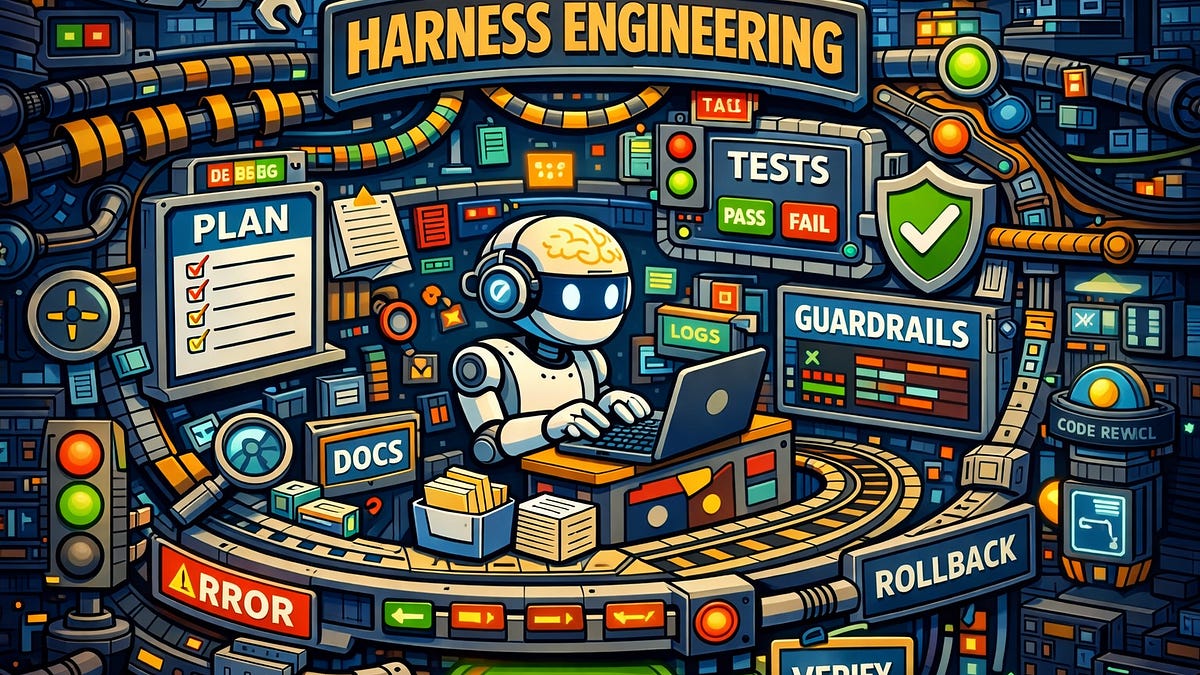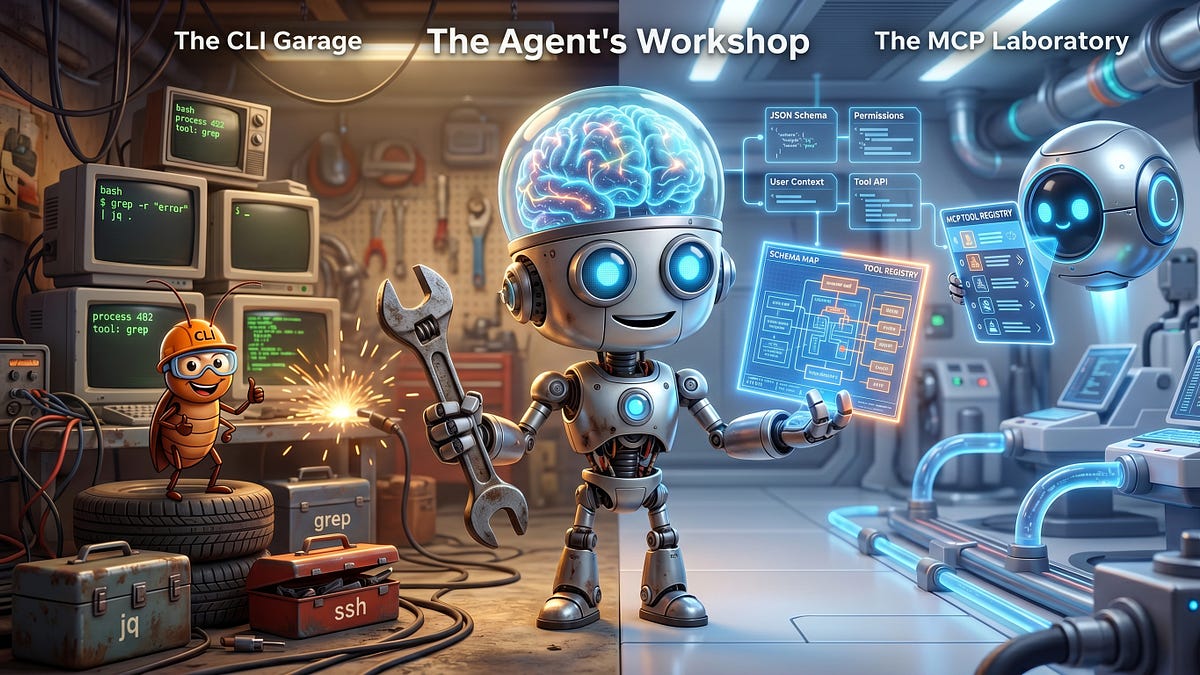
The most important question in agentic software is not “Which model?” It is “What can the model touch?”A language model by itself is a strange kind of brain in a jar. It can predict, plan, summarize, and improvise, but it has no hands. The moment we give it tools, it becomes something else: not merely a chatbot, but an operator. It can read files, write code, open issues, call APIs, move tickets, delete emails, deploy infrastructure, or wake you up at 3 a.m. because a background workflow misread a calendar event.So the real primitive of agentic systems is the interface between the model and the world.Two candidates have emerged as the main bridge: the command-line interface, or CLI, and the Model Context Protocol, or MCP. They represent two different philosophies. CLI says: “The best tool interface already exists. It is the Unix process. Text in, text out, exit code, compose everything.” MCP says: “Agents need structured, discoverable, typed tools. Give them a protocol, schemas, resources, prompts, permissions, and a client-server architecture.”
The Sequence Opinion #848: The Agent’s Hands: CLI or MCP?
What matter most when building agentic tool interfaces.
171 words~1 min read