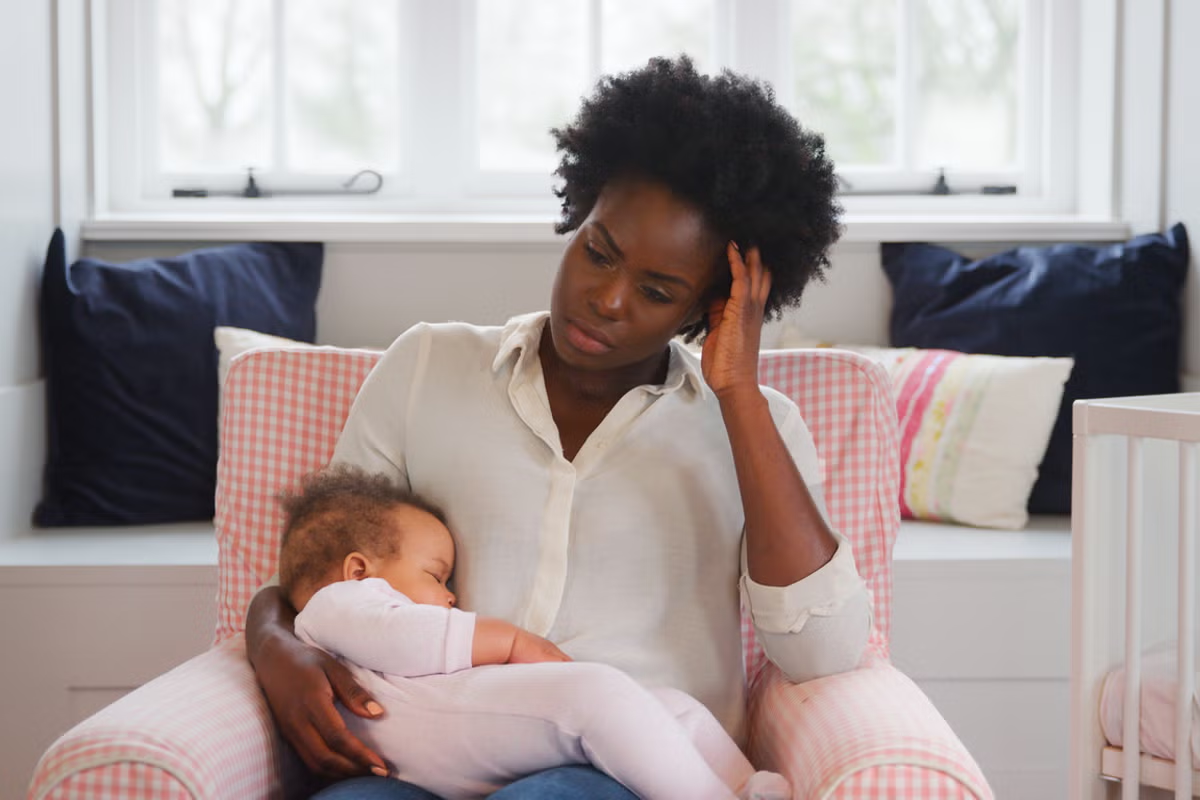
Twenty percent of women experience mental health conditions such as depression or anxiety during pregnancy and the first year of parenthood. Kara Zivin, a professor of psychiatry and obstetrics and gynecology at the University of Michigan, is part of this statistic. She studies health policy and maternal outcomes, having chronicled her own experience with depression during pregnancy in a memoir.
"When I became pregnant, I wondered how my pre-existing depression diagnosis and antidepressant use could affect my baby's development in utero and after delivery," Zivin said. "I knew the risks, but didn't anticipate how sick I would become."
In the following Q&A, Zivin, also a policy researcher at the U-M Institute for Social Research, discusses the most common complications of childbirth, the pressure of modern motherhood, the importance of a support network and how open conversation and presence can shift the reality of families facing perinatal mental health challenges.
How common are perinatal depression and anxiety today? What does the data help us understand about what moms are going through?
Perinatal mood and anxiety disorders affect roughly one in five women during pregnancy through one year postpartum, making them among the most common complications of childbirth. Research shows these conditions are widespread, underdetected and undertreated. The consequences of leaving them unaddressed extend beyond the mother to her baby, her family and her community. Many women never reach the systems that would identify and help them, which means the true scope of the problem is likely larger than what we can measure.