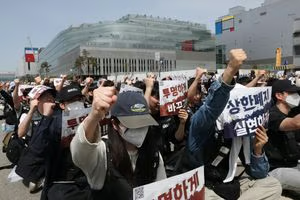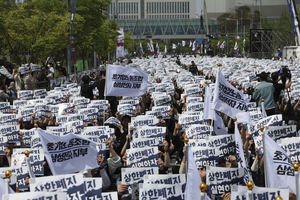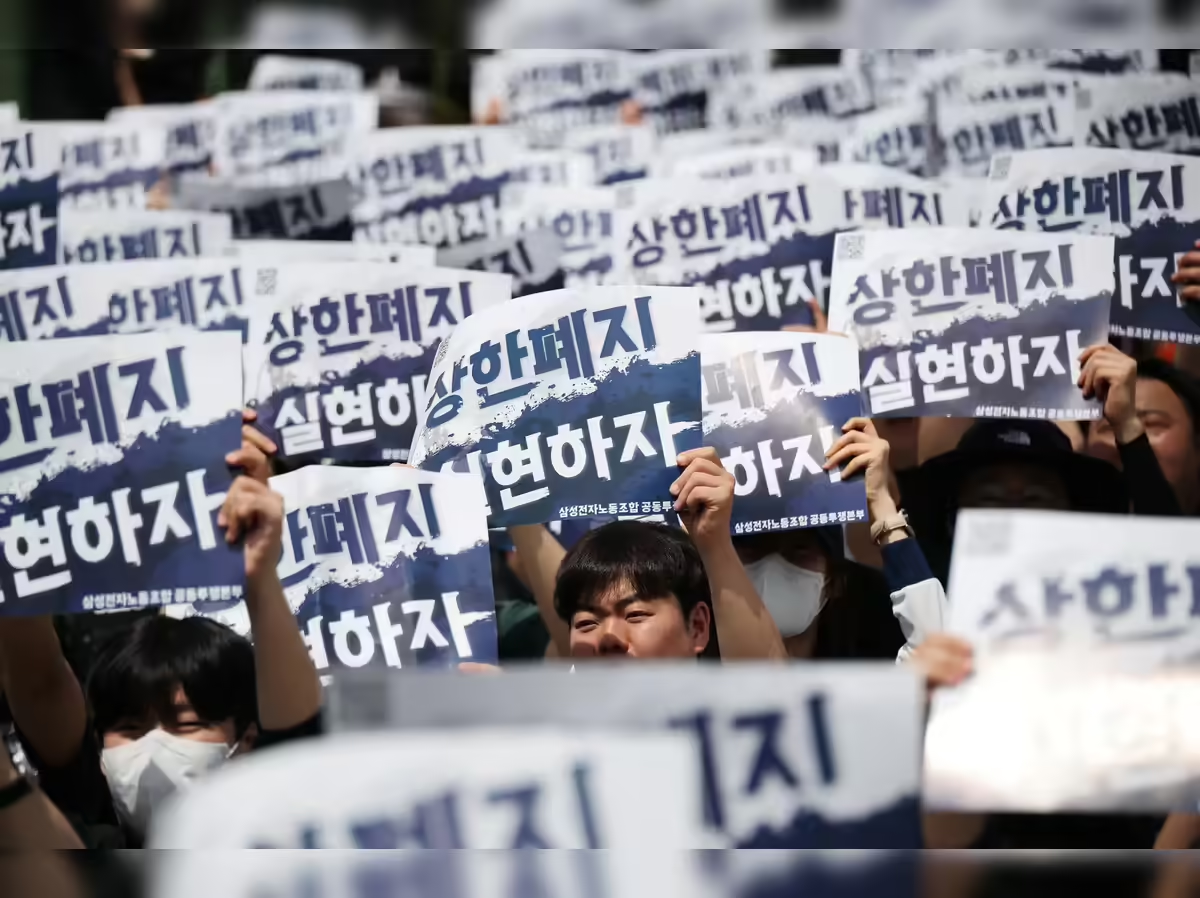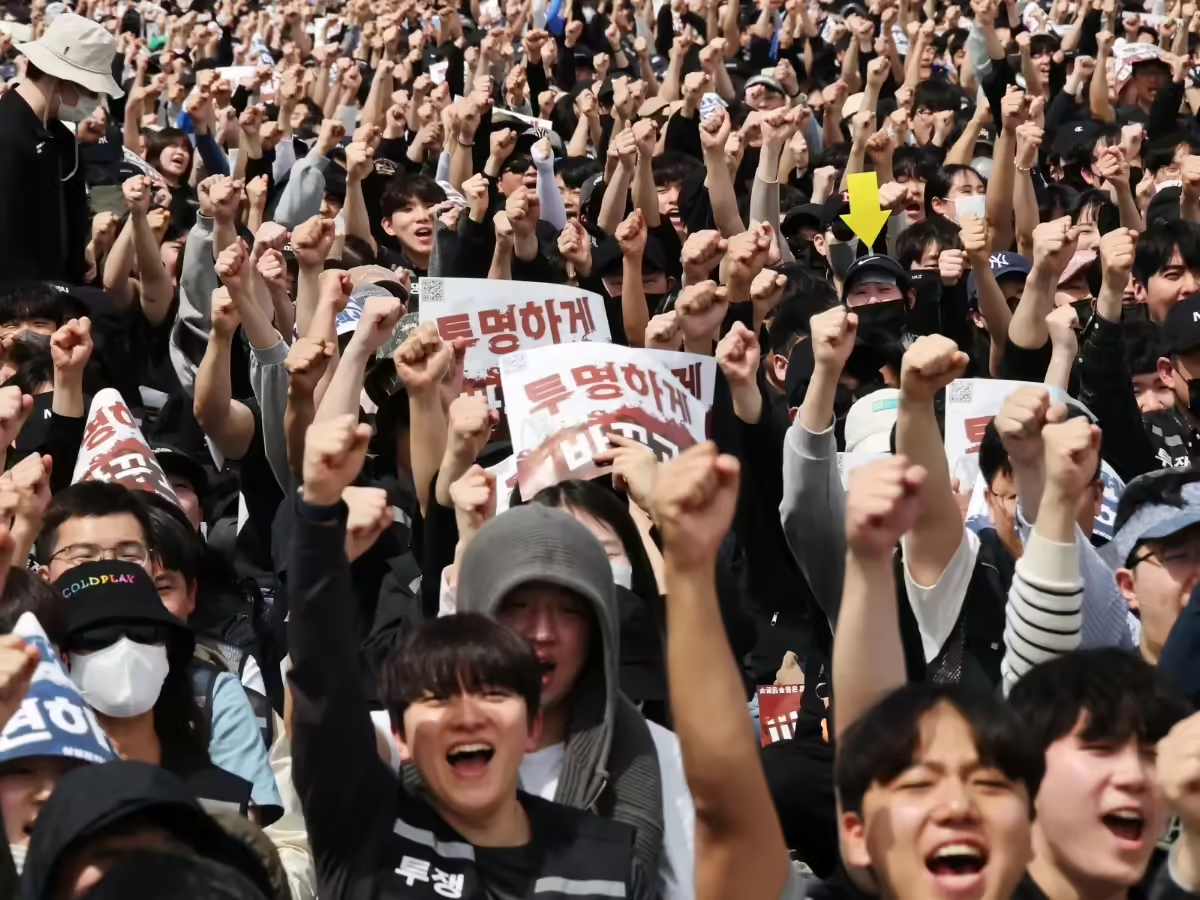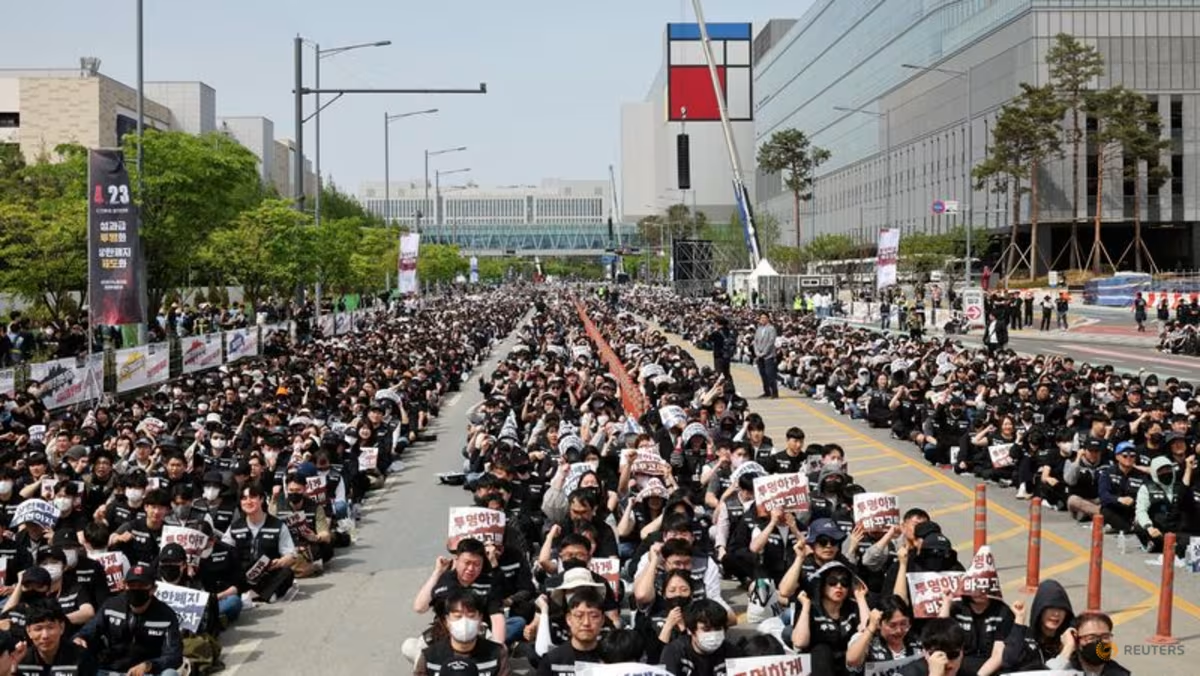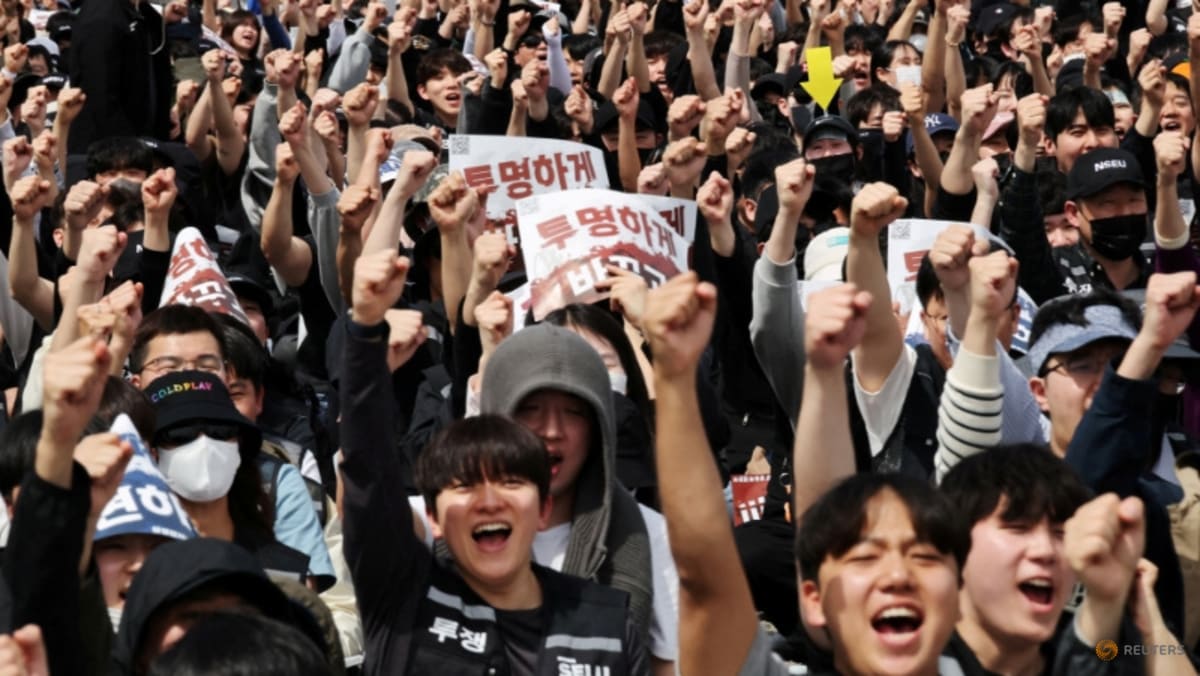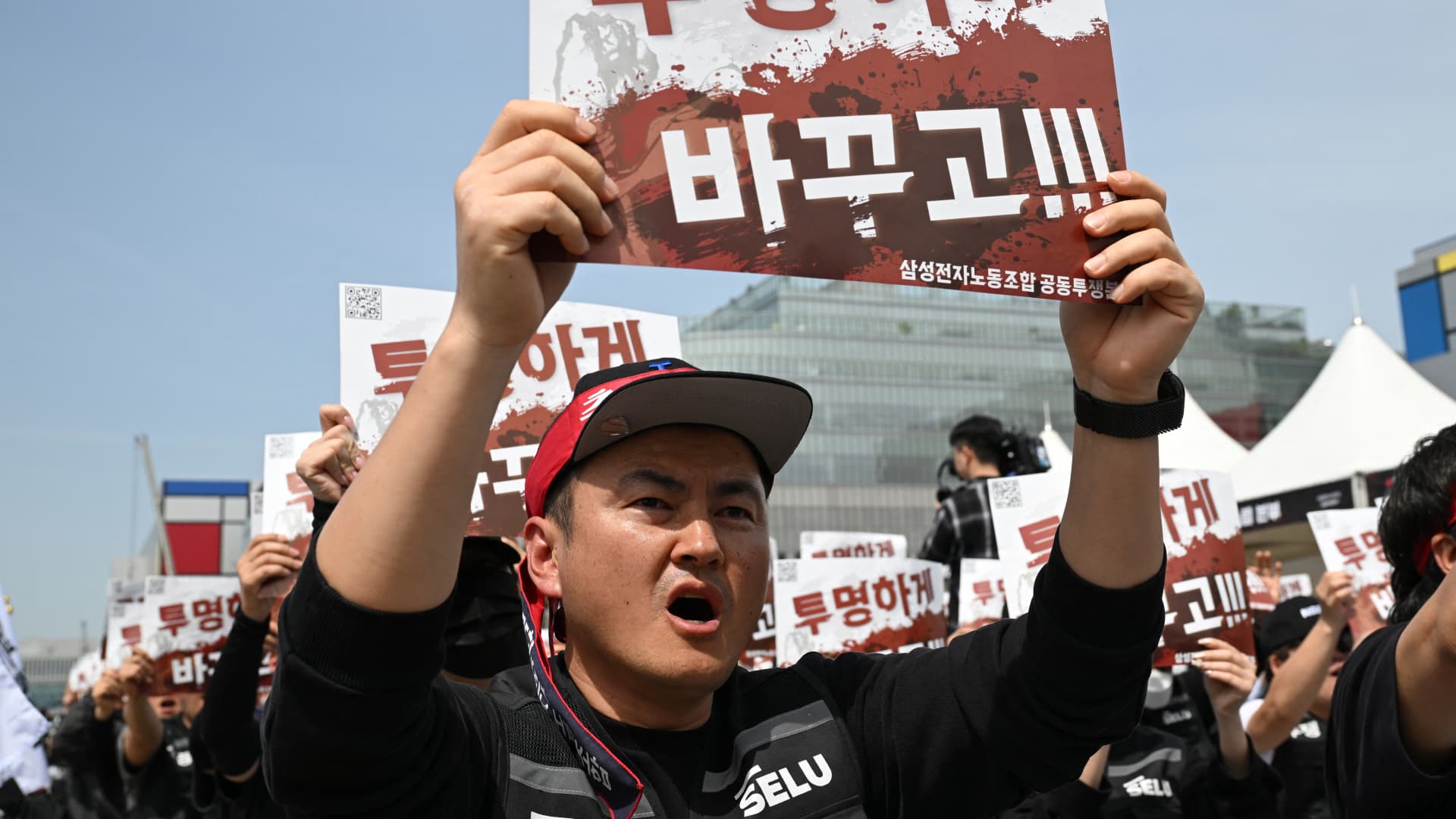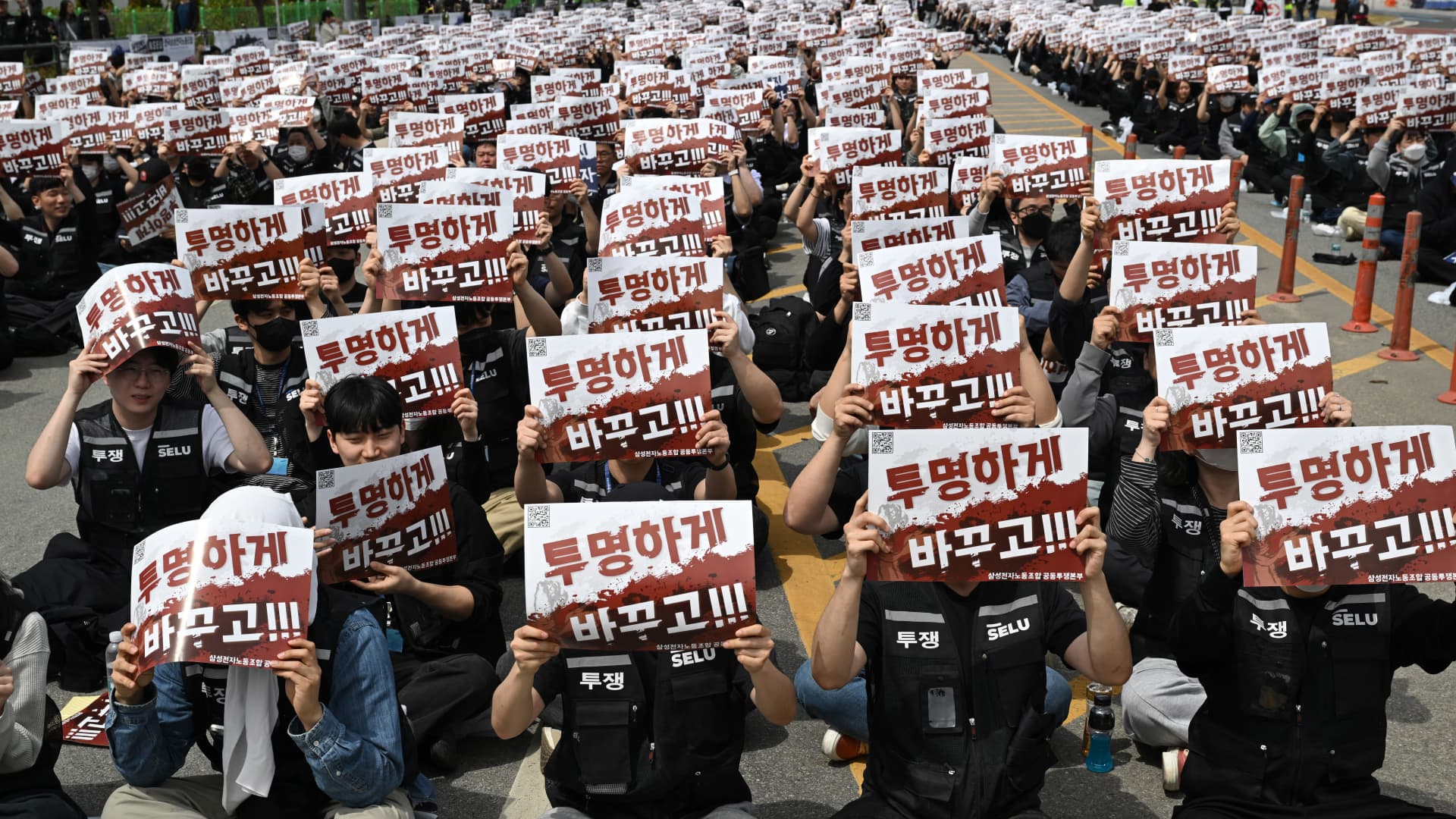
TOPSHOT - Members of the Samsung Electronics labour union hold signs reading "Change it to be transparent!" as they stage a mass rally demanding the removal of a cap on performance bonuses, outside the company's foundry and semiconductor factory in Pyeongtaek on April 23, 2026. (Photo by Jung Yeon-je / AFP via Getty Images)Jung Yeon-je | Afp | Getty ImagesA strike involving more than 47,000 Samsung Electronics workers will begin on Thursday after wage negotiations between the company and its union broke down, sending shares of the South Korean chip giant down 3%.The union had agreed to the mediation proposal from South Korea's National Labor Relations Commission, but Samsung Electronics rejected it, the government body said.Choi Seung-ho, the spokesperson for the labor union, said in a statement Wednesday that Samsung had requested more time for negotiations.However, the company said on Wednesday at 11 a.m. local time that "no decision has been made," Choi said, leading to the impasse."We express deep regret that the post-mediation process was terminated due to the delay in management's decision-making," Choi added, stating the union will still continue efforts to reach a settlement even during the strike.Samsung Electronics said the talks fell through as "accepting the labor union's excessive demands as they are could undermine the fundamental principles of company management," according to a company statement published by South Korean media outlet MoneyToday. However, Samsung also said that it "will not give up on dialogue until the last moment," and insisted that "there must be no strikes under any circumstances."watch nowThe union's walkout is likely to be limited, after a South Korean court had previously ordered that the strike not interfere with safety protection facilities or obstruct work, to prevent damage to facilities and semiconductor wafers.The union's demands centered on Samsung's performance-based bonus system. It is seeking performance bonuses equivalent to 15% of Samsung's operating profit, the removal of bonus payout caps, and a formalized bonus structure, among other measures.South Korean government officials, including President Lee Jae Myung and Prime Minister Kim Min-seok, had urged both sides to reach an agreement in the days leading up to the strike. Kim had reportedly signaled that the government may use emergency measures to stop the strike if it went ahead. Under South Korean law, the labor minister can invoke an "emergency adjustment" to suspend industrial action for 30 days if a dispute is deemed likely to harm the economy or daily life.This is breaking news, please check back for updates.
Over 47,000 Samsung Electronics workers set to strike as wage talks break down, sending shares lower
More than 47,000 Samsung Electronics workers will begin a strike on Thursday after wage negotiations between the company and its union broke down.
412 words~2 min read