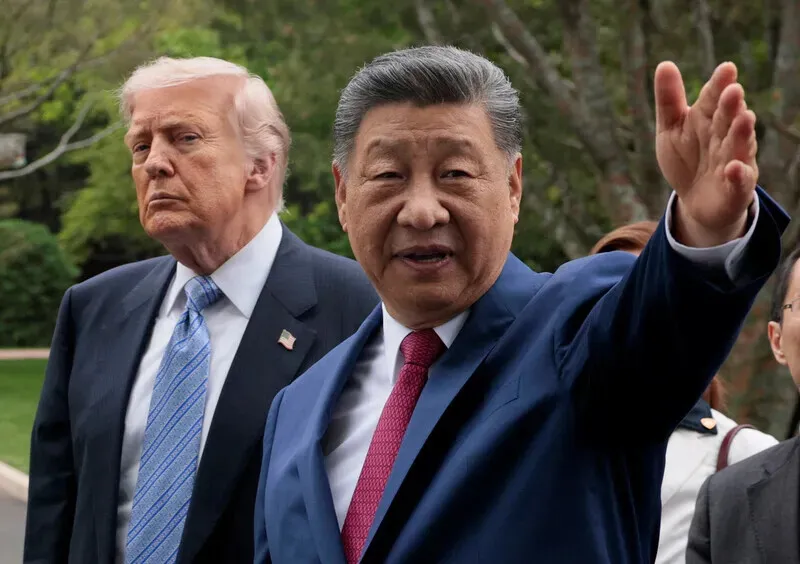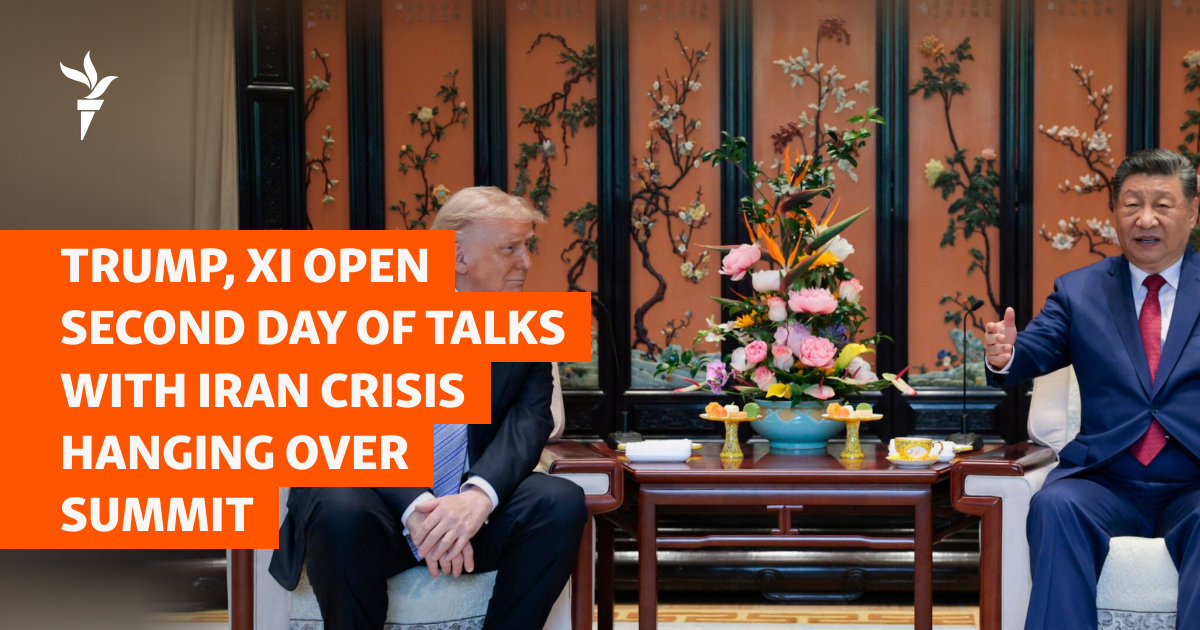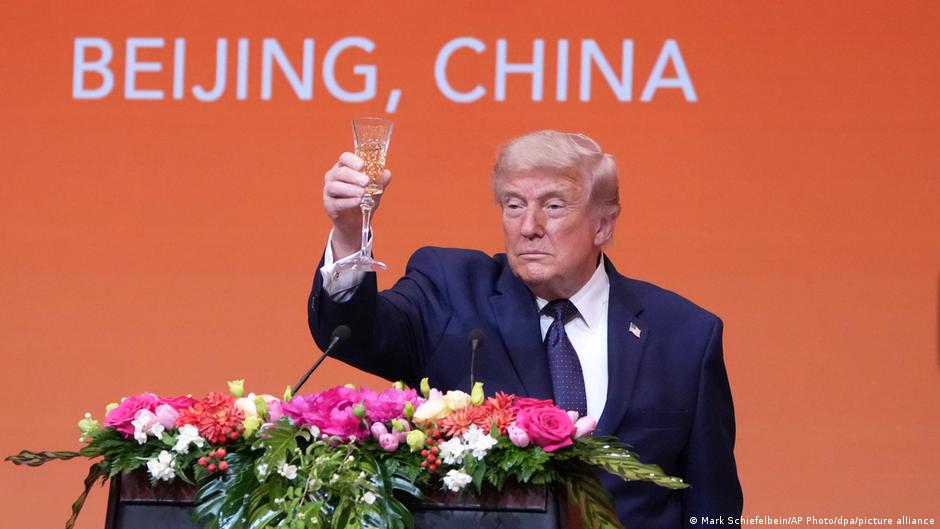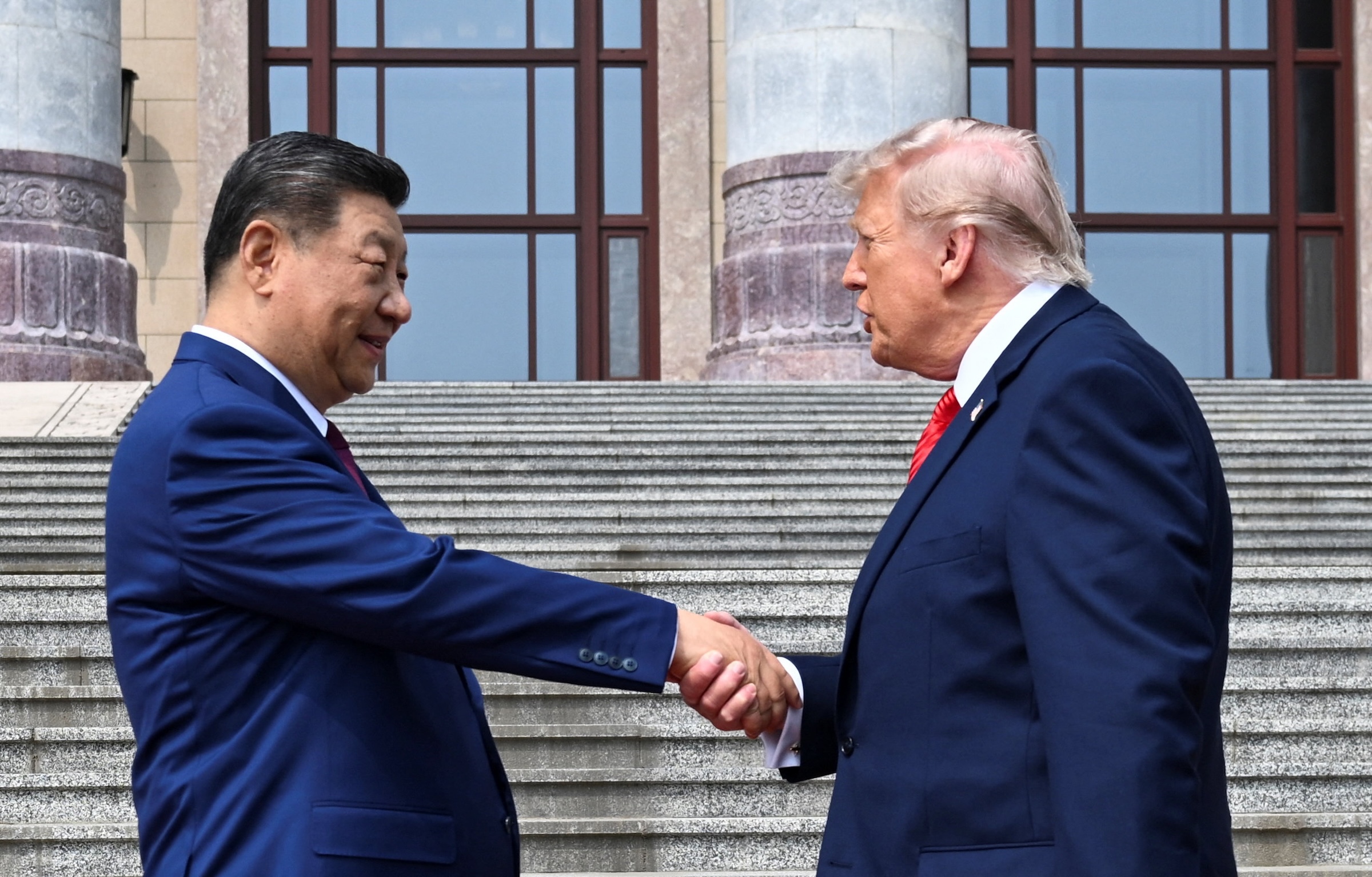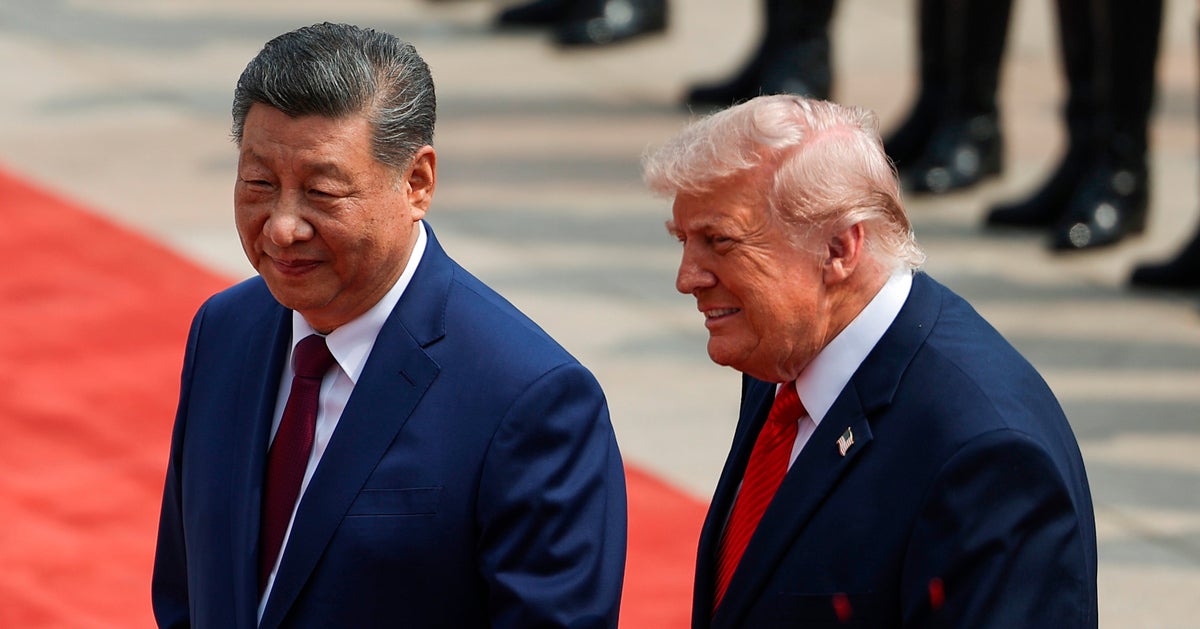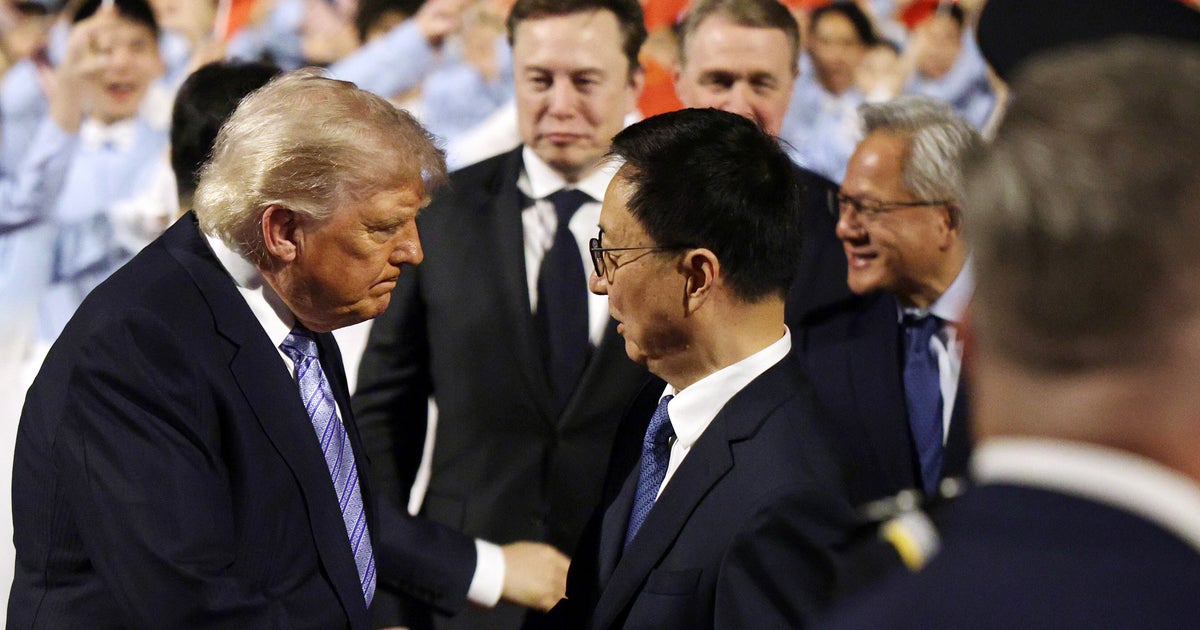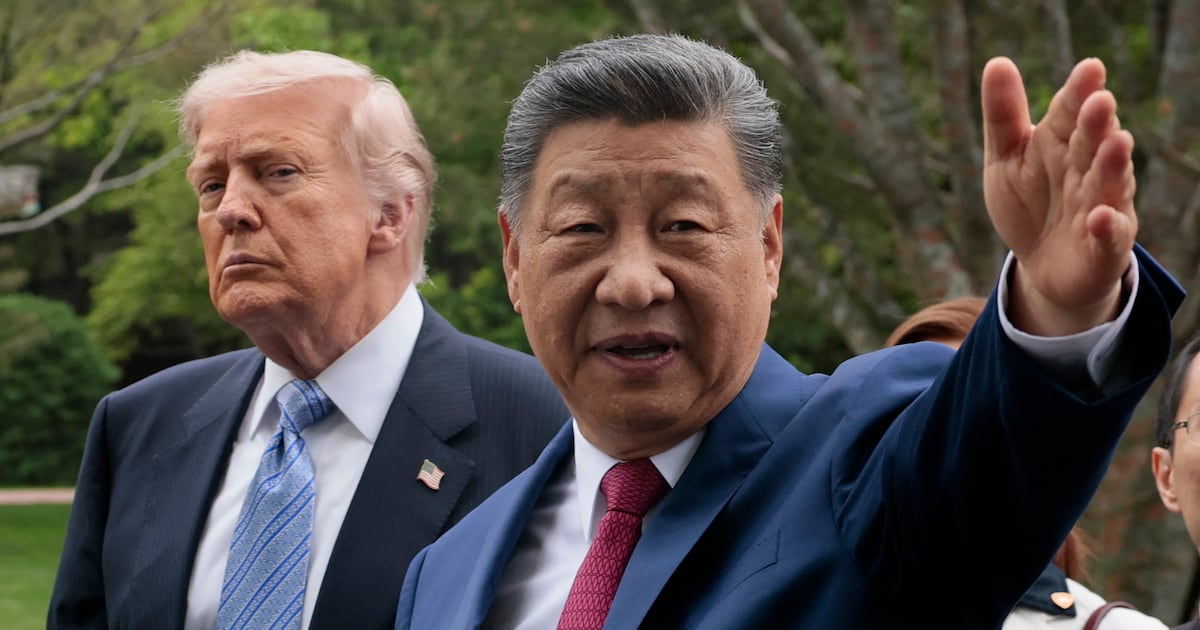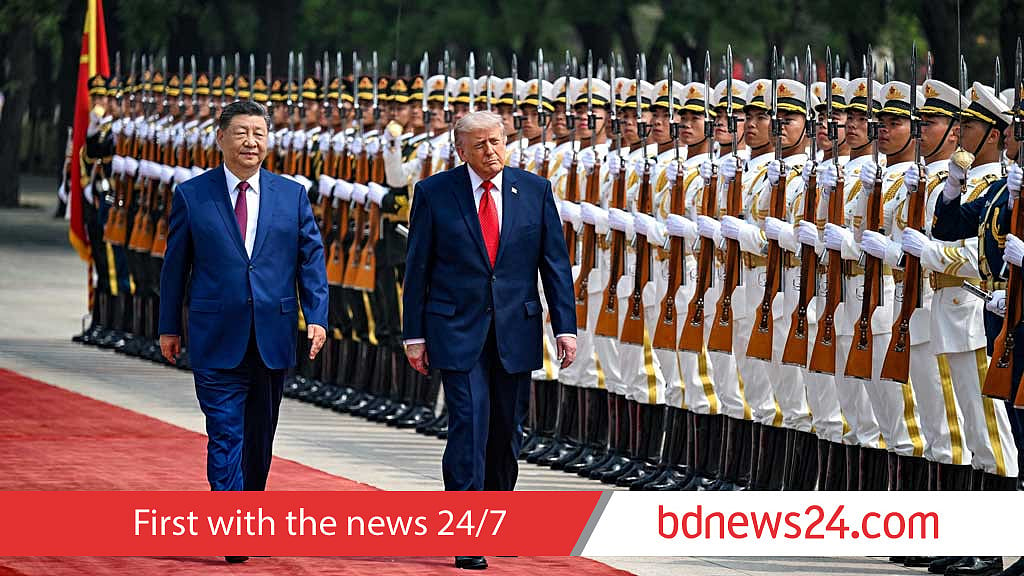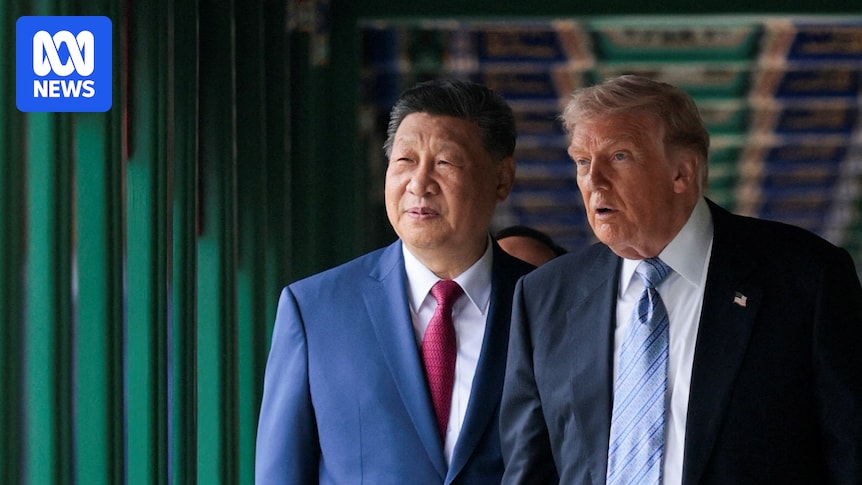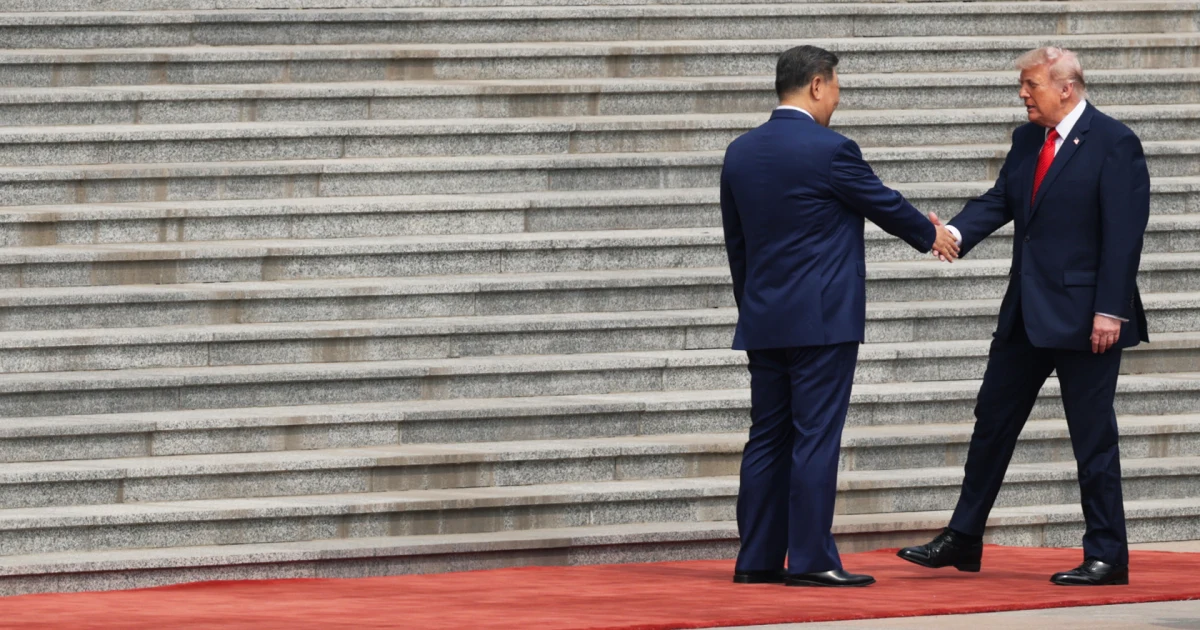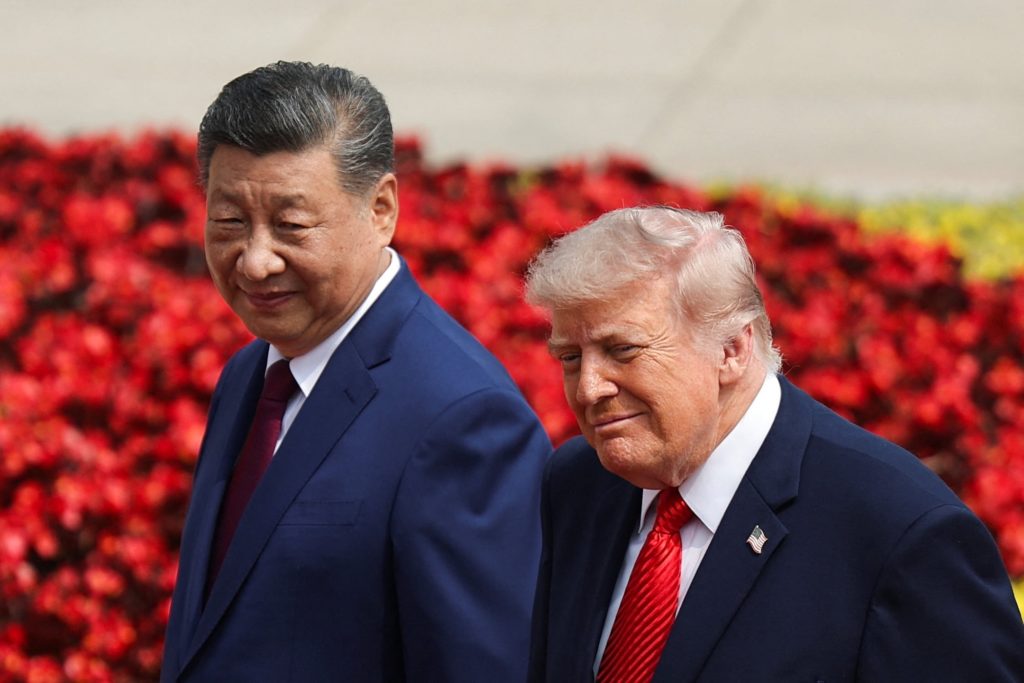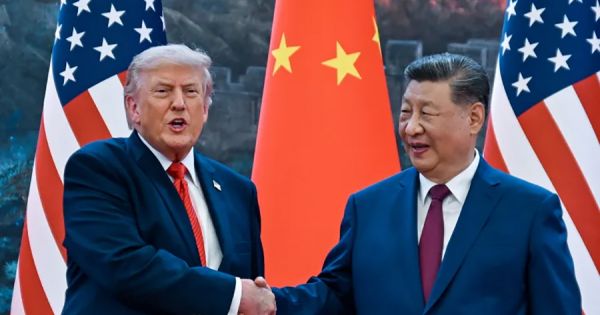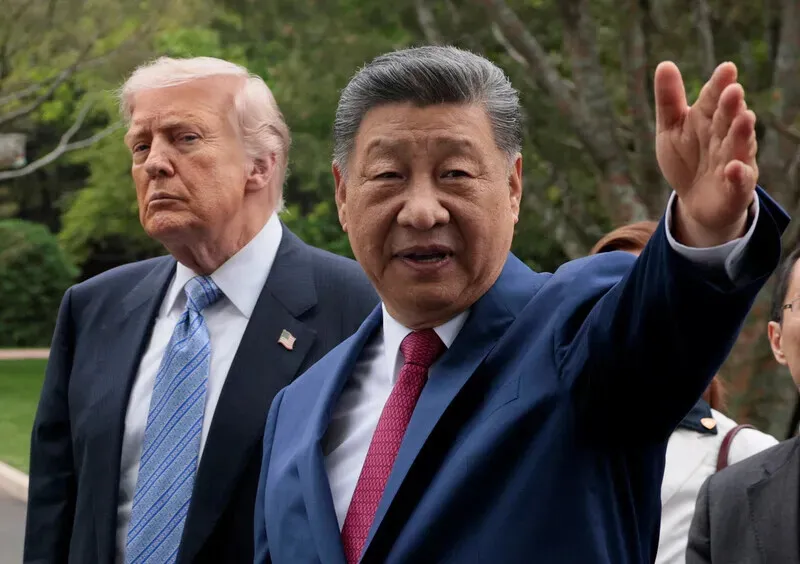
President Xi Jinping of China and President Donald Trump of the United States pay a visit to the garden in the Zhongnanhai leadership compound in Beijing, China, on May 15, 2026. (Reuters/Yonhap)
By Jung E-gil, senior international affairs writerChina said that US President Donald Trump had agreed to form a “constructive China-US relationship of strategic stability” during his recent visit to China.The exact phrase did not appear in materials initially released by the White House. But in an interview with NBC, US Secretary of State Marco Rubio said that “one of the things the Chinese emphasize, which we agree [on], is strategic stability in our relationship, a constructive relationship [. . .] so that we don’t have misunderstandings that could lead to broader conflict.”After coming to power in 2012, Chinese President Xi Jinping asked the US to agree to “a new model of great power relations.” That amounted to a request to recognize the US and China as being major powers of equal standing.Xi tried to sell this idea to then US President Barack Obama, remarking after a summit in 2013 that “the vast Pacific Ocean has enough space for two large countries like the United States and China.”But the US dismissed that idea, which it took as an offer to divide the Pacific region into two separate spheres of influence.Samuel Locklear III, the commander of US Pacific Command, opposed the idea of placing East Asia under the Chinese sphere of influence, which he said would amount to selling out American allies such as Korea, Japan and the Philippines.China’s new model for great power relations includes language about “mutual respect for core interests,” which, for China, includes Taiwan, Tibet, Xinjiang and the South China Sea. US acquiescence would effectively mean forfeiting the ability to contest Chinese actions in the region.Obama ignored China’s proposal for a new relational model. In his first term, Trump put China on the defensive with “decoupling,” the attempt to lock China out of global supply chains.The Biden administration toned down the language about “decoupling” with the term “derisking.” But it also rejected China’s framing by describing its own China strategy with the phrase “invest, align and compete.”According to China’s state-run Xinhua News, Xi defined “constructive strategic stability” as including “moderate competition” and “manageable differences.”Xi told Trump that Taiwanese independence is incompatible with peace in the Taiwan Strait and warned that the Taiwan issue, as the “most important issue in China-US relations,” could lead to great danger if improperly handled.In effect, Xi is representing Taiwan as a variable that could damage “constructive strategic stability” between China and the US. If the US wants peace, in other words, it must accept China’s position on the Taiwan question. And Trump accepted that to avoid “misunderstandings that could lead to broader conflict,” as Rubio put it.Thus, the “new model of great power relations” that the US had rejected for over a decade was realized, at least in part, under the new name of “constructive strategic stability” in Trump’s summit in Beijing.The US’ acceptance of China’s red line on the Taiwan issue is tantamount to recognizing China’s superiority in the western Pacific. But the US has little choice on that point, as demonstrated by its war against Iran.According to an analysis by The Washington Post, American military bases in the Middle East have sustained at least 228 strikes during the war against Iran. It’s doubtful whether those bases can be rebuilt and restored to normal operations.The US burned through 30%-80% of its cutting-edge precision-guided weapons, a critical element of its arsenal, in five weeks of hostilities. Military analysts expect it will take the US six years to restock those weapons.Only the US is capable of projecting military power across an ocean — indeed, that is central to the superiority of American arms.Strategic attempts to prevent the US military from operating in a given area are known as anti-access/area denial (A2/AD). Even Iran has proven successful in its A2/AD efforts against the US.That raises serious doubts about whether the US could overpower A2/AD operations by the Chinese military, which is far superior to that of Iran, if an armed conflict were to break out in Taiwan.John Culver, a former CIA analyst on China and a global authority on the Chinese military, discussed the Taiwan situation in a conversation with Washington Post columnist Max Boot in the newspaper’s May 11 edition.“I think some of the thinking in the Pentagon,” Culver said, “is that when we think there’s going to be a war, we need to get our high-value naval assets out of the theater, and then we would have to fight our way back in. From where, it’s not clear. Guam is no bastion either.”Culver’s remarks suggest that the US would have to beat a quick retreat from East Asia if a conflict erupted.The fact that most American bases in the Middle East have been battered in the war with Iran suggests that US bases in East Asia — including those in Korea, Japan, Okinawa, the Philippines and Guam — would all be vulnerable to attack from China.Trump’s platform of “America first” has ended up being a disastrous descent to “America last.”Trump’s arm-twisting of US allies, his threats about annexing territory, his indiscriminate tariff campaign against countries around the world, and his use of military force in violation of international law — including his capture of Venezuelan President Nicolás Maduro and his war against Iran — are all consequences of Trump’s “America first” policy.Please direct questions or comments to [english@hani.co.kr]