Why Enterprise Security Is Different
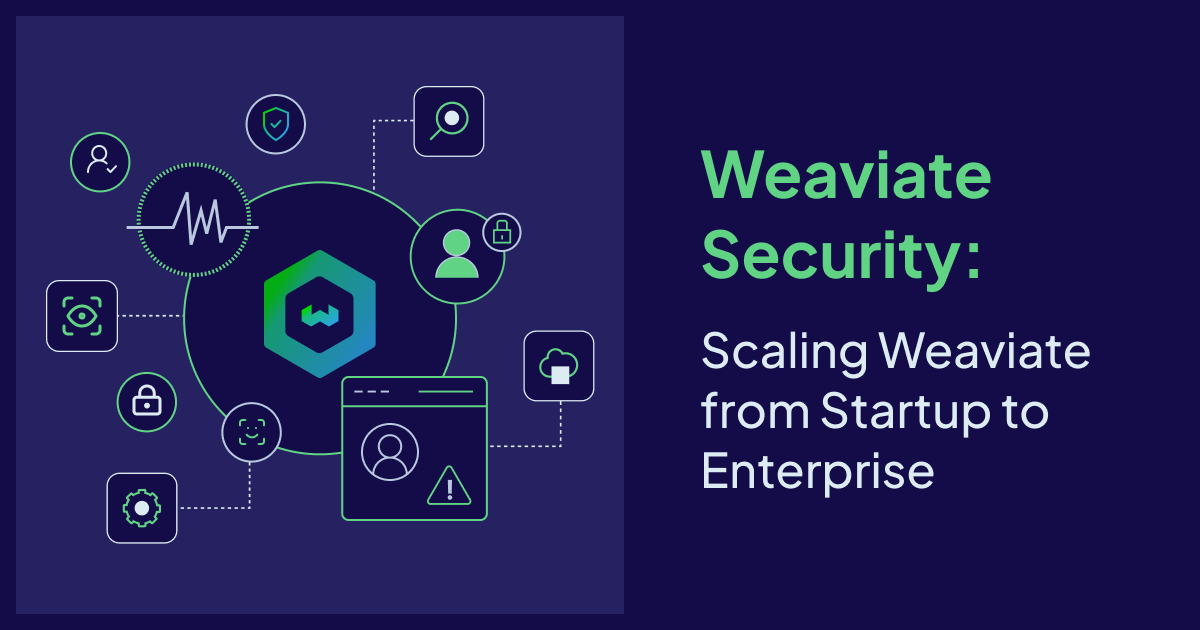
Our introductory guide to Weaviate security covered the fundamentals — API keys, OIDC basics, and role-based access control. Those building blocks get you far, but enterprise environments bring a different set of challenges: hundreds of users across multiple teams, regulatory compliance (GDPR, HIPAA, SOC 2, PCI DSS, FedRAMP), and the expectation that your vector database integrates with the identity infrastructure you've already invested in.
To make this concrete, we'll follow MedVector Health — a fictional health-tech company that built an AI-powered clinical search tool on Weaviate. Early on, five engineers shared two API keys. It worked fine. Then they onboarded their first hospital client, hired 40 more people, and got a call from their compliance team: a HIPAA audit was six months out. Their two original API keys had quietly become twelve, spread across Slack messages and .env files. When a contractor's engagement ended, nobody was sure which keys they'd had access to.
What follows is how MedVector went from startup security to enterprise-grade — and how each layer they added answered a specific question their security auditors would eventually ask.