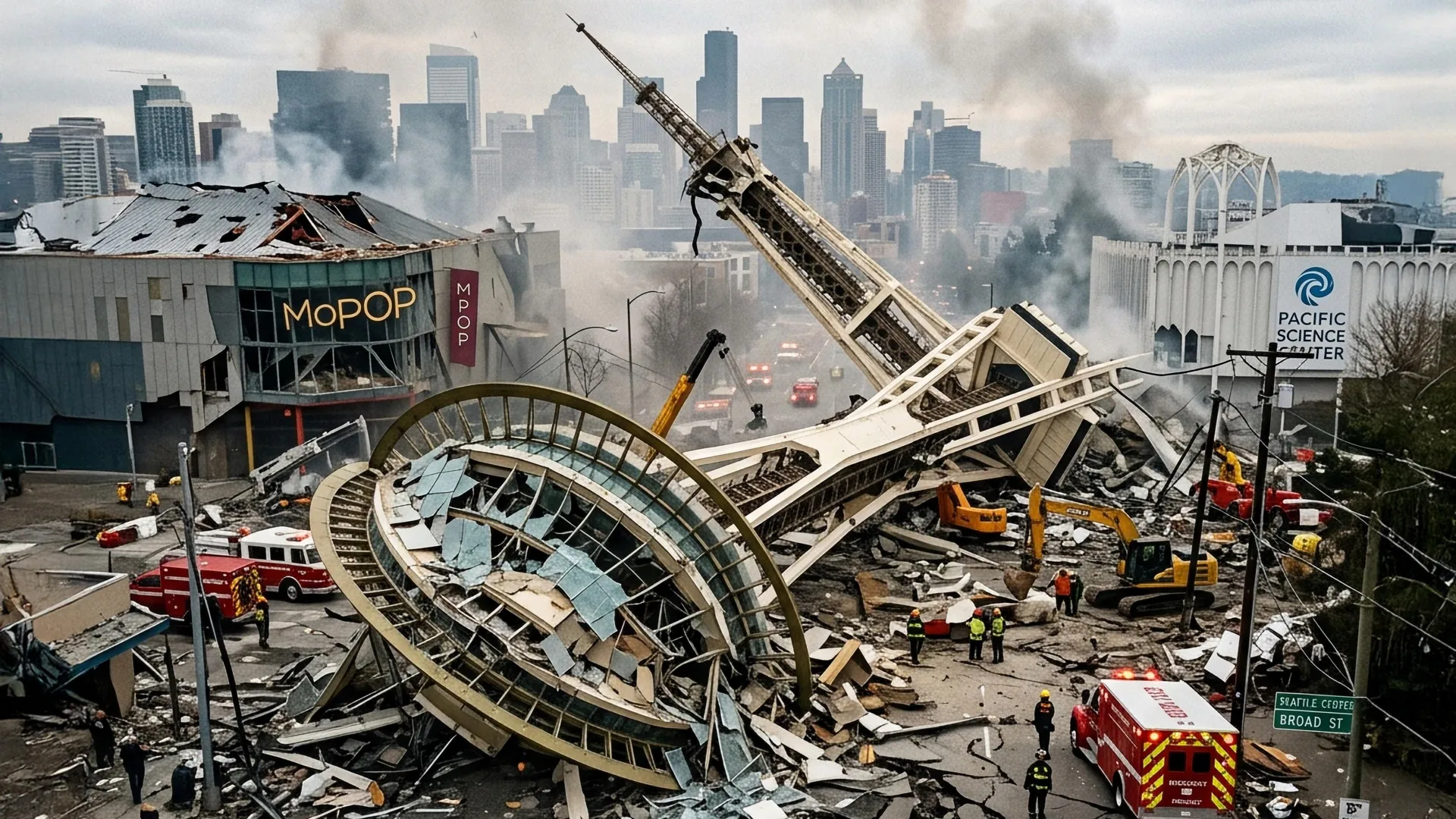
Seattle is best known for the earthquake danger posed by the massive Cascadia subduction zone offshore. But researchers say another threat lies much closer to the city itself. A new study published in GSA Bulletin examines a complicated system of faults running directly beneath Seattle and nearby communities, revealing that smaller faults in the region may be far more active than previously understood.
"My job as a paleoseismologist," says Dr. Stephen Angster, a research geologist at the U.S. Geological Survey's Earthquake Science Center in Seattle and lead author of the new study, "is to figure out when and how often these local faults rupture, which would help us predict roughly when we come in the window of the next potential rupture."
Hidden Faults Beneath Seattle
The research centers on the Seattle Fault Zone (SFZ), an east to west fault system that stretches through Bainbridge Island and Seattle. Scientists have long known that the main Seattle fault produces major earthquakes only over very long periods, typically more than 5,000 years apart. More recently, however, geologists have identified a number of smaller secondary faults connected to the system.
These shorter faults are not usually included in national earthquake hazard calculations because they are considered too small to produce very large earthquakes. Angster says that may overlook an important source of danger.