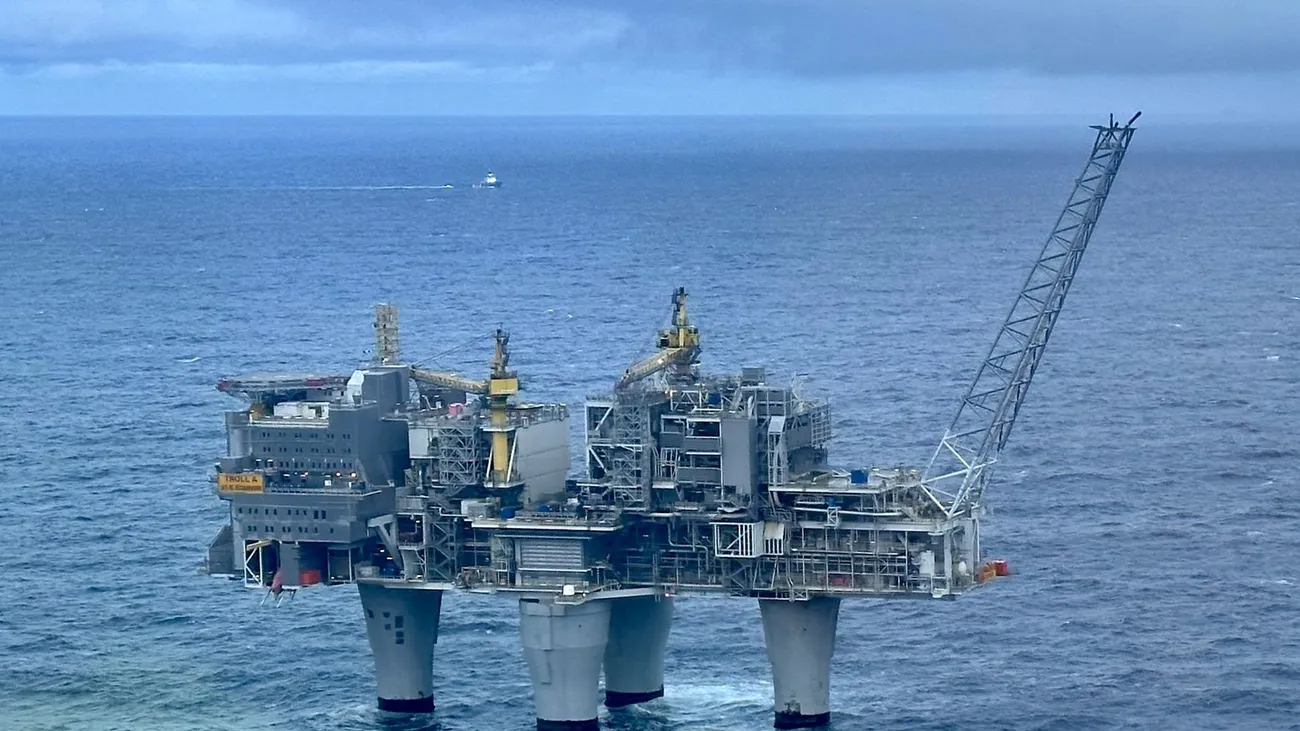
Europe’s post-Russian energy system is increasingly being built around Norwegian gas.As the continent continues adapting to the fallout from Russia’s invasion of Ukraine, Norwegian natural gas has emerged as one of the region’s most strategically valuable energy supplies—offering political stability, lower emissions, and direct pipeline access at a time when reliability now matters as much as price.Equinor has signed a new five-year natural gas supply agreement with Dutch energy company Eneco reinforcing Norway’s growing dominance in the post-Russian European gas market.Under the agreement, Equinor will deliver approximately 2.2 terawatt-hours of natural gas annually—equivalent to around 0.2 billion cubic meters per year, or roughly 1.2 million barrels of oil equivalent annually—from the Norwegian continental shelf to Eneco’s German subsidiary, LichtBlick. Deliveries began in April 2026 and will continue through the end of 2030.The volumes themselves are relatively modest. The strategic signal behind the agreement is not.With benchmark European TTF gas prices remaining well above pre-crisis averages and volatility returning to energy markets in 2026, utilities are increasingly prioritizing long-term supply agreements with nearby and politically stable producers over exposure to unpredictable spot markets. Tighter storage levels, LNG market uncertainty, and renewed geopolitical tensions have once again exposed the fragility of Europe’s energy balance.The return of long-term contracting also suggests buyers are no longer confident that global LNG markets alone can guarantee supply security.Since Russian pipeline gas flows to the continent collapsed following Moscow’s invasion of Ukraine, governments and utilities have been forced into a brutal reassessment of what matters most in energy markets.Europe no longer wants the cheapest gas. It wants the safest gas.That shift has dramatically strengthened Norway’s position.While European buyers rushed to secure LNG cargoes from the United States and Qatar after 2022, Norwegian pipeline gas retained major structural advantages.Shorter transportation distances, lower transport-related emissions, and direct pipeline integration made Norwegian gas both cheaper to move and easier to scale. Just as importantly, Norwegian supply avoided many of the shipping bottlenecks and logistical risks tied to the increasingly competitive global LNG market.Norway suddenly had exactly what Europe lacked: stable nearby gas.At the same time, production from the Norwegian continental shelf remains among the lowest-emitting upstream gas supplies globally, supported by offshore electrification projects and efficiency improvements across the value chain.Equinor said the gas supplied under the agreement carries lower greenhouse gas intensity than alternative sources feeding into the German grid. According to LichtBlick, the Norwegian gas under the contract has roughly 9% lower greenhouse gas intensity compared to alternative supply options.As part of the agreement, Eneco will also purchase guarantees of origin—referred to as “sustainability qualities”—through the Attributes SAS platform allowing independent tracking and verification of emissions data associated with the supplied gas.“Norwegian gas plays an important role in supporting Europe’s energy security while also contributing to lower emissions compared with other gas sources,” said Helle Ø. Kristiansen, senior vice president for Gas & Power at Equinor.The agreement also highlights a broader reality developing across Europe’s energy system: despite aggressive renewable expansion targets, the continent still needs enormous volumes of natural gas to maintain grid stability, industrial activity, and winter supply security.For Germany in particular, the post-Ukraine energy era has forced a pragmatic shift away from idealism toward resilience. Berlin may still publicly champion rapid decarbonization, but buyers continue locking in long-term gas contracts because intermittent renewables alone cannot yet guarantee industrial-scale energy security.“As long as gas is still needed, we are taking targeted measures to reduce emissions as much as possible,” said Jonas Beck, director of Green Energy Markets at LichtBlick. “At the same time, the contract strengthens our security of supply in geopolitically uncertain times.”The agreement adds to Equinor’s growing portfolio of long-term European gas supply contracts and signals that demand for reliable regional gas is unlikely to disappear anytime soon.Europe learned the hard way that energy security cannot be outsourced.By Jan-Thore Bergsagel for Oilprice.comMore Top Reads From Oilprice.comNigeria Needs New Export Markets as UAE's Exit Rattles OPECGermany Launches Formal Sale Process for UniperIran’s Floating Oil Stockpile Jumps 65% as U.S. Naval Blockade Bites
Equinor and Eneco Sign New Long-Term Gas Supply Deal | OilPrice.com
Equinor has signed a new five-year natural gas supply agreement with Dutch energy company Eneco reinforcing Norway’s growing dominance in the post-Russian European gas market.
667 words~3 min read