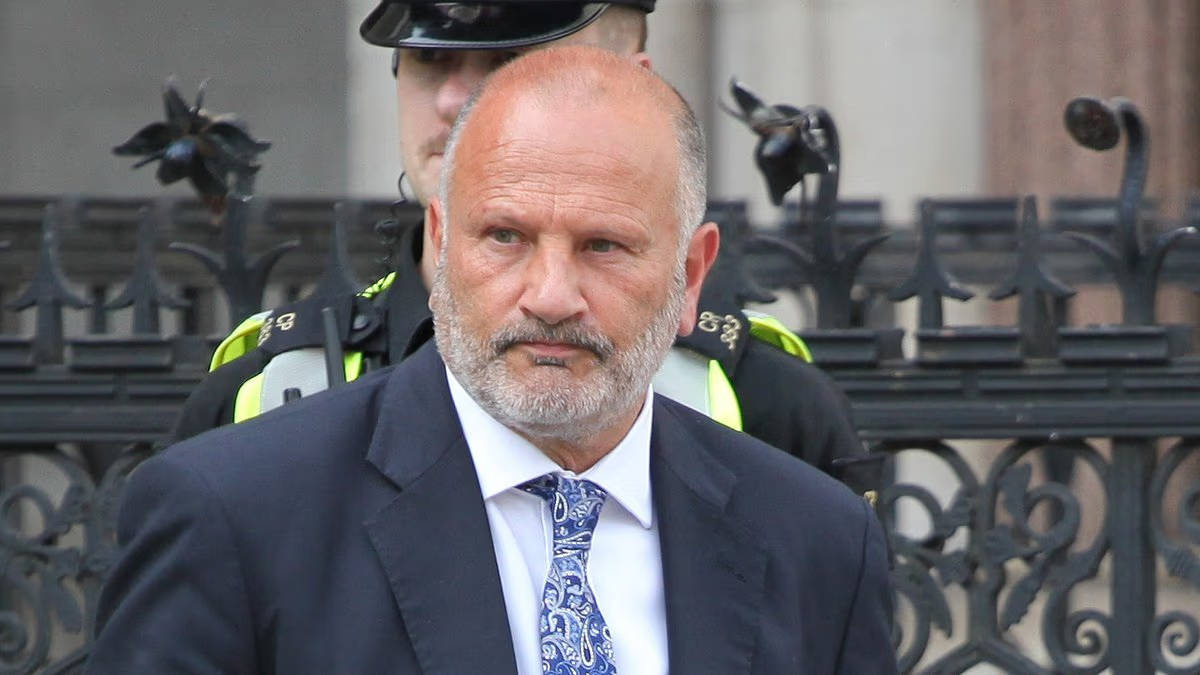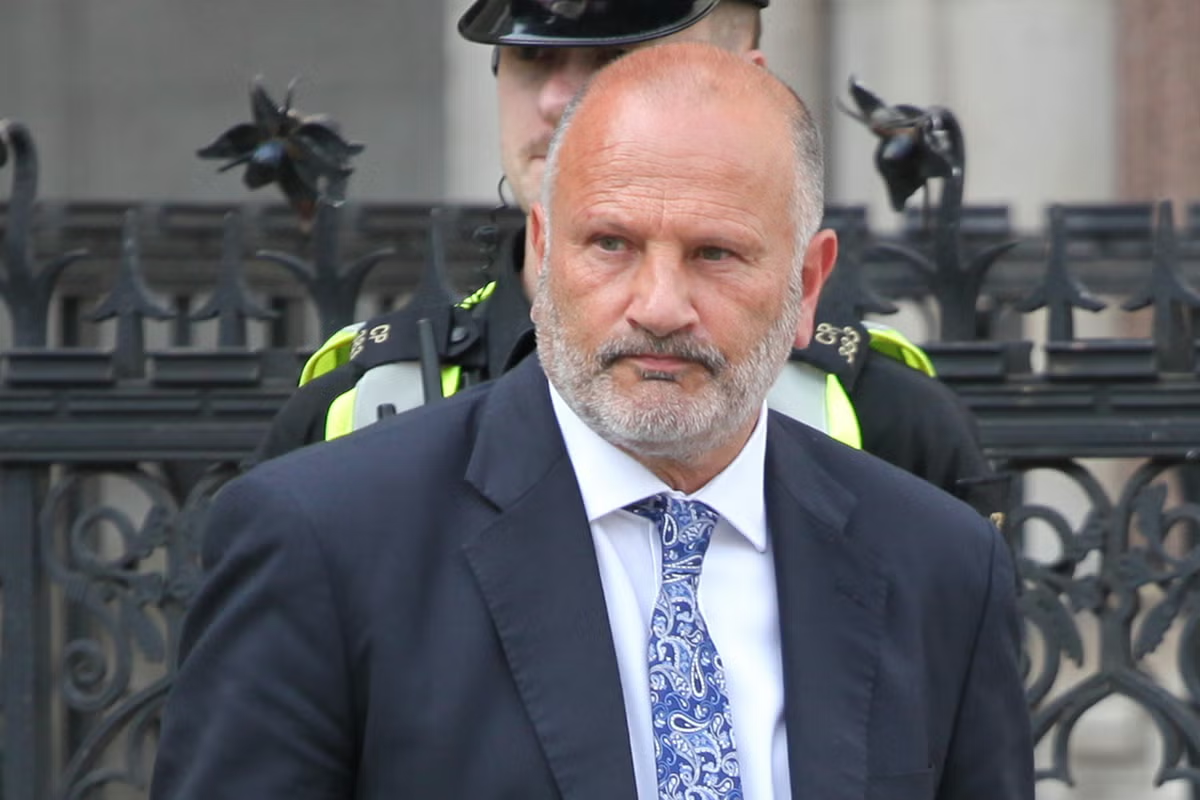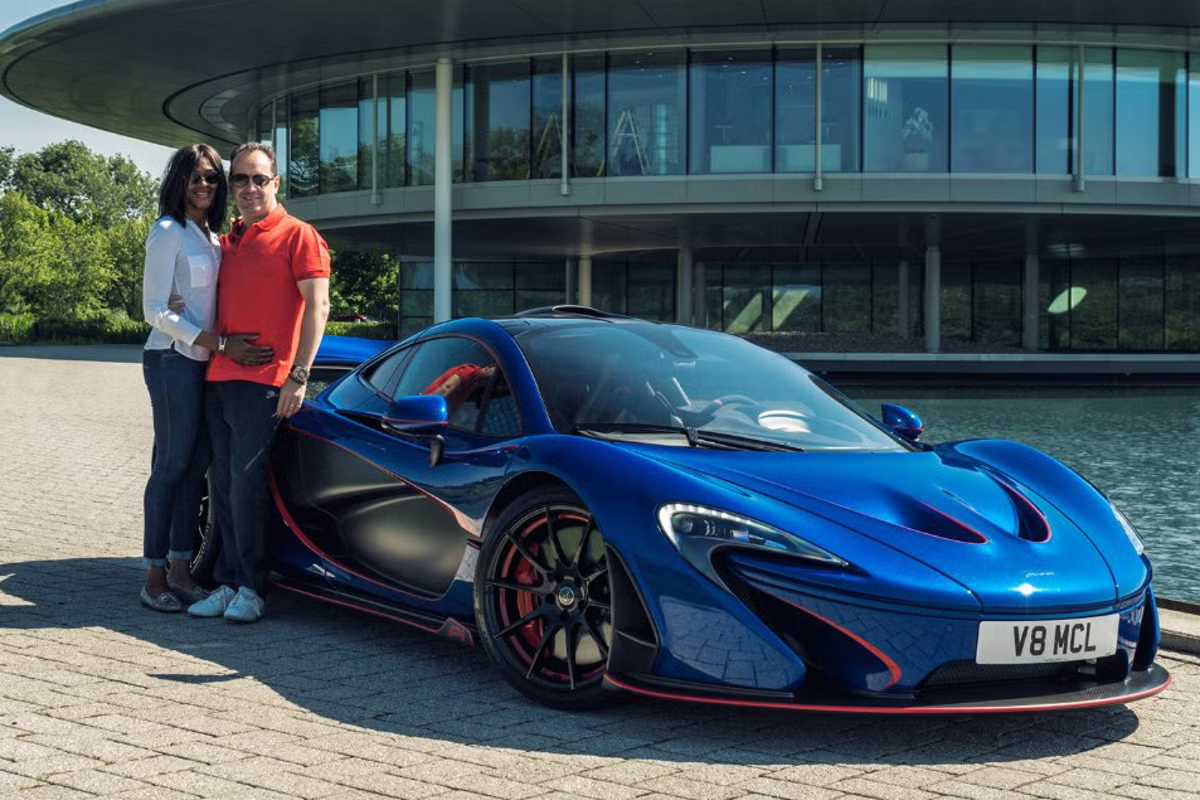
A millionaire property developer who sued for more than £2 million after his limited edition McLaren P1 burst into flames has had his case thrown out by a judge.David Kyte sustained head and face burns after the car, which he had paid more than £1 million for, caught fire on a road close to Heathrow Airport in October 2017.Mr Kyte, of Kingston-upon-Thames, was able to get to safety, but the 903-horsepower, 217mph car was a "total loss" as it became engulfed in flames.After the fire, Mr Kyte launched a High Court claim for £2.1 million damages from McLaren Automotive Limited and dealers Stratstone Sports Cars Limited.He blamed McLaren, which had rebuilt the car after an earlier accident, and also Stratstone, which had undertaken service, maintenance and repair works on it at various times. But he has been left empty-handed after a High Court judge, Mr Justice Eyre, struck out his claim following an application by the two companies.Giving judgment, the judge said Mr Kyte had failed properly to "particularise" his allegations against McLaren and Stratstone, some of which were "hopelessly vague."The court heard Mr Kyte - who was reported to be worth £45m in 2008 - bought the McLaren P1 Coupe 3.8l V8 sports car from Stratstone in May 2015 for £1.029m, but claimed that by the time it was destroyed it was worth £2.1m.Multimillionaire property developer David Kyte sustained head and face burns after the car caught fire (Champion News)The P1 features a 3.8-litre twin-turbo V8, paired with an electric motor, producing a combined 903 horsepower, allowing it to accelerate from zero to 60mph in only 2.8 seconds.Following an earlier accident in June 2015, Mr Kyte had engaged McLaren to rebuild the vehicle, creating what he said was to be essentially a "new" car.Stratstone thereafter performed maintenance and servicing work on several occasions.However, the car went on to be completely destroyed when it "caught fire when the claimant was driving it on 20th October 2017 and was a total loss," said the judge.Mr Kyte sued both McLaren and Stratstone for the loss, claiming that the fire was probably caused by a leak of flammable fluid or ignition of combustible components within the car, which should not have happened.But before the case could reach trial, the two companies launched applications to have Mr Kyte's case struck out due to deficiencies in the way it had been put.Lawyers for both argued that he had failed to "set out the essential facts needed to constitute a cause of action" and that what was said was "insufficiently clear to enable either defendant to know the case it had to meet."Giving judgment, the judge said that, Mr Kyte needed to have identified a relevant defect and explained how it caused the fire, and to have explained how any act of the two companies had caused that defect."It would have been necessary for the claimant to identify, at the very least, the faults on which he was relying," he said.David Kyte launched a High Court claim for £2.1m damages (PA)He added: "It is not sufficient for the claimant simply to plead a potential cause for the fire."He must go further than that and set out the basis for saying that cause was the consequence of a breach of contract or from negligence on the part of the defendant in question."The alleged breach of contract or negligent act or omission must itself be identified with sufficient particularity. Unless that is done, neither the defendants nor the court will be able properly to identify the issues or to address them."He said a properly put case would require Mr Kyte to "set out with specificity the respects in which the vehicle is said to have been unsafe" after the works in question.Mr Kyte had relied on a legal doctrine which suggests that the fire itself was evidence of negligence and it could only be inferred that one or other of the companies was to blame, he continued.However, he said that did not solve the problem of the "deficiencies" in the way his case was put in the claim documents."It is now two years since these proceedings were begun, just over eight-and-a-half years since the fire, just over nine years since the last of the works performed by Stratstone; and ten-and-a-half years since McLaren ended its work and returned the vehicle to the claimant," he added."In those circumstances, it is too late for the claimant to be given a further opportunity to advance a properly particularised claim."Accordingly, the defendants’ applications succeed and the claim is to be struck out."
Millionaire has £2m claim thrown out after McLaren burst into flames
Supercar-loving tycoon David Kyte sustained head and face burns after the car caught fire in October 2017
760 words~3 min read