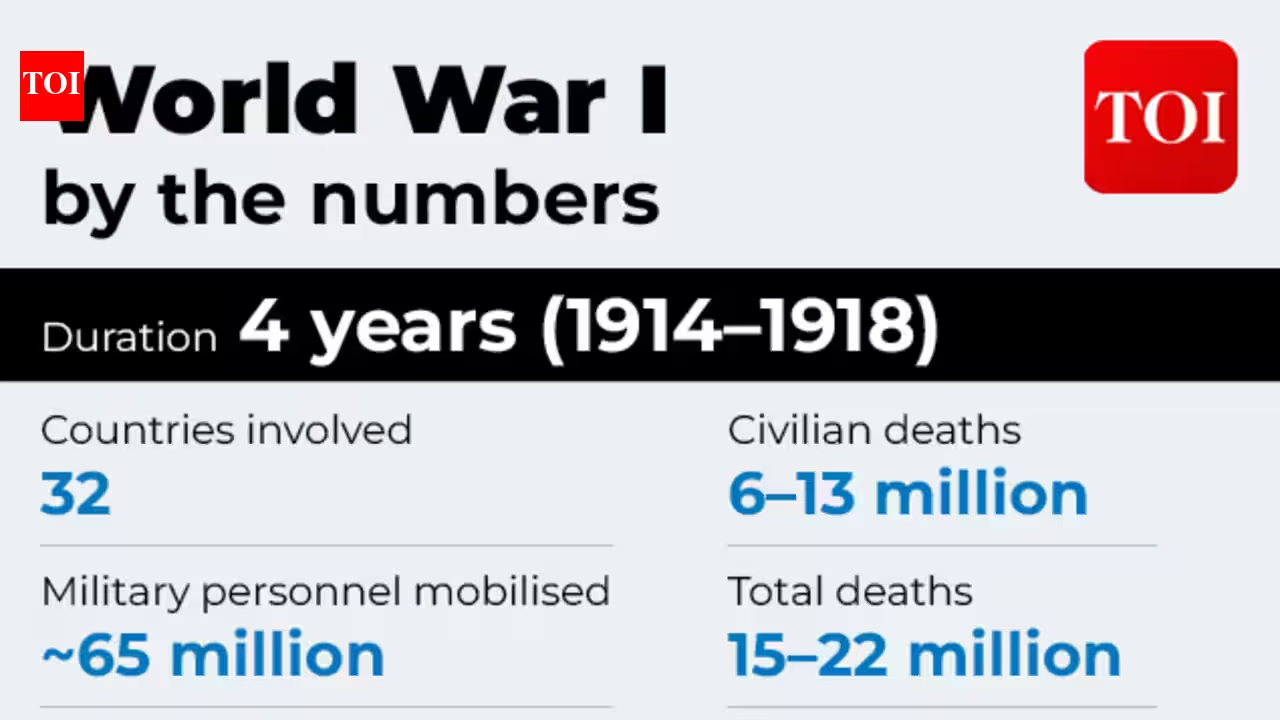
The world’s idea of what constitutes a “world war” has been shaped by two massive wars in the first half of the 20th century. In these two “world wars”, multiple countries were at war with multiple other countries simultaneously. These direct combatants often used resources from non-belligerents (as Great Britain did using Indian soldiers and resources in the two world wars) and both wars ended only when one coalition achieved a comprehensive victory.
Today, where there are two unresolved conflicts going on in Europe (Ukraine-Russia) and West Asia (Iran-US-Israel plus some Gulf countries), we are still not able to call this a “world war” because of the framing that happened in our minds over the 20th century’s two world wars. Or, maybe, we are hesitating to call a spade a spade because of what it implies for our world’s future survival.Technology and the nature of warfare have changed, not only because of drones and missiles, but also because of the role played by satellite-based surveillance and integrated war systems, artificial intelligence and near autonomous fighting forces that involve practically no humans, and conflicts driven as much by data analysis and cyber and information as by tanks, fighter aircraft, submarines and destroyers.