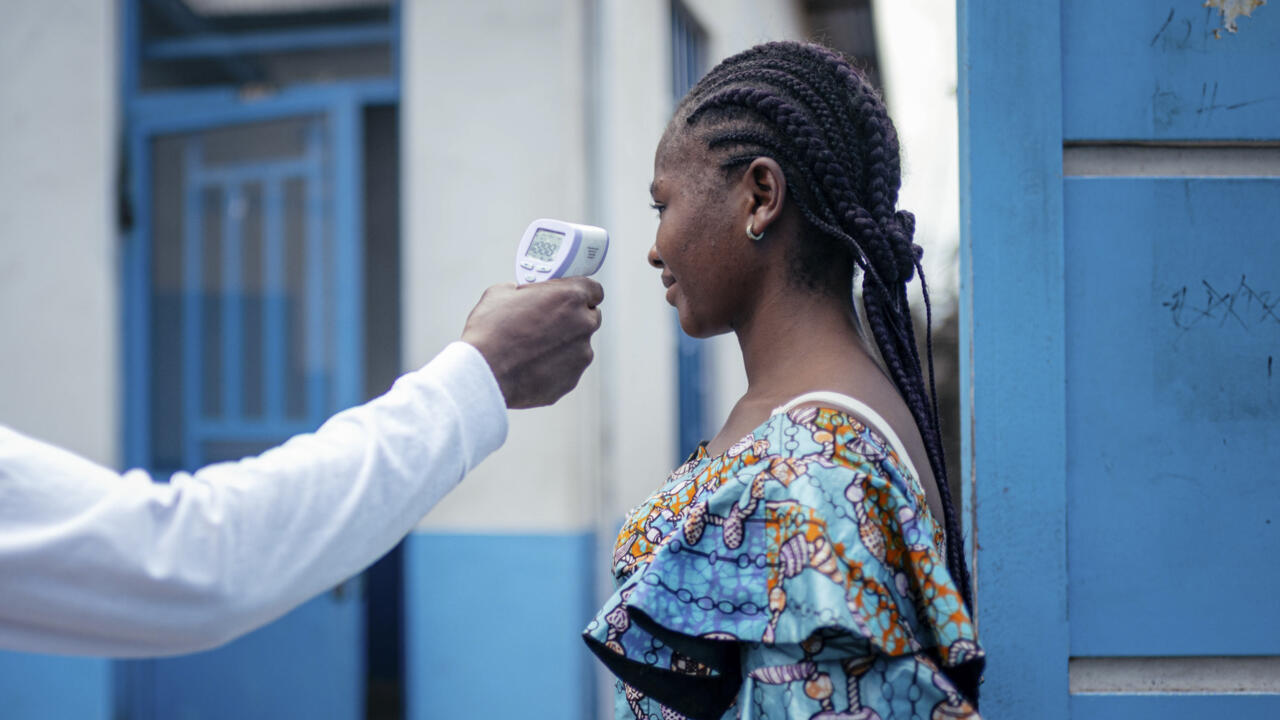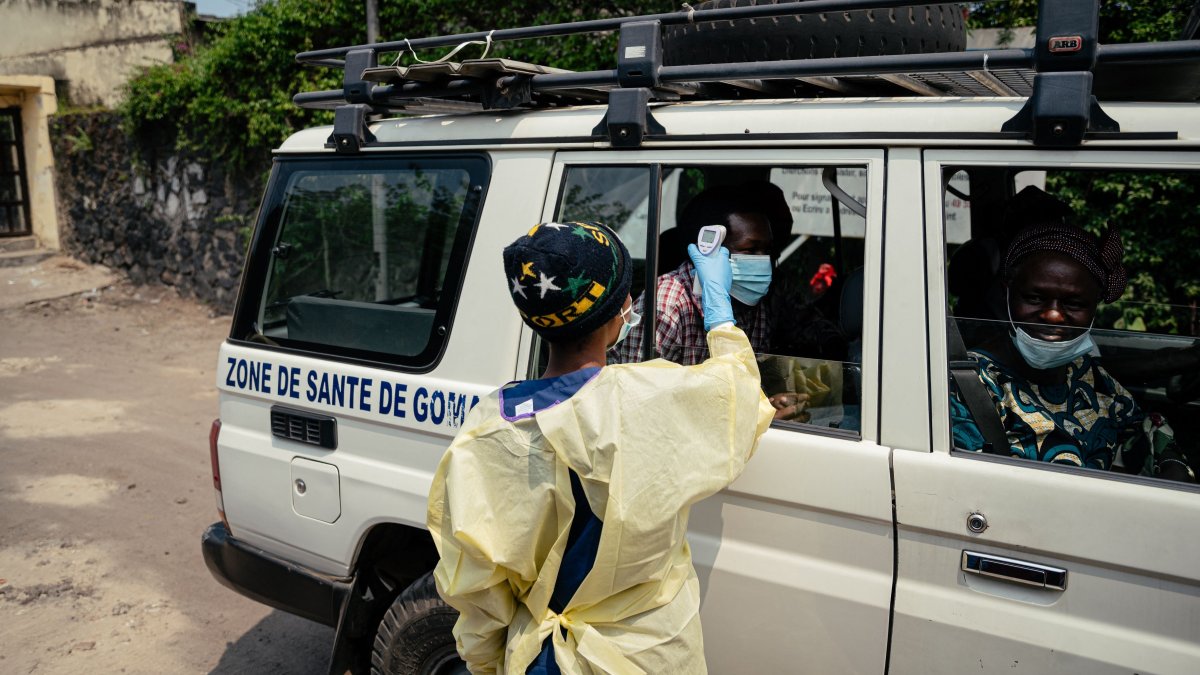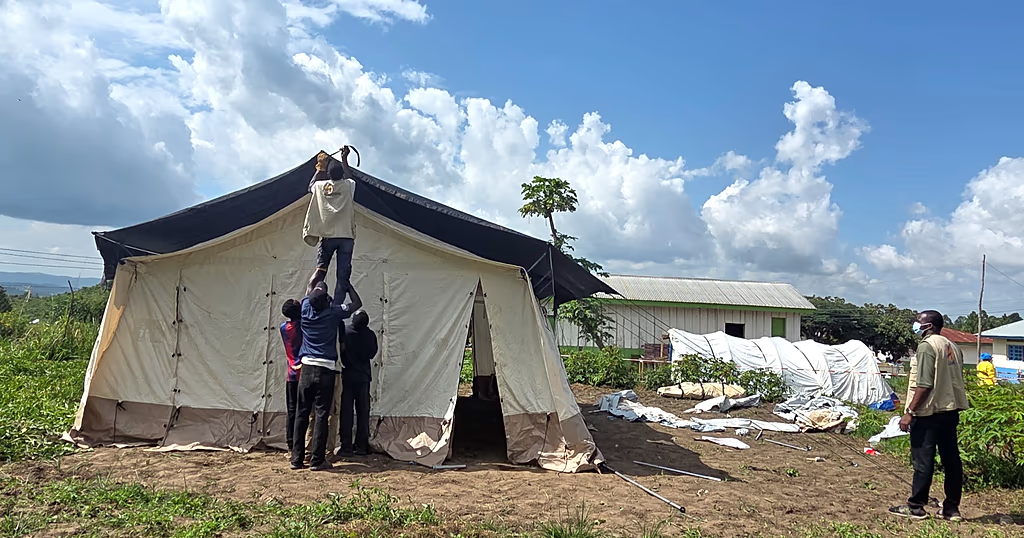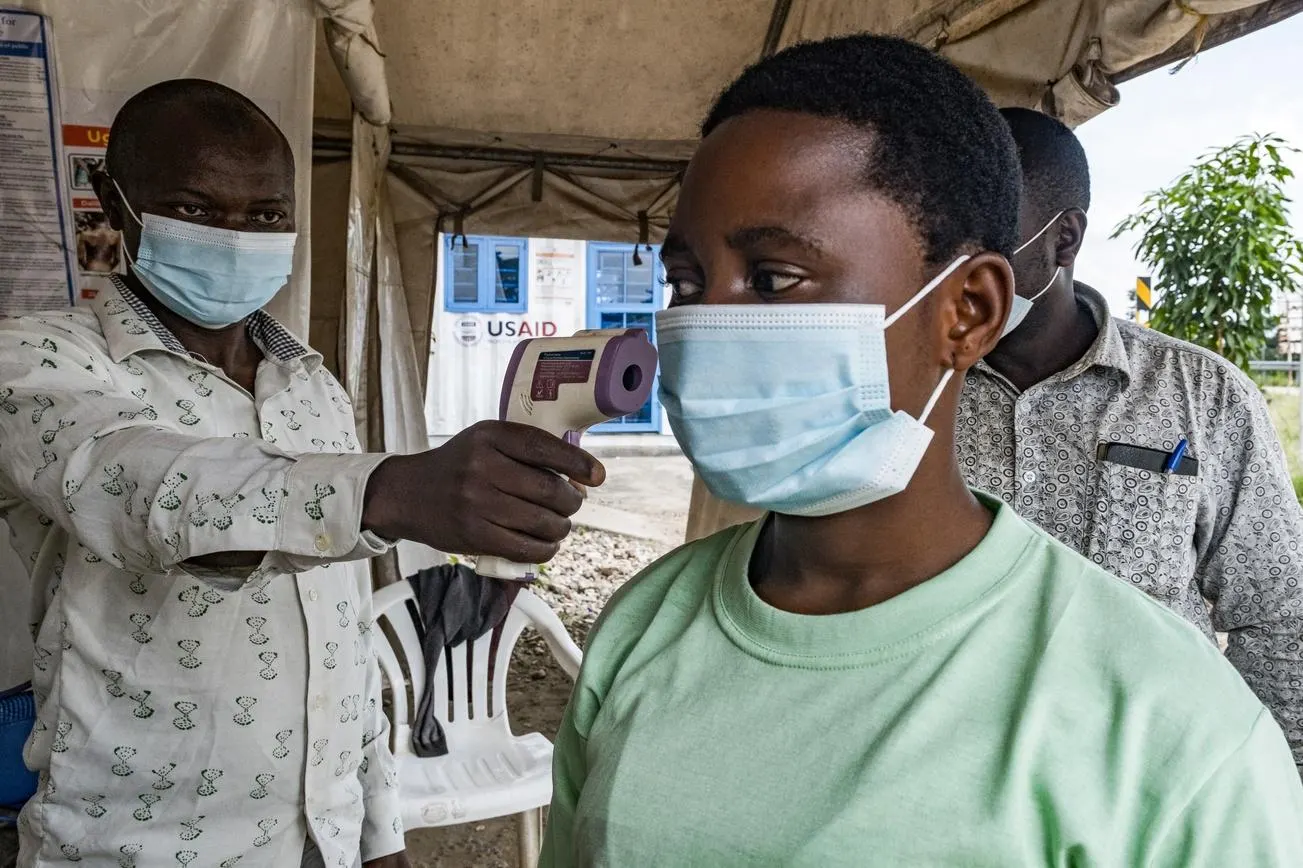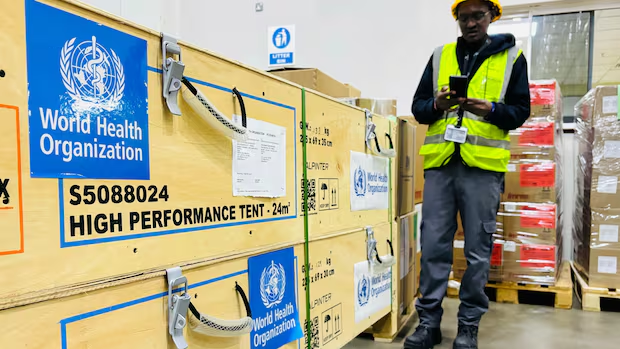
Health·UpdatedAt least 131 deaths and over 500 suspected cases have been reported in the latest Ebola outbreak in eastern Congo, the Congolese health ministry said Tuesday as the World Health Organization's head expressed concern over the "scale and speed of the epidemic."Previous outbreaks of same rare variant have seen fatality rates of over 30%The Associated Press · Posted: May 19, 2026 7:06 AM EDT | Last Updated: 15 minutes agoListen to this articleEstimated 5 minutesThe audio version of this article is generated by AI-based technology. Mispronunciations can occur. We are working with our partners to continually review and improve the results.WHO chief 'deeply concerned' about scale and speed of Ebola epidemic49 minutes ago|Duration 3:21WHO chief Tedros Adhanom Ghebreyesus provided updated numbers on Ebola cases in Congo and Uganda on Tuesday, saying there are more than 500 suspected cases and 130 suspected deaths beyond confirmed cases — with numbers expected to change as field operations scale up.At least 131 deaths and over 500 suspected cases have been reported in the latest Ebola outbreak in eastern Congo, the Congolese Health Ministry said Tuesday as the World Health Organization's head expressed concern over the "scale and speed of the epidemic."The virus spread undetected for at least a few weeks before the first person died, health experts and aid workers said, and the delayed response is now complicating efforts to curb the outbreak.Congo's Health Minister Samuel Roger Kamba said 513 suspected cases and 131 deaths have been recorded, though he added "these are suspected deaths, and investigations are underway to determine which ones are actually linked to the disease." The numbers mark a sharp increase from Monday, when officials said there were 300 suspected cases, and highlight the largely unknown scale of the outbreak.Tedros Adhanom Ghebreyesus, the director general of the World Health Organization (WHO), said he is "deeply concerned about the scale and speed of the epidemic" and the UN health agency will convene its emergency committee later Tuesday.He said the emergence of cases in urban areas, the deaths of healthcare workers, significant population movement in the area and a lack of vaccines and therapeutics are the main reasons for concern "for further spread and further deaths."Ebola is highly contagious and can be contracted via bodily fluids. The symptoms include fever, headache, muscle pain, weakness, diarrhea, vomiting, stomach pain and unexplained bleeding or bruising.Health authorities say the outbreak, first confirmed Friday, is caused by the Bundibugyo virus, a rare variant of the Ebola disease that has no approved therapeutics or vaccines. Fatality rates from previous outbreaks of that variant earlier this century ranged from 30 to 50 per cent, WHO has said.WATCH | Bundibugyo virus detected:Ebola strain in deadly new Congo outbreak has no vaccineMay 15|Duration 1:58A deadly new Ebola outbreak in a remote northeastern region of the Democratic Republic of Congo has killed at least 65 people. Early testing points to a less common strain of the virus that currently has no vaccine.U.S. doctor infectedThe WHO declared the Ebola outbreak a public health emergency of international concern on Sunday.Cases have been confirmed in Bunia, North Kivu's rebel-held capital of Goma, Mongbwalu, Butembo, and Nyakunde. There has also been one case and one death reported in Uganda in people who travelled from Congo.Dr. Peter Stafford, an American physician, is among the cases in Bunia, the capital of Ituri province, said Dr. Jean-Jacques Muyembe, medical director of the country's National Institute of Bio-Medical Research. Tent consignments headed for Congo are seen at a World Health Organization (WHO) warehouse in Nairobi. (Jackson Njehia/The Associated Press)Stafford had been treating patients at a hospital there when he developed symptoms, Serge, the organization he works for, said in a statement.Three other employees of Serge were working at the same hospital — including Stafford's wife — but are not showing symptoms.Germany's Health Ministry spokesperson said Tuesday it was preparing to treat a U.S. citizen who contracted Ebola, at the behest of the U.S. government. "Arrangements are currently being made to admit and treat the patient in Germany," a ministry spokesperson said, adding that there was a network of experts in the country for the management and care of patients with highly infectious diseases. Challenges and missteps early in Congo's Ebola outbreak likely delayed detection, sources sayAt 'crucial' moment for pandemic preparedness, experts say world isn't readyAs of January, the U.S. is no longer affiliated with WHO, and Donald Trump's administration is currently without a director of the Centers for Disease Control and Prevention, amid turmoil and turnover in the Health and Human Services department led by Robert F. Kennedy Jr.The U.S. State Department said in statements to the media Monday it has already provided $13 million in assistance for combating Ebola in Congo and Uganda."Our first goal is to ensure the safety of Americans abroad and the protection of the American homeland," the department said on social media.Outbreak in volatile regionsCongo has said the first person died from the virus on April 24 in Bunia, and the body was repatriated to the Mongbwalu health zone, a mining area with a large population."That caused the Ebola outbreak to escalate," said Kamba, the health minister.A border health officer at the Busunga crossing between Uganda and Congo checks a traveller's temperature using a contactless infrared thermometer in Bundibugyo, Uganda on Monday. (Badru Katumba/AFP/Getty Images)When another person fell ill on April 26, samples were sent to Kinshasa for testing, according to the Africa Centers for Disease Control.Samples from Bunia were initially tested for the more common type of Ebola, Zaire, Congolese officials said, coming back negative.On May 5, the WHO was alerted of about 50 deaths in Mongbwalu, including four health workers, which prompted further tests. The first confirmation of Ebola came on Thursday.Matthew M. Kavanagh, director of the Georgetown University Center for Global Health Policy and Politics said that because of the false negative tests, "we are playing catch-up against a very dangerous pathogen."LISTEN | Kinshasa aid worker on sadness of another Ebola outbreak:As It Happens1:16:54Lessons not learned from last Ebola outbreakThe situation "is quite worrying and is evolving pretty quickly. It was detected quite late," said Esther Sterk with the aid group Medecins Sans Frontieres. But she said that was often the case with outbreaks of Ebola, which has similar symptoms to other tropical diseases.The severity of the symptoms and the rising caseload are causing unease. "I know the consequences of Ebola, I know what it's like," said Noela Lumo, a resident of Bunia who previously lived in Beni, a region hit by former outbreaks. When she heard about the latest outbreak, Lumo began making protective masks by hand.Eastern Congo long has grappled with a humanitarian crisis and the threat of armed groups that have killed dozens and displaced thousands in Ituri in the past year.
WHO concerned about 'scale and speed' of Ebola outbreak, with 131 now dead | CBC News
At least 131 deaths and over 500 suspected cases have been reported in the latest Ebola outbreak in eastern Congo, the Congolese health ministry said Tuesday as the World Health Organization's head expressed concern over the "scale and speed of the epidemic."
1,125 words~5 min read