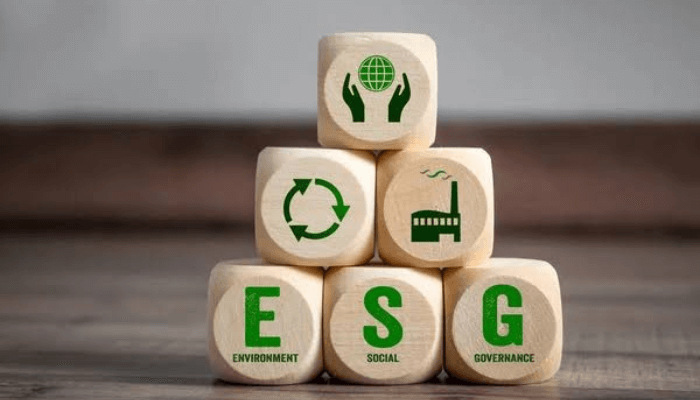
Brian Benfield’s column against the “triple bottom line” lays out a forceful case for shareholder primacy (“The delusion of the triple bottom line”, May 15).There is, he insists, only one bottom line. Focusing on environmental, social & governance (ESG) issues is a “moral conceit” that privatises political choice, and the proper response to environmental or labour harms is law, not the spreadsheets of distant asset managers. Benfield is right that the triple bottom line is conceptually fuzzy. Its own creator, John Elkington, issued a public “product recall” of the phrase in 2018. And he is right that ESG ratings remain noisy and that accountability matters. However, he is wrong about almost everything else, and the error is consequential for South Africa. Start with the empirical claim on which the column rests. Benfield argues that ESG screening starves developing economies of capital and exiles polluting industry to less regulated competitors. But the data runs the other way. A 2020 MSCI ESG Research study covering more than 2,500 listed firms found that companies in the highest ESG quintile faced an average cost of capital of 6.16%, against 6.55% for the lowest quintile in developed markets. In emerging markets the spread was wider at 7.75% against 8.70%. Subsequent panel studies across the Brics and E7 economies replicate the result. This correlation may be partly endogenous, with well-governed firms simply attracting cheaper capital regardless of the label. That is the strongest argument for mandatory ESG disclosure, not against it. ESG is the Hayekian logic of price discovery extended to externalities the market does not yet capture. The pollution haven hypothesis on which Benfield’s leakage claim rests is similarly contested. Paul Krugman has concluded that it is “hard to come up with major examples” of significant pollution haven effects. South Africa is living that arithmetic. Eskom carries about $5.3bn of stranded asset exposure on its existing coal fleet, according to Carbon Tracker. The Just Energy Transition Partnership, designed by South Africa’s own Meridian Economics in 2018 rather than imposed from London, grew from its initial $8.5bn COP26 pledge to about $13.7bn by mid-2025. The EU’s Carbon Border Adjustment Mechanism (CBAM) enters its definitive phase in January, and Net Zero Tracker estimates that 422,000 South African jobs depend on exports to jurisdictions with active or incoming carbon border measures. A free-market purist may respond that South Africa contributes only about 1% of global emissions, so climate ambition is moot. That misreads the threat. This is not moral atonement or corporate paternalism. It is self-interest for a small open economy. CBAM is coming because Brussels has decided to internalise carbon at its border. If South Africa prices carbon at home, the revenue stays in Pretoria. If not, Brussels collects it. There is no third option. This brings us to Benfield’s most interesting move and the one that most undermines his own case. The proper response, he writes, is law. “If emissions are too high, price carbon. If labour standards are inadequate, legislate and enforce them.” South Africa has in fact done so. The Carbon Tax Act has been in force since 2019, with the rate rising to R308 per tonne CO₂e in January. The Climate Change Act was proclaimed in March 2025. The Prudential Authority’s Guidance Note 3 of 2025 aligns bank and insurer climate disclosures with IFRS S2. It is therefore striking that Benfield’s own Free Market Foundation, in the voice of CEO David Ansara, has publicly urged the government to suspend the carbon tax because South Africa “should not be sacrificing its natural advantage in coal power at the altar of a misguided ‘Net Zero’ target”. One cannot, in the same breath, insist that emissions be priced through law and lobby against the law that prices them. The FMF’s revealed preference is not “legislate instead of self-regulate”. It is neither. Timing matters too. Long horizon environmental and social risks were once safely discounted to near zero net present value. That horizon has collapsed. Extreme weather, grid constraints and supply chain failures are hitting South African balance sheets now. Insurance premiums are inflating sharply, and certain systemic liabilities are becoming uninsurable. When risk cannot be transferred, it must be managed on the balance sheet. ESG disclosure is what lets capital see and price it. The argument against unaccountable asset managers is Benfield’s strongest residual point, and it does deserve a hearing. The answer, though, is not less ESG but more accountable ESG, anchored in mandatory disclosure under the ISSB’s IFRS S1 and S2 and our own Climate Change Act. Statistics South Africa’s first quarter 2026 Labour Force Survey records official unemployment at 32.7%, with youth unemployment at 45.8%. South Africa is the world’s 14th largest greenhouse gas emitter, 80% coal-dependent, and acutely climate vulnerable. To call the triple bottom line a “delusion” here is not classical liberalism. It is nostalgia. • Schrywer is a corporate strategy practitioner focused on the strategic integration of ESG frameworks in emerging markets.
PENELOPÉ SCHRYWER | Triple bottom line is no delusion — and for SA, no luxury
ESG disclosure emerges as key to unlocking capital for South Africa’s transition
822 words~4 min read