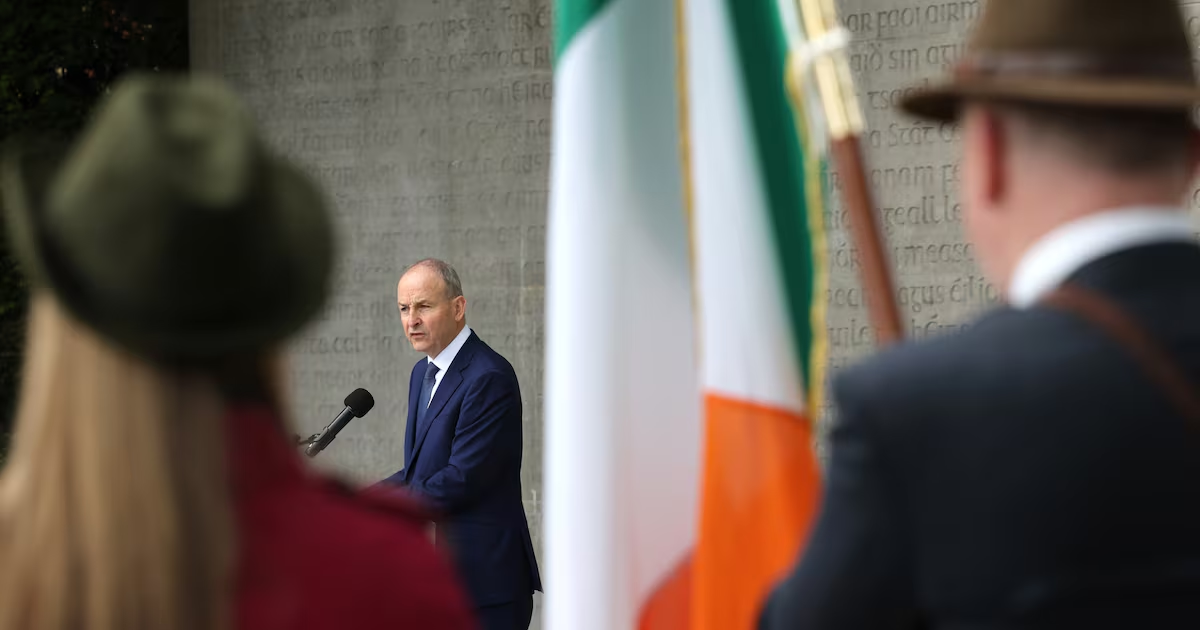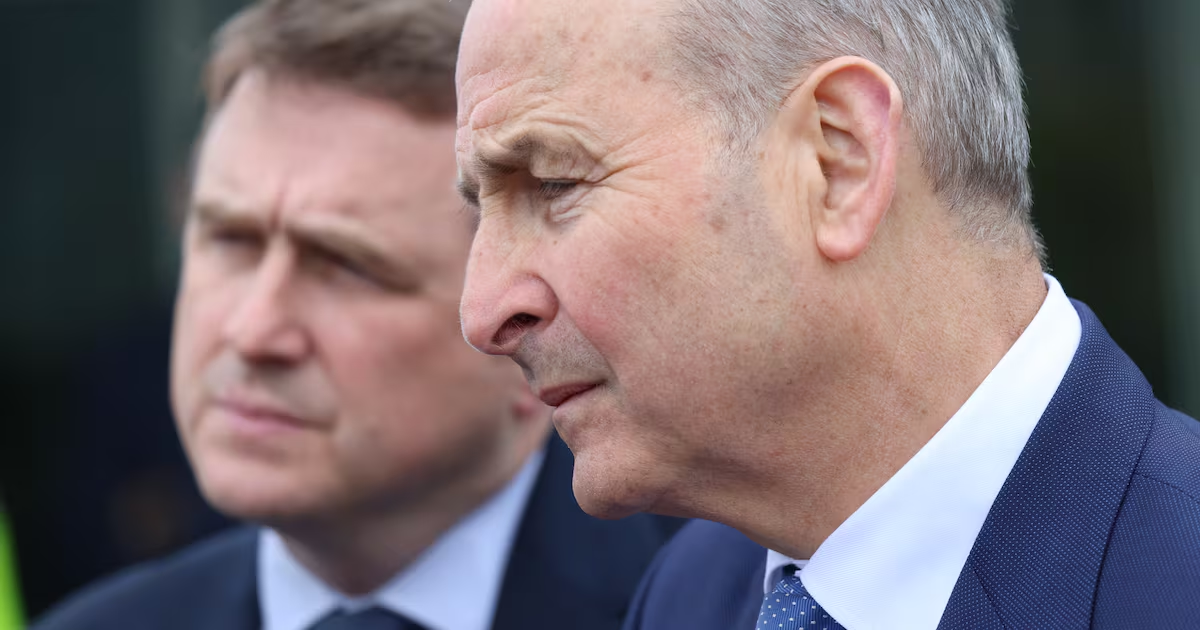
In a recent interview, Fianna Fáil leader and Taoiseach Micheál Martin said that his party, which celebrated its 100th anniversary this weekend, had “made a difference” when it took over the housing portfolio, and that it had historically made “very significant achievements” in housing.The second part of the claim is true. Since the foundation of the State, the same number of social houses has been completed under Fianna Fáil as Fine Gael (including Cumman na nGaedheal before it), and about 30 per cent more private housing.From Cabra to Cahir and Letterkenny to Leixlip, Fianna Fáil got councils building – mostly by allowing them to borrow. Councils responded by building more than 300,000 houses not just for poorer households, but also for sale to middle-income families. It provided mortgages for the buyers.Fianna Fáil also facilitated the purchase of council houses from the 1930s onwards, turning hundreds of thousands of local authority tenants into home owners. Councils are still selling hundreds of their houses each year.Not all of this had positive outcomes – selling off two-thirds of our council housing left the State with a shortage – but it can’t be said Fianna Fáil didn’t make significant achievements. Large swathes of working-class Dublin houses are testament to that.Things have changed in recent years, however.In June 2020, Fianna Fáil’s Darragh O’Brien took over the housing portfolio from Fine Gael’s Eoghan Murphy. O’Brien was replaced by James Browne in January 2025. Since 2020, the number of new houses completed each year has risen consistently from about 21,000 to more than 36,000. In the same period, the percentage of apartments grew from less than one in five to one in three. Almost none of these come up for sale – 150 new apartments were sold in Dublin 2025 out of more than 4,500 new homes built; in Cork city, it was 11 from almost 1,500 new homes – forcing potential homeowners to look further afield for a house to buy.The rise in the construction of new housing for investment rather than for use as a home has meant the proportion of new homes available for sale each year is falling. In 2020, about half of all houses appeared in an estate agent’s window for sale; in 2025, that figure was less than one in three.[ ‘Lack of housing’ a factor in Irish emigration to UK, says Catherine Connolly on first visit to BritainOpens in new window ]In 2025, the average house price-to-income ratio was eight times; in 2020, when O’Brien took over, it was just over seven times. At its peak during the Celtic Tiger it was 8.8 times, so if current trends continue – and there are no signs they won’t, as rising housing output is dependent on rising sales prices – then we are not far off where we were at the top of the boom.Over the last six years, the average house sale price across the country has increased 47 per cent. In the rental sector, at the end of 2020 the average standardised rent for new tenancies was €1,256 per month. In 2025, this rose to €1,755 per month – an increase of 40 per cent.Probably the most important indicator of impact on housing policy, but one that ministers talk about as little as possible, is homelessness. The data for homeless numbers is released in the afternoon on the last Friday of every month, which is an indicator of how the news is designed to be buried.When O’Brien was in opposition and the number of homeless reached 10,000 under Murphy, he said it was “a shameful and saddening example of failed government policy”. (To his credit, he had opposed Murphy publishing the homeless data on a quarterly rather than monthly basis.) When O’Brien took over as minister, the total homeless figure was 8,669. Under his tenure it reached 15,286, and under his party’s successor this number has now reached 17,517 including 5,571 children – an overall increase of more than 100 per cent. This is truly “shameful and saddening”.On the social housing front, where many of those homeless should be accommodated, the Department of Housing has missed its own output target every year since 2020. Six years ago, local authority “new builds” accounted for 44 per cent of social housing output. Under two Fianna Fáil ministers – a party historically competent at getting councils building houses – this had decreased to 30 per cent by 2025, with councils buying the rest from the market. The State is increasingly propping up the private sector instead of building social houses itself.Levels of home ownership, that traditional route to middle-class respectability, security and often wealth, have been in decline for years. Ireland now languishes in the bottom half of European countries for owning one’s own home. When O’Brien became minister, the average age to buy a first home was 36. Under his successor, it is now 40 (in Kerry, it is 45).[ ‘Powerful and heartbreaking’: A couch is what Ireland’s homeless children say they want mostOpens in new window ]According to the Central Bank, purchasers of their first home in 2020 had an income of €76,000 and borrowed €232,000. Last year, that had increased to an income of €95,000 and a loan of €318,000.When the Government begins to see spending on services and infrastructure as an expensive outlay to the State rather than an investment in society, it has all sorts of knock-on effects that end up costing more in the medium term. The 2020 budget for the Department of Housing was €2.6 billion; this has now risen to €7.8 billion and yet no dent has been put in rising numbers of homeless, house prices or rents. Instead, we see these billions spent accommodating people in the rental sector whom the State would traditionally have been able to house, and on subventions and incentives to the development sector to cajole them to build more. Arguably, the biggest difference Fianna Fáil has made running the Department of Housing for the last six years is making no difference at all. It has continued Fine Gael’s market-first approach, tucking itself into the slipstream of its Coalition partner’s 1980s, Thatcherite-inspired ideology. Dr Lorcan Sirr is senior lecturer in housing at TU Dublin
Lorcan Sirr: These figures tell the real story of Fianna Fáil’s impact on housing
In 2020, about half of all houses appeared in an estate agent’s window for sale; in 2025, that figure was fewer than one in three
1,034 words~5 min read