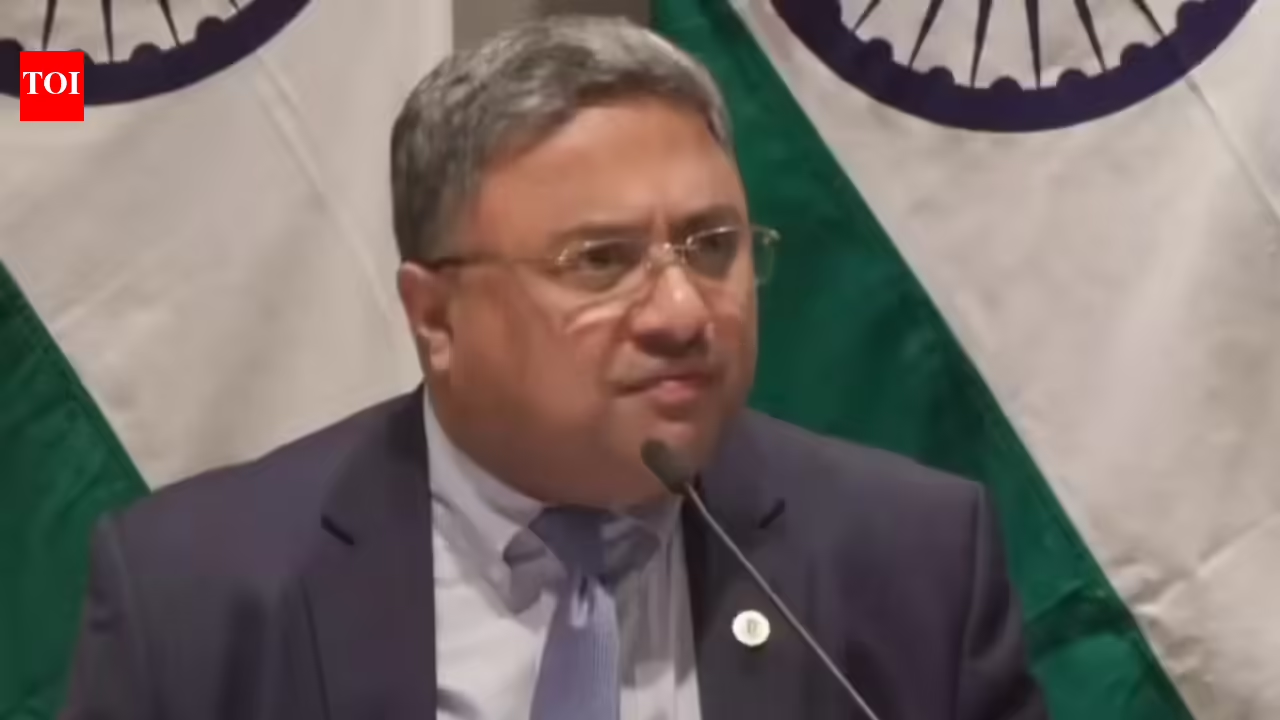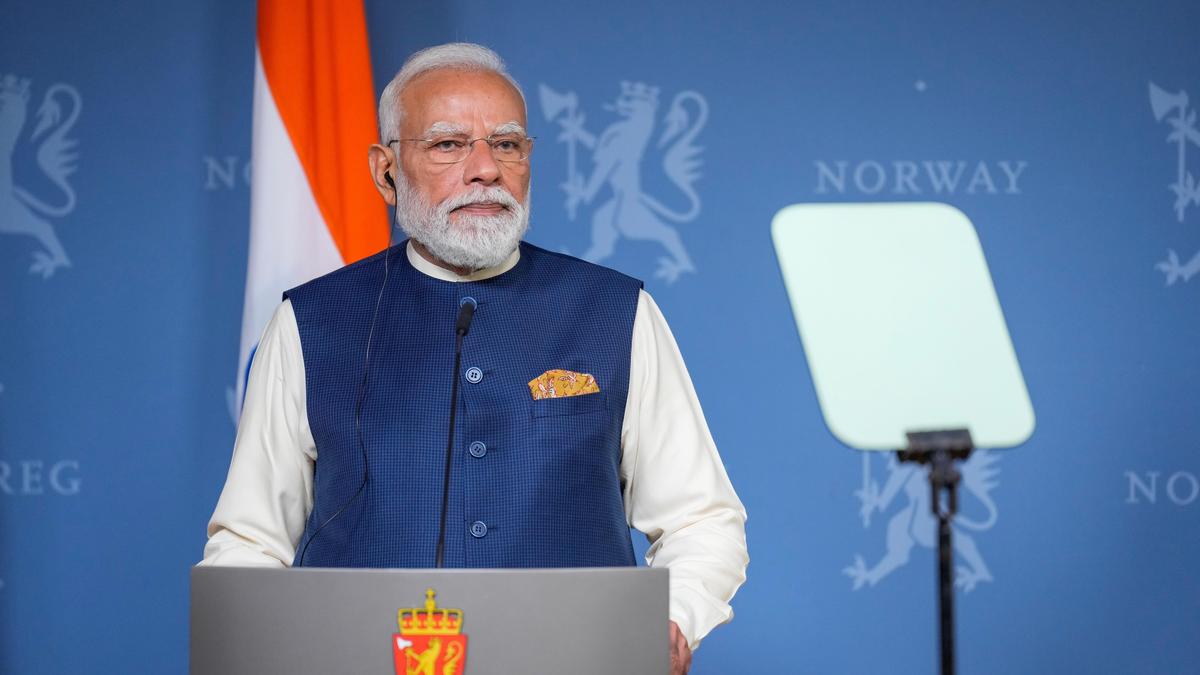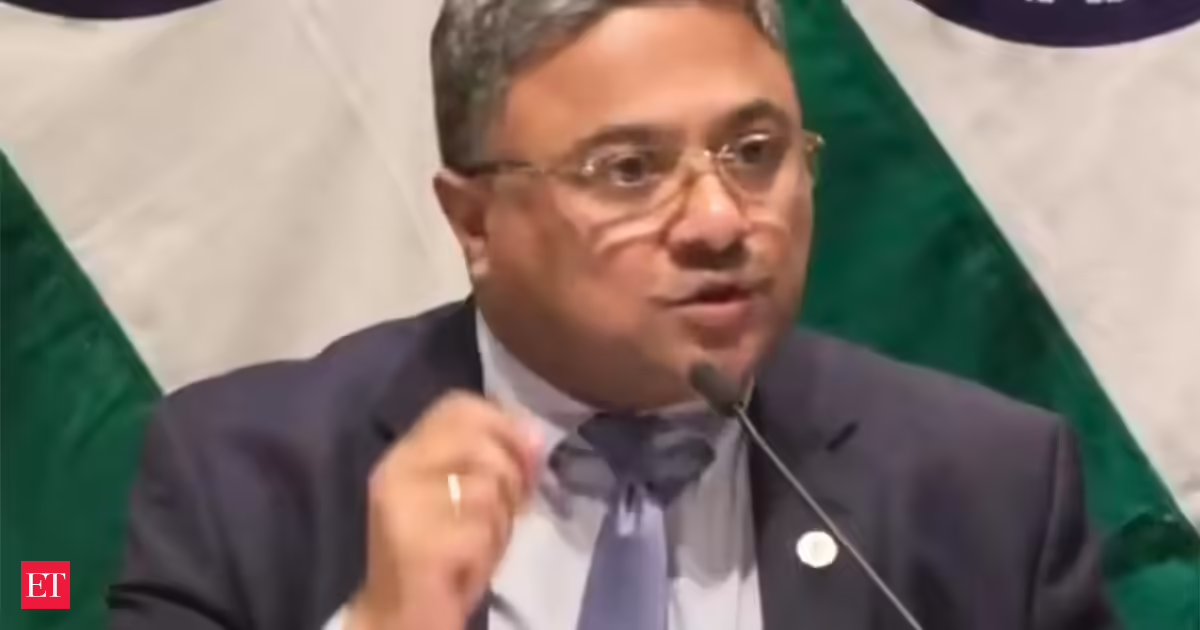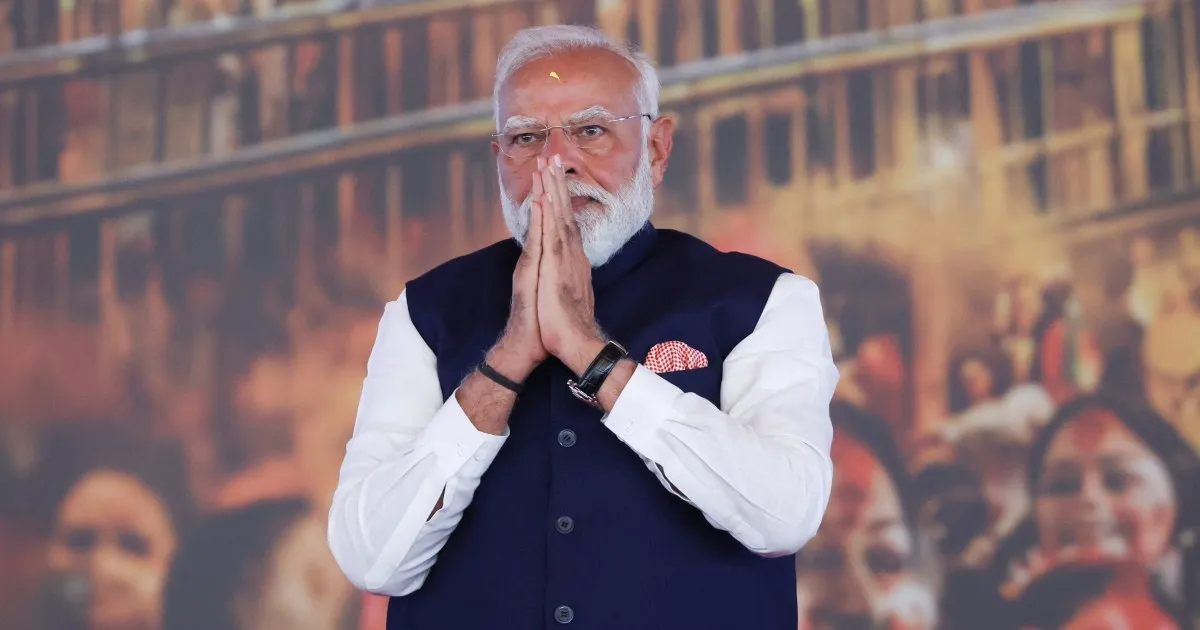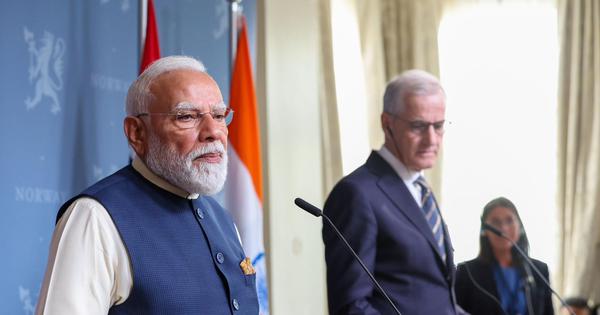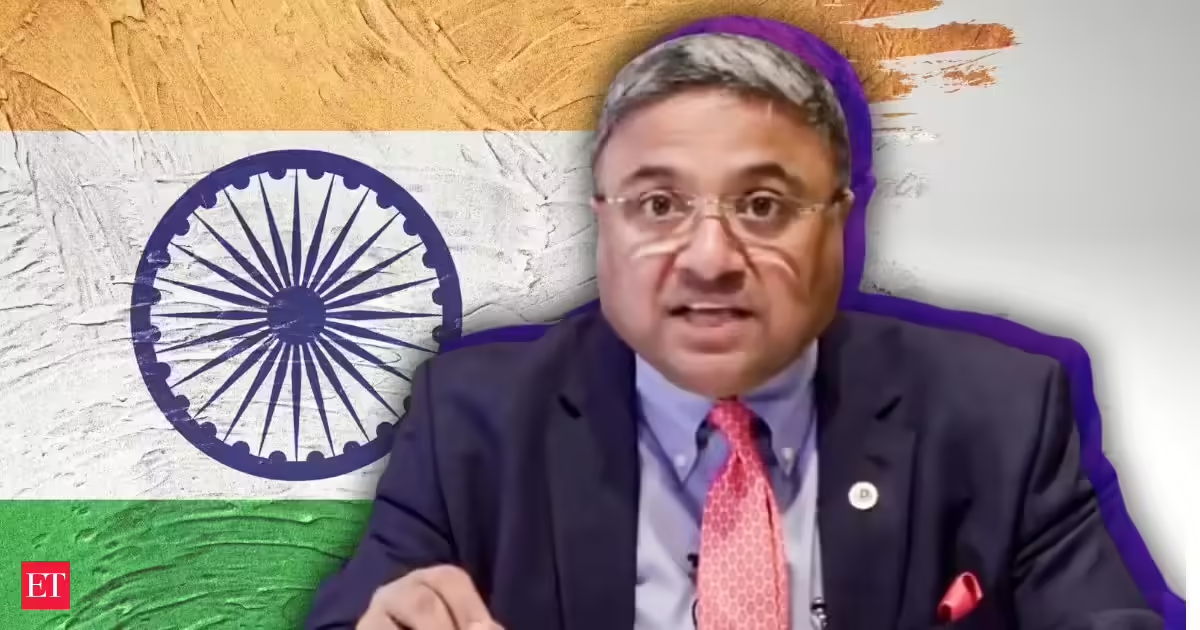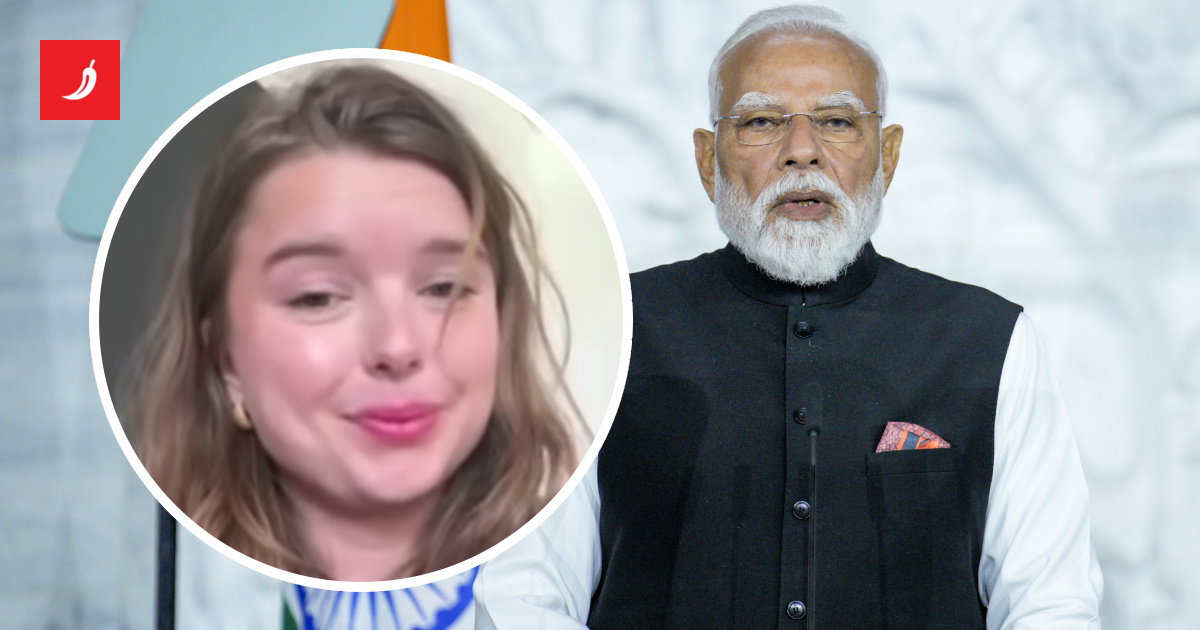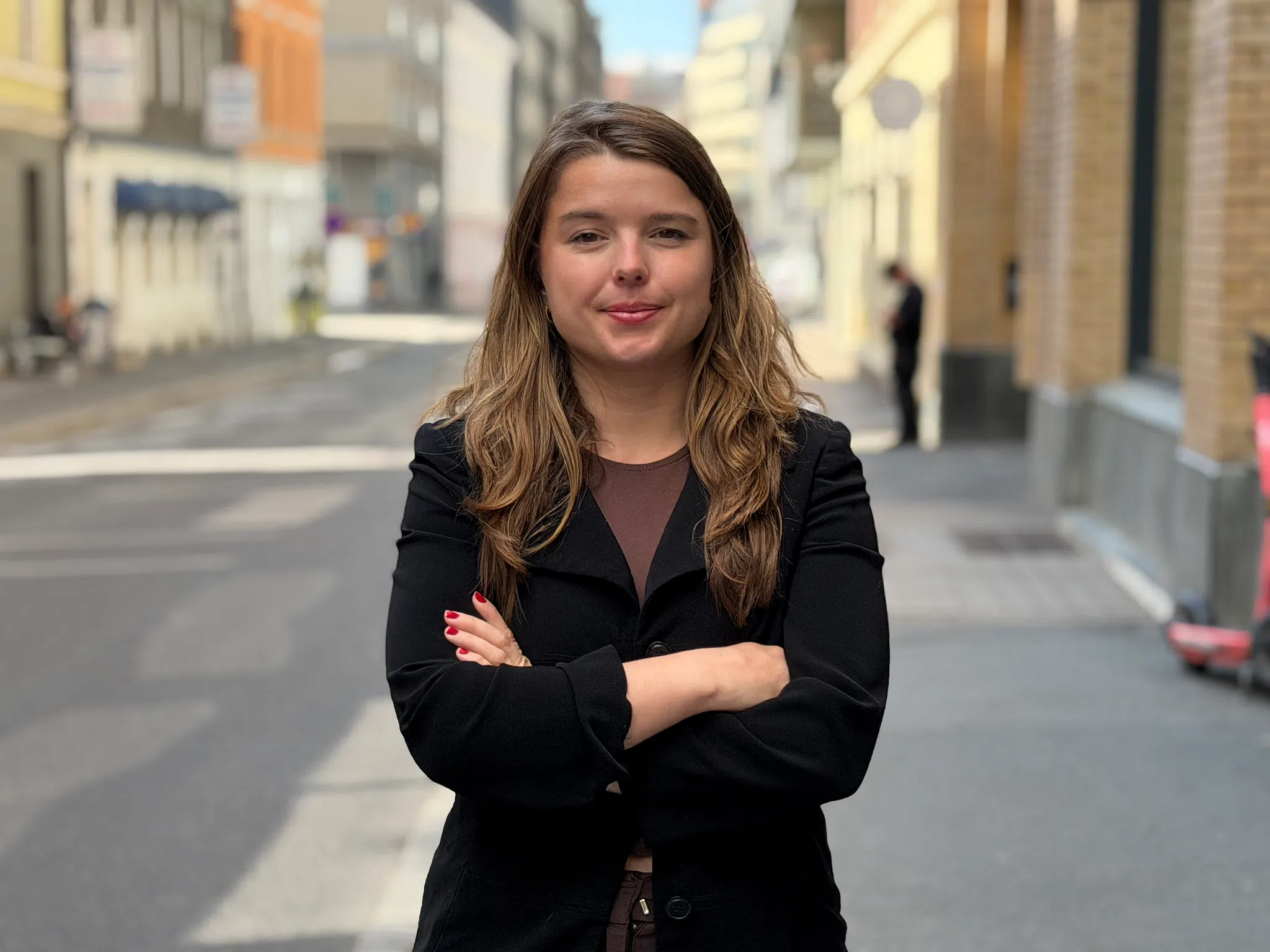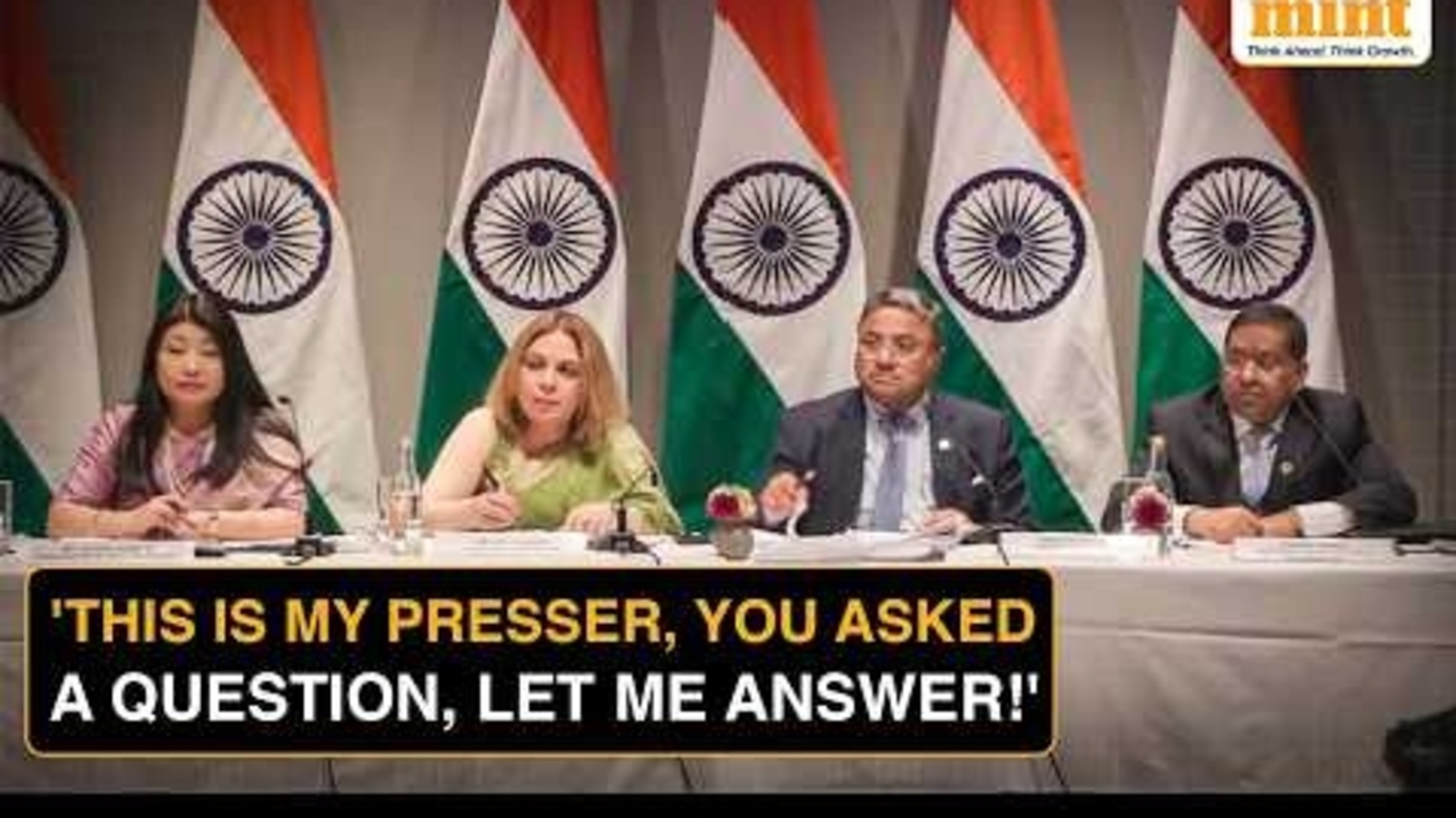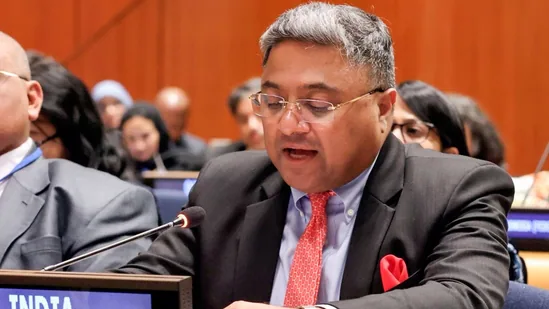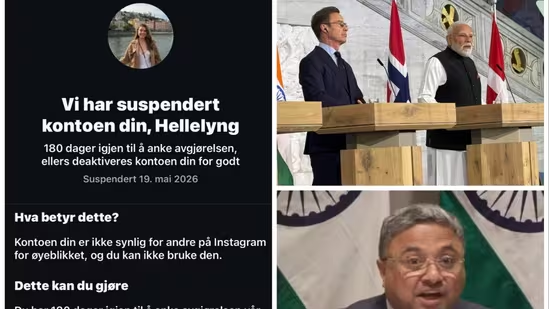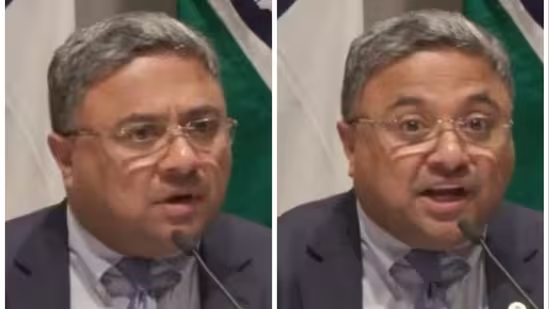
MEA's Sibi George affirmed India's civilisational legacy, its commitment to equality and human rights, and defended against skepticism about media freedom. The lack of media interactions during Prime Minister Narendra Modi's joint press statement with his Norwegian counterpart on Monday during his Europe trip came under scrutiny at a later Ministry of External Affairs (MEA) briefing, where journalists pressed officials on PM not taking questions from the “freest press in the world”.MEA's Sibi George engaged in a tense exchange with a journalist who raised a questioned over alleged human rights violation and press freedom in IndiaPM Modi is currently in Norway for the fourth leg of his five-nation tour and was slated to head to Italy on May 19. He reached Oslo after visiting the United Arab Emirares (UAE), the Netherlands and Sweden.A Norwegian newspaper commentator Helle Lyng shared on X a video of PM Modi walking out of the joint statement venue and said in the caption that PM Modi did not take her question. “Primeminister of India, Narendra Modi, would not take my question, I was not expecting him to,” she said in the post, sharing the video in which a woman can be heard saying loudly, “Why don't you take some questions from the world's freest press”.“Norway has the number one spot on the World Press Freedom Index, India is at 157th, competing with Palestine, Emirates & Cuba. It is our job to question the powers we cooperate with,” the journalist wrote with the video.Tense exchange in MEA presserThe journalist's post of PM Modi exiting the press briefing — , which sparked varying reactions — also spilled into an MEA presser on the prime minister's visit later, where Indian officials faced questions over “trust”.“Why should we trust you,” a woman who identified herself to be a journalist from a Norwegian newspaper said, adding that "can you promise you will stop the human rights violation that goes on in your country".She also asked if the prime minister "will start takin g critical questions from the Indian press?"In response, MEA Secretary (West) Sibi George gave a lowdown "of what India is".Let me give a background to what India is… What is a country? A country today has four elements. One, population, two government, third sovereignty, and fourth territory. So, that is what makes a country a country. And we are proud... That we are a civilisational country of 5,000 years old. Continuous civilisation, continuous civilisation. contributed immensely to the world,"While listing what all originated from India, George could be seen asking someone to let him answer the question without interruption. “Please don't interrupt me,” a visibly irate George said.Watch"You asked why should a country trust India, let me answer that question… India is a civilisational country which has something unique to offer to the world… the whole world suffered in Covid…what did we do? We didn't hide in cave, we didn't say we will not save the world. We came out offering helping hand to the world… that builds trust, and we are very happy that that trust is appreciated.George went on to assertively list the global platforms such as G20 and AI Summit where India raised key issues and brought trust, and engaged in another exchange with the journalist — who requested a answers straightaway — over letting him finish speaking.“Please let me answer… these are my prerogatives. You ask a question, don't ask me to answer in a particular way,” said George.'Go to court': MEA's bold standSibi George then emphatically pressed, "We hear a lot of people asking why this, why that, but let me tell you this. We are one sixth of the total population of the world, but not one sixth of the problems of the world. We have a constitution which guarantees the fundamental rights of the people. We have equal rights for the women of our country, which is very important.Sibi George then said India gave equal rights to women from the first day of independence, unlike many other countries, displaying its firm belief in equality and human rights."In 1947 we gave the freedom to vote to our women. We got the freedom together and got the right to vote from day one. I know many countries where voting rights for women came after several decades. We believe in equality; We believe in human rights. If anyone whose rights are violated, they have the right to go to court. We are proud to be a democracy." he said.Sibi George said that people don't understand the extensive reach of India's media ecosystem and make statements after reading some reports published by "ignorant NGOs"."You know how many stories are up here. We have how many breaking news coming every day in the evening. At least 200 TV channels in Delhi alone, in the English language, in Hindi language and multiple languages. People have no understanding of the scale of India. People have no understanding. They read, you know, one or two news reports published by some godforsaken, ignorant NGOs and then come and ask questions," he said.To another query over PM Modi not taking media questions, Sibi George told a journalist that as a country in charge of the visit it is his responsibility to address the media.“I have been doing that and I will continue to do that,” George said.Nayanika is a Chief Content Producer at Hindustan Times, based in New Delhi, with over six years of experience in the digital media industry. She specialises in delivering clear, insightful coverage across general, national, and international beats, with a strong focus on breaking news and in-depth explainers. Known for her ability to decode complex developments, she enjoys unpacking layered political and policy issues into accessible, reader-friendly narratives that inform without overwhelming. She has previously worked in India's leading newsrooms, including India Today, News18, and Outlook, where she chased news, covered major events of the past six years and led teams. With a Master's degree in Political Science, Nayanika has a keen interest in international relations and global affairs. Her academic grounding shapes her analytical approach to stories, enabling her to connect the dots between domestic events and broader geopolitical currents. She is particularly drawn to stories that require context, nuance, and clarity - turning complicated subjects into compelling reads. Outside the newsroom, Nayanika is a passionate gourmand who loves cooking and sharing meals with loved ones. When she's not writing or tracking the latest headlines, she can often be found exploring local markets for fresh ingredients, seeking inspiration for her next culinary experiment.Read More
‘Go to court’: MEA's tense exchange with Norwegian press over PM Modi ‘skipping questions’ | Watch
MEA's Sibi George affirmed India's civilisational legacy, its commitment to equality and human rights, and defended against skepticism about media freedom. | India News
1,089 words~5 min read