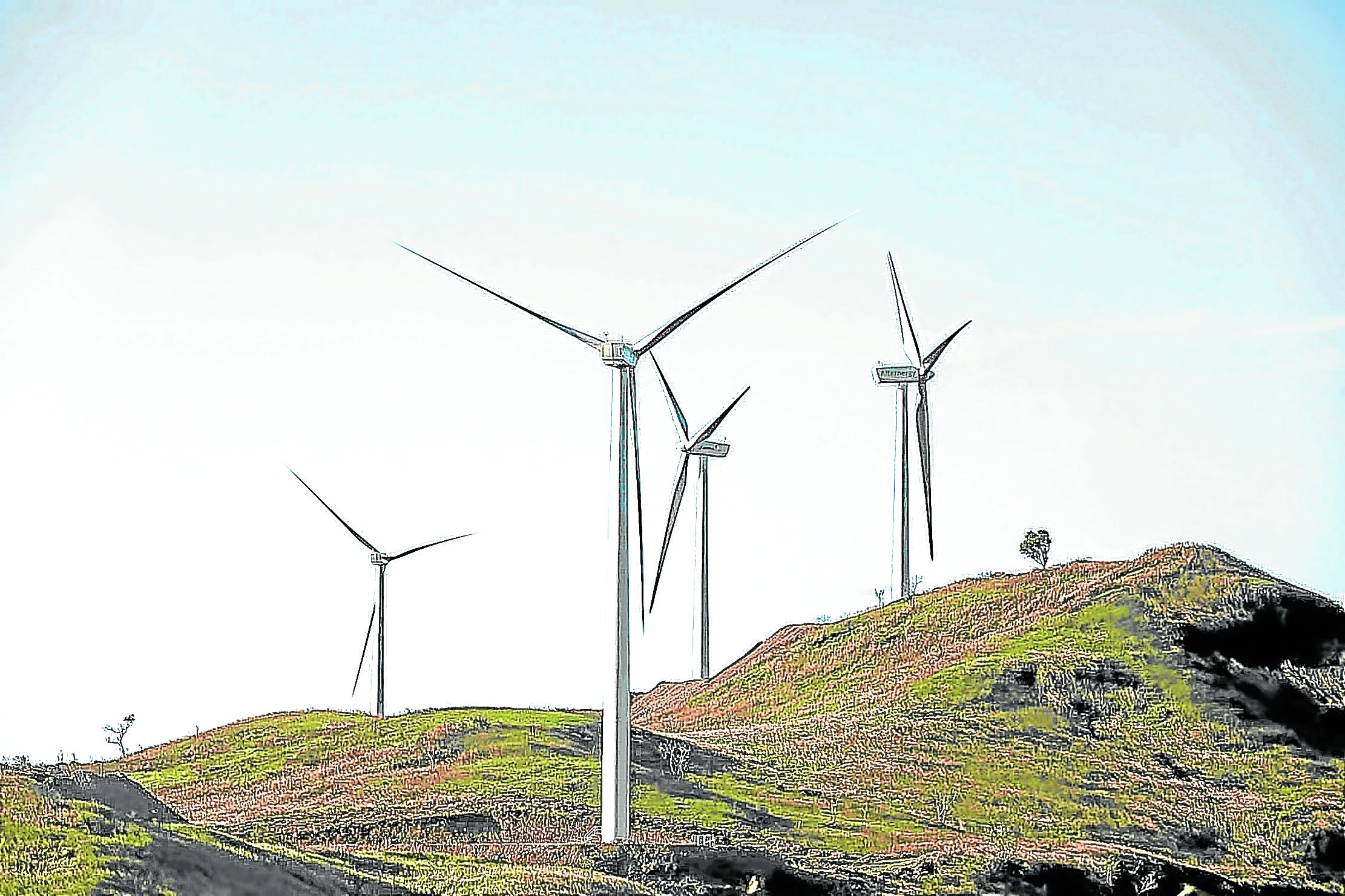
The Philippines is currently highly dependent on fossil fuels for energy generation, but the government has committed to reaching 50% renewables by 2050.The resulting energy boom — especially in Ilocos North, the president’s home province — has seen an influx of foreign investment, but also raised questions about who will bear the costs of the country’s energy transition.Fishers in Ilocos Norte say they worry that wind energy projects in their traditional fishing grounds will disrupt marine life and fishing routes.Inland, the Masamuyao Isneg Yapayao tribal council is trying to stop the expansion of a solar farm that officials say failed to obtain the tribe’s consent.
PASUQUIN, Philippines — Crouched on the beach under the hot noon sun, a fisherman flattens a black sheet of seaweed on a bamboo mat rolled out on the sand. Wearing a straw hat wide enough to shade his entire body, he tucks his legs in to avoid getting burned.
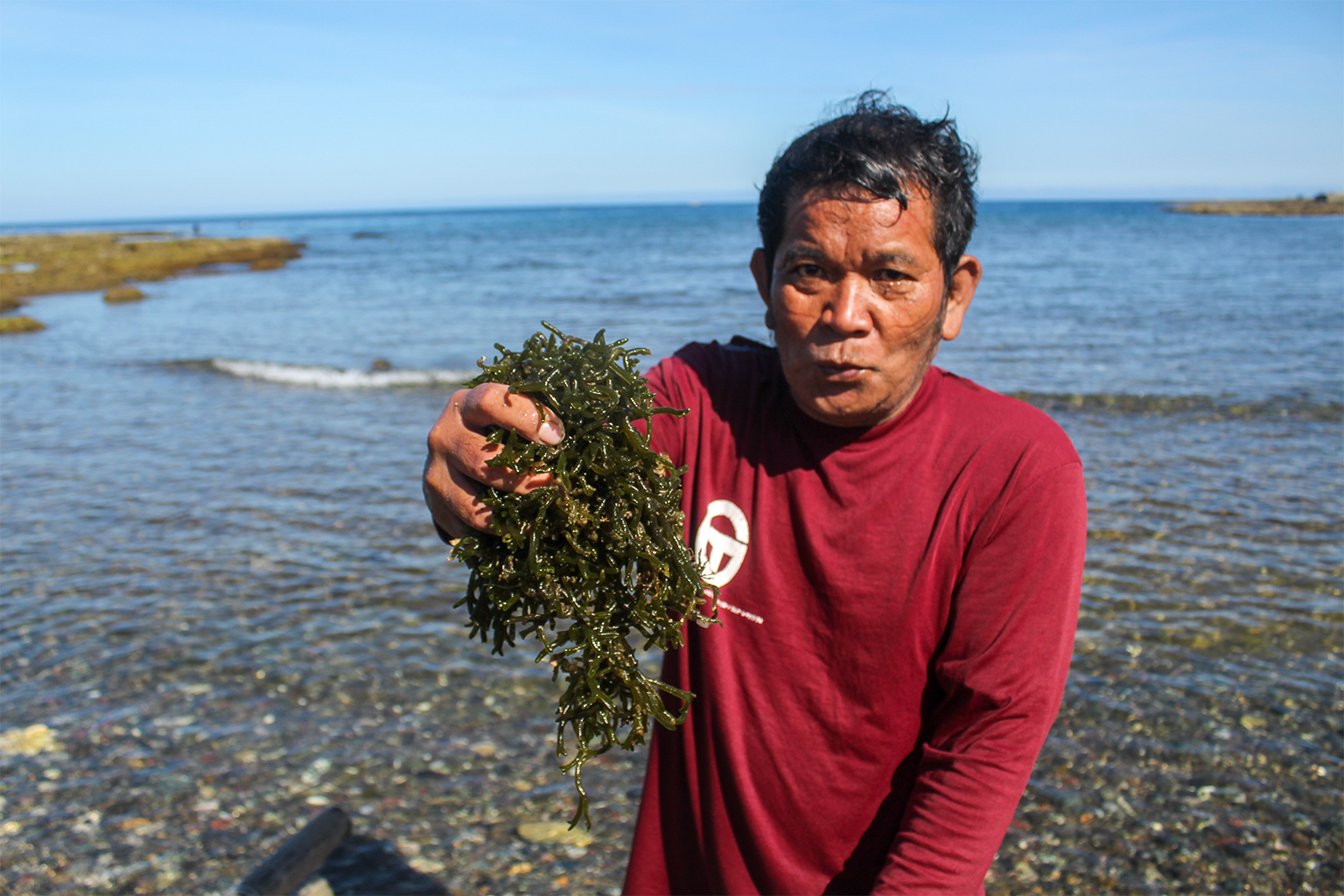
Gamet, a rare and coveted variety of seaweed local to the coasts of the Philippines’ Ilocos Norte province, is both a staple to fishing communities and a popular souvenir for travelers. But harvesting the highly sought-after seaweed can be a dangerous task. Like the better-known nori, it belongs to the Bangiaceae family of red algae and grows exclusively on the sharp, pointed rocks along the cooler waters of the northern Philippine coast.