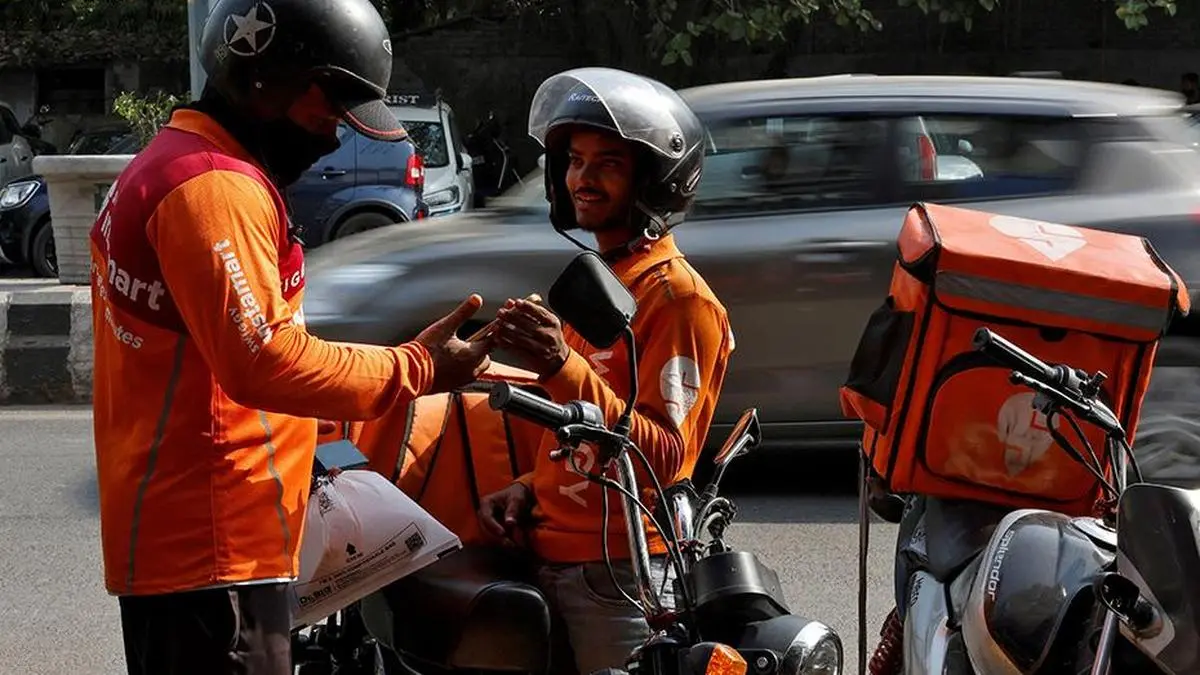
Happy Tuesday! Despite a shortage of delivery workers, payouts for gig riders have increased only slightly this summer. This and more in today's ETtech Morning Dispatch.Also in the letter:■ Infosys rolls out lower bonus■ India's fintech gap■ Delhivery bets on disciplineIt's a summer of discontent for delivery riders as incentives dip Even as fuel prices climb and seasonal worker shortages bite, delivery riders' incentives have barely moved this summer, with ecommerce and quick-commerce firms slamming the brakes on spending.What's the news: Incentives are up just 5-6% this year—well below the usual 10–15% summer hikes that kick in when riders are scarce, an industry executive told us. “Platforms are facing cost pressures after packaging and logistics costs went up following the West Asia conflict,” they said.This new-found restraint comes even as gig workers staged a nationwide strike to demand higher payouts and a reworked incentive structure—protests that, ultimately, failed to spark a groundswell of support. How it works: Typically, delivery and ride-hailing platforms sweeten incentives in April and May to keep riders from jumping ship. This year, though, they've restricted higher payouts to select, high-demand micro-markets instead of rolling out broad-based hikes.Cost discipline: Analysts say ecommerce and quick-commerce players are tightening their belts, reining in costs amid choppy demand ahead of mid-year sale events.Quick commerce leader Blinkit has already flagged a likely moderation in growth in its March-quarter results.Swiggy's Instamart reported a gross order value (GOV) of Rs 7,881 crore in Q4 FY26, 0.7% lower than in the December quarter.Indian founders flip YC's $25,000 AI tokens for quick bucks WhatsApp groups and Reddit threads are buzzing as attendees of Y Combinator's Startup School in Bengaluru hawk discounted AI credits for tools such as Amazon Web Services (AWS), Microsoft Azure, OpenAI's ChatGPT, and Anthropic's Claude.Tell me more:Founders, engineers, and student builders who attended Silicon Valley accelerator Y Combinator's first Startup School in India, held in Bengaluru on April 18, are now selling their AI credits or tokens at a discount to others.On its first visit to India, YC selected about 2,000 participants for the programme and dangled startup perks and AI credits worth up to $25,000. What are credits? These credits or tokens are essentially coupons or codes worth $25,000 (roughly Rs 21 lakh) in free API usage that anyone can redeem to access AI tools.Limited access: For early-stage AI startups—which burn through cash just to test, train, and run models—such credits can offset hefty backend costs in the early days.But multiple attendees told ET that some credits didn't work as advertised or came with restrictive activation conditions.Also Read: Large AI firms hoovering maximum funding, not enough for smaller startups: Y Combinator's Ankit GuptaInfosys employees see 15 percentage point drop in bonus Infosys announced an average performance bonus of 70% for Q4 FY26 on Monday, a decrease from the December payout due to tensions in the Middle East and challenging macroeconomic conditions for the IT sector.Bonus trimmed: In the December quarter, the IT giant had paid out 85% bonus to employees following a period of strong business performance and major deal wins.The latest payout ranges from 63% to 82% for employees at job levels (JL) 4, 5, and 6, which constitute most of the company's workforce.Outstanding performers at JL4 and JL5 received slightly higher payouts (82% and 79%, respectively) compared to their peers at JL6 (77%).What this means: The reduction in bonuses comes after Infosys reported a 21% increase in fourth-quarter net profit. Its annual revenue growth forecast fell short of expectations. Following the lower bonuses, employees told ET they are awaiting clarity on annual pay hikes. Last year, increments ranged from 5-8%.Meanwhile: Tata Consultancy Services (TCS) has implemented average salary hikes of 5–8% for FY26, while also restructuring pay systems to comply with new labour regulations. In its annual report, the company stated that junior and mid-level staff in India received average increases of 4.5–7%, with high performers earning double-digit pay rises.Other Top Stories By Our Reporters Why India still can't build a world-class fintech champion: India has created the world's most envied digital financial infrastructure. And yet, as of 2026, it has not produced a single consumer fintech on the scale of Brazil's Nubank, the UK's Revolut, or Chime. The issue isn't founder ambition, customer demand, or tech talent—it's the architecture of regulation, writes Jupiter CEO Jitendra Gupta.Delhivery's Sahil Barua on third-party logistics: Even as ecommerce growth recovers, the third-party logistics industry is unlikely to return to “irrational pricing” or heavy capital expenditure, Delhivery CEO Sahil Barua said on the company's earnings call.Global Picks We Are Reading■ I'm a normie. Can normies really vibe code? (Wired)■ The fate of OpenAI's $1tn IPO will be decided in an Oakland jury room (FT)■ India's VCs are beating Silicon Valley at home (Rest of World)
Gig workers' incentives cool; YC attendees resell AI credits
Happy Tuesday! Despite a shortage of delivery workers, payouts for gig riders have increased only slightly this summer. This and more in today's ETtech Morning Dispatch.
792 words~4 min read