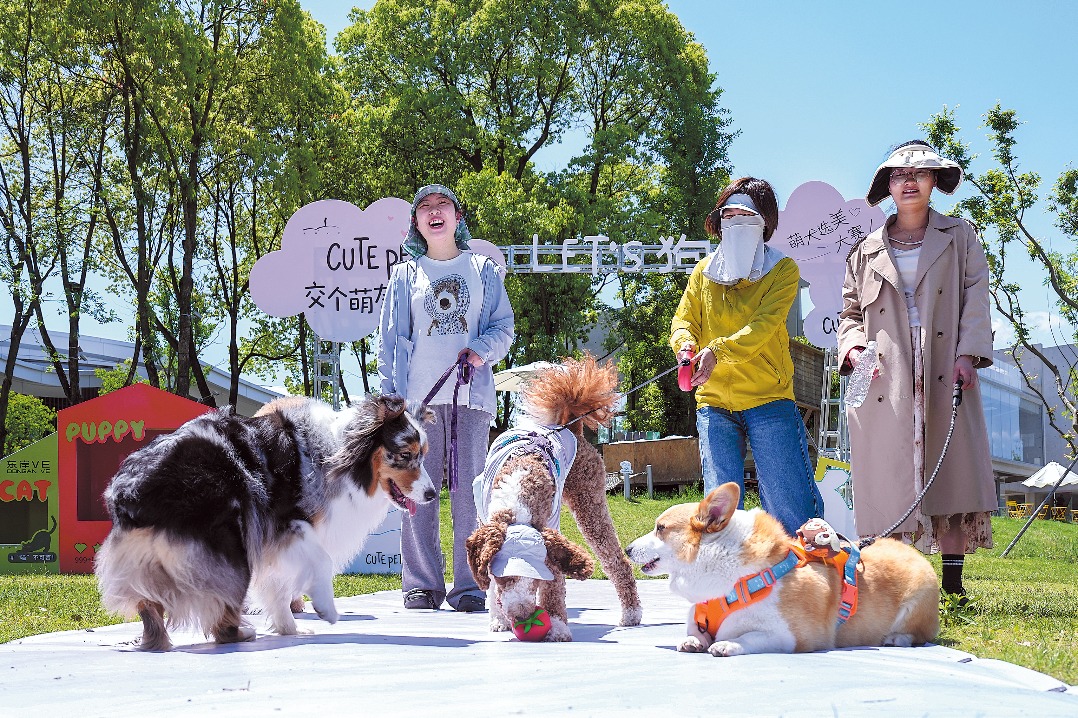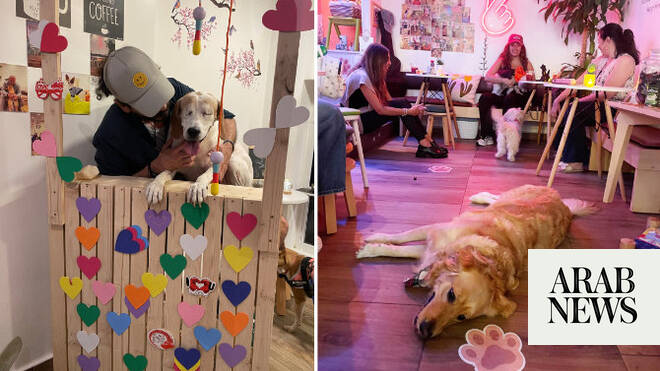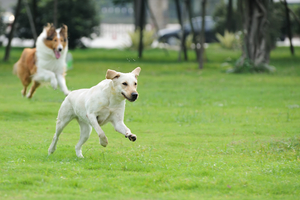
Two dogs are seen prancing in the fields in this stock photo. (123rf) For pet owners who consider their animals part of the family, their companions’ physical and emotional well-being is a top priority.Dogs in particular are generally more social than many other pets, and dog cafes offer a space where they can meet and interact with other dogs. Many also provide basic training, temporary boarding and grooming services.A dog cafe usually requires visitors to buy beverages or snacks, hence the name, and some charge a separate entrance fee. The cost is usually not much higher than a visit to an average coffee shop. Once inside, visitors will find dogs roaming freely and playing with one another.Most dog cafes in the city are indoors and offer limited space for exercise, although some have small playgrounds on the roof or in the backyard. Some dog cafes on the outskirts of Seoul, however, offer larger outdoor spaces where visiting dogs can run around.One such place is The Rad Dog in Seongnam, Gyeonggi Province, which has spacious outdoor fields and a smaller indoor playground. One of its main draws is that it has separate areas for smaller dogs weighing 12 kilograms or less and for larger dogs. For many owners, this is a major advantage, as the risk of a smaller pet being injured by a larger dog is one of their biggest concerns.Keep in mind that most dog cafes do not allow the five breeds classified as “fierce dogs” under Korean law: Tosas, American Pit Bull Terriers, American Staffordshire Terriers, Staffordshire Bull Terriers and Rottweilers.Outdoor dog cafes can give dogs a chance to run freely, particularly in a country where 64.9 percent of households live in apartments and other multi-unit buildings.While dog cafes are typically visited by people with their pets, some places also welcome visitors without dogs.One such place is Ggotgil Geotgae, or Walking the Flower Road, in Seocho-gu, southern Seoul, which also serves as a shelter for abandoned dogs. Visitors can play with the dogs there or inquire about adoption.What to know before visitingThere are several things to consider before visiting a dog cafe. Some dogs may be sensitive to social dynamics, and owners should make sure their pets do not become stressed or overwhelmed in a group.Dogs that are highly assertive or poorly socialized may try to dominate others, which can cause stress or possible injury. Owners should be aware of the risks that come with introducing their pets to unfamiliar animals.This means avoiding cafes frequented mostly by dogs that are much larger than yours. It also means being careful about bringing a large dog to a space used mainly by much smaller dogs.Many dog cafe operators advise owners to be careful when feeding their dogs near others, as food can trigger competition or fights. It is also important to make sure your dog does not become overly excited during the visit.Very young dogs that have not yet been vaccinated may be exposed to pathogens from other animals, which is an obvious concern in a space visited by many unfamiliar dogs. Owners also cannot fully control the environment, meaning furniture or other surroundings could trigger skin problems or other health issues in some pets.For those with pets other than dogs, it is worth noting that most cat cafes, parrot cafes and other animal cafes serve a different purpose from dog cafes. They are usually animal-themed cafes with resident animals for visitors to interact with, rather than places for pets and their owners to socialize.Some dog cafes offer basic training programs, often called “kindergarten.” Fees generally vary depending on the dog’s size and the type of activities offered.Before signing up, owners should check whether the programs are run by qualified instructors and review the facility’s reputation.This is the third installment of a series on tips for living with a pet in Korea. -- Ed.
What to know before visiting dog cafes in Korea
For pet owners who consider their animals part of the family, their companions’ physical and emotional well-being is a top priority. Dogs in particular are gene
644 words~3 min read