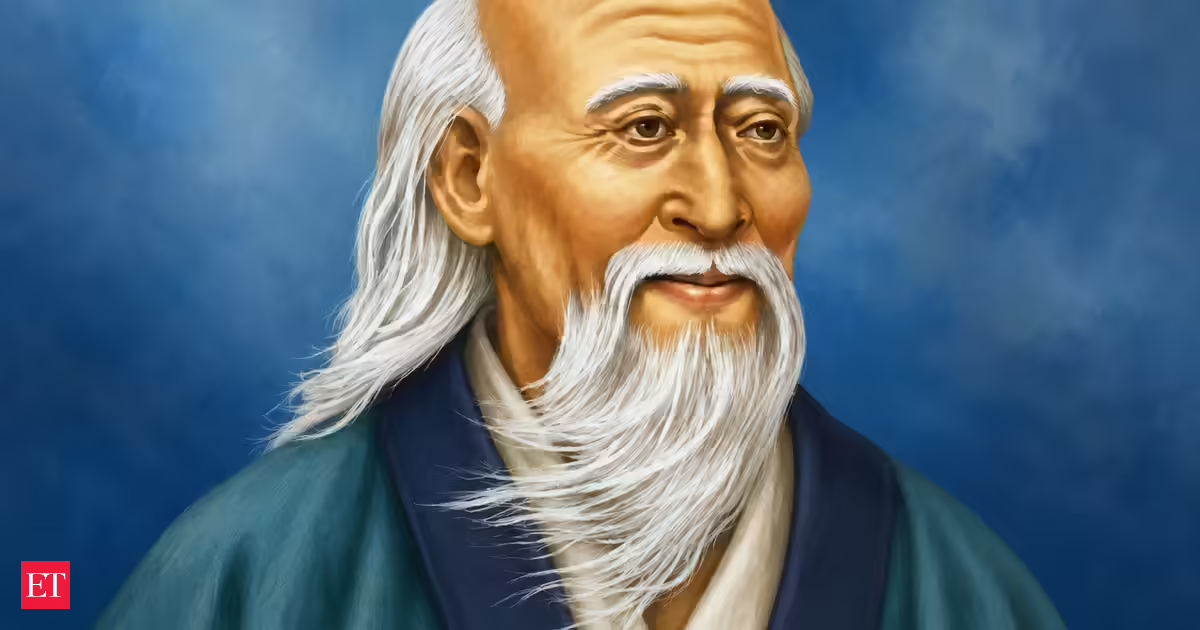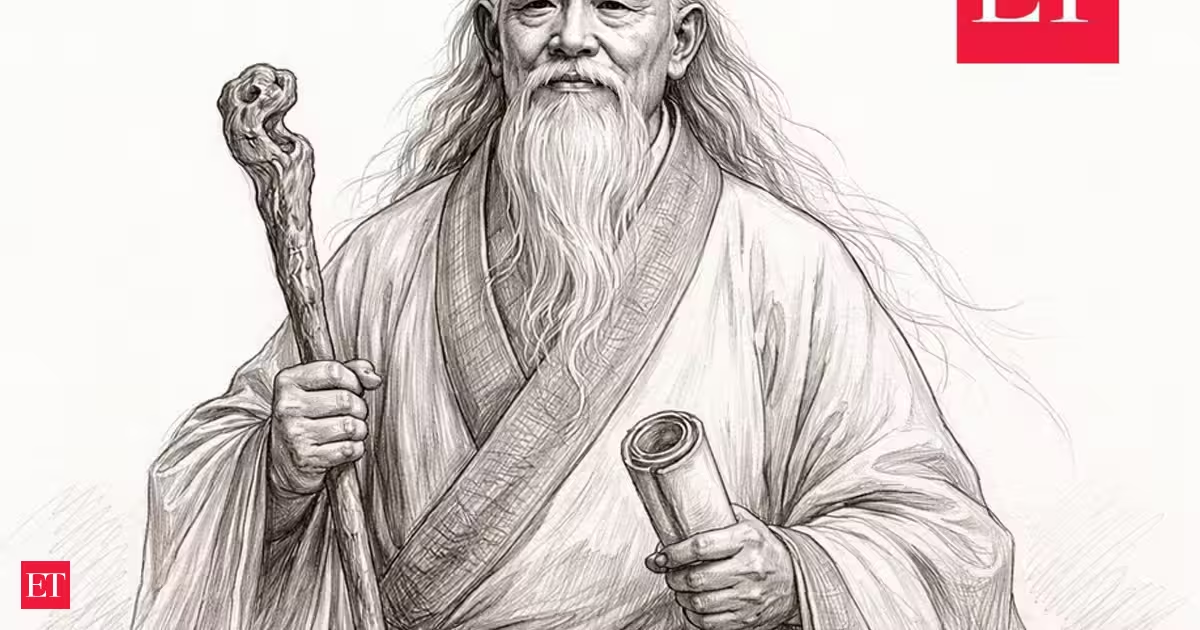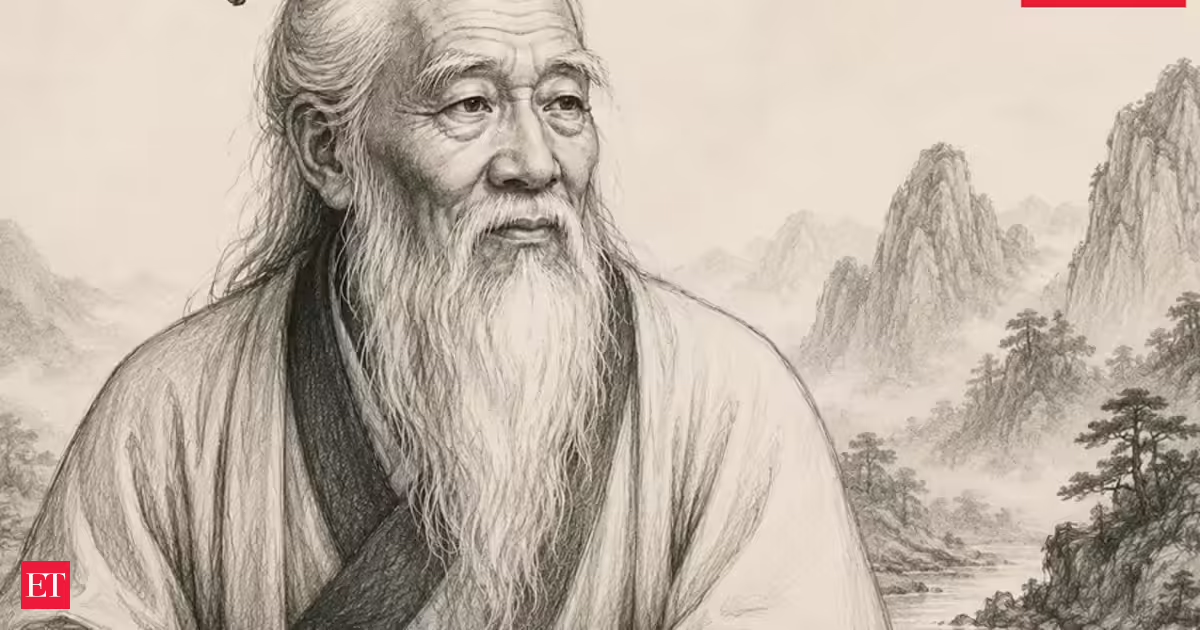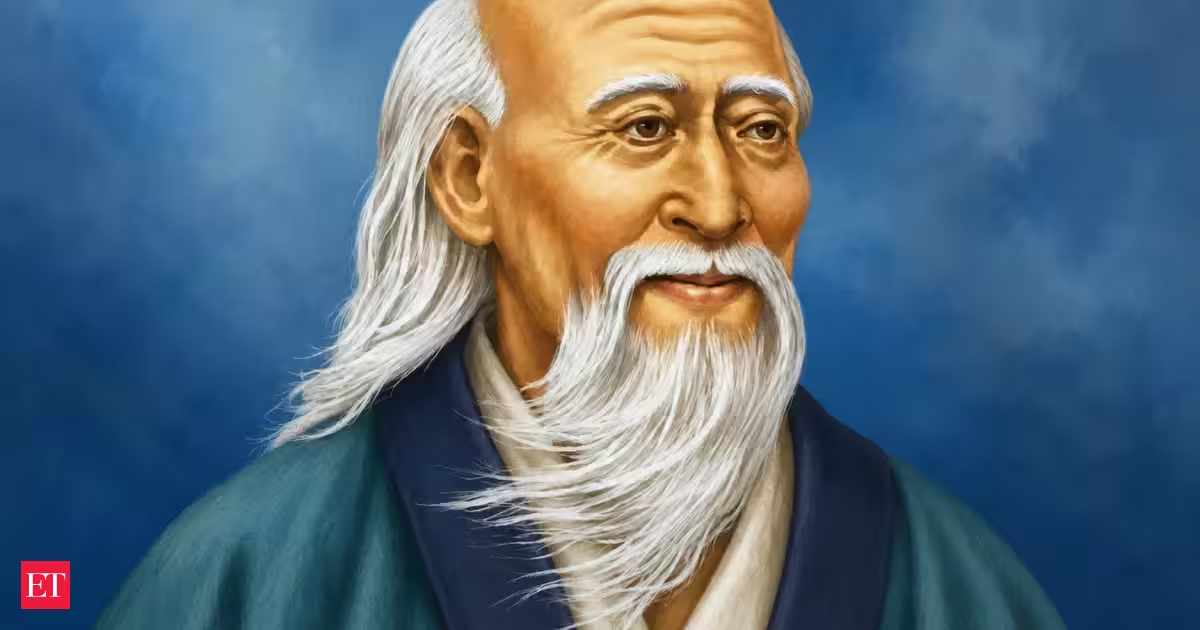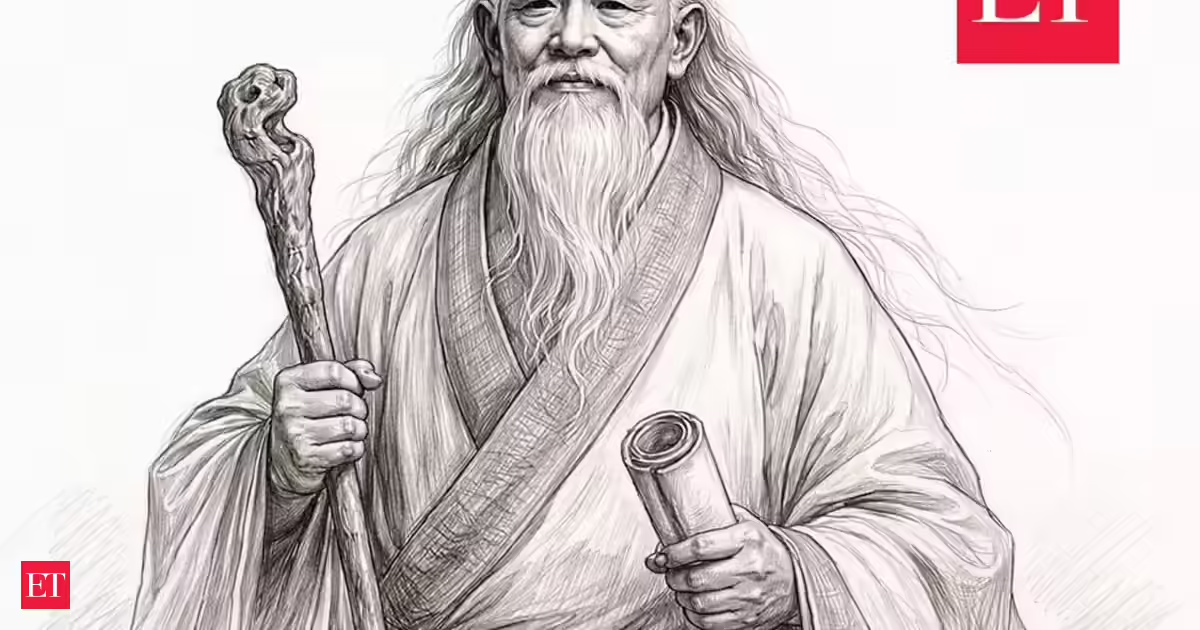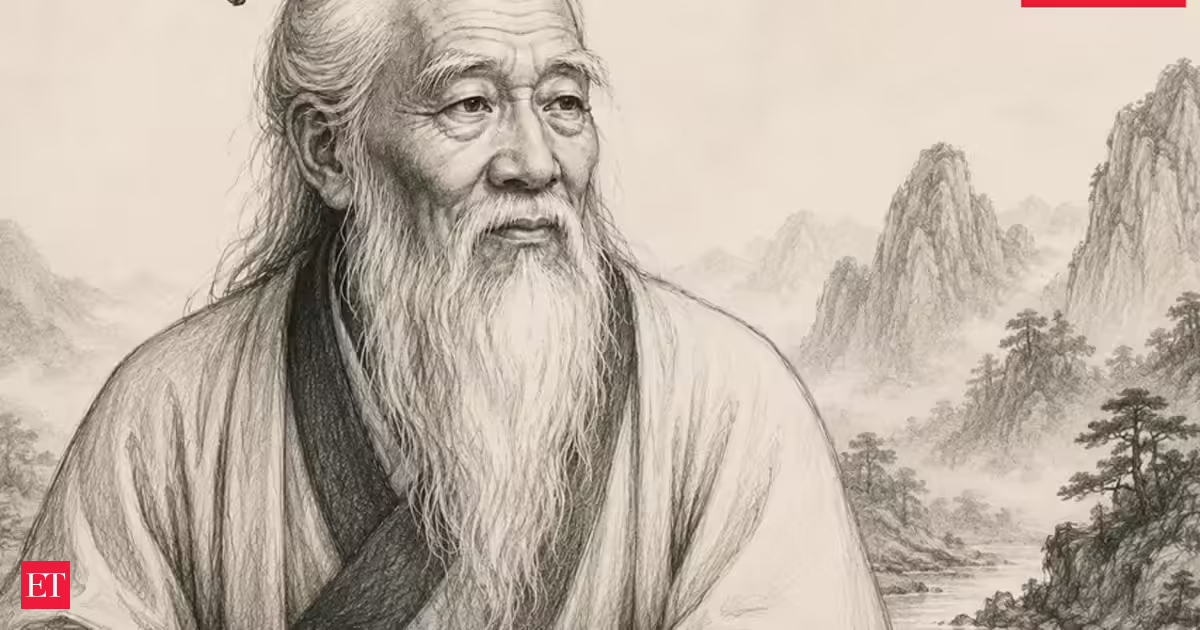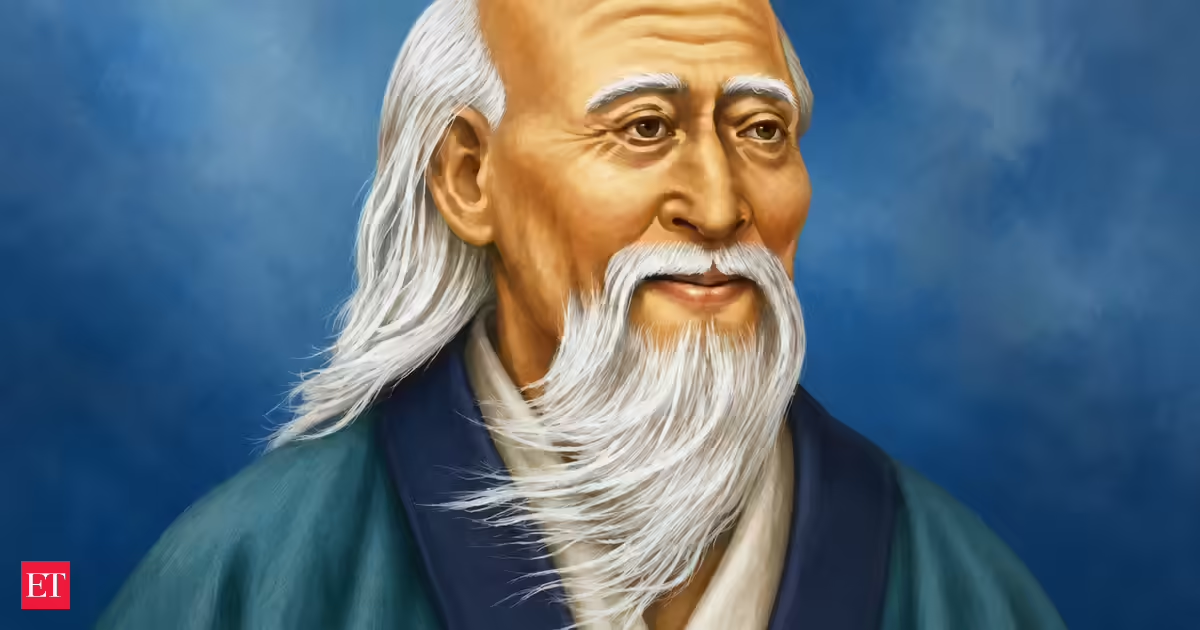
Quote of the day by Lao Tzu begins with a short line that connects silence and knowledge. The quote says, “Those who know do not speak. Those who speak do not know.” The words come from Laozi, the first philosopher of Daoism and the linked author of the Daodejing. The message links education, wisdom, human behavior, and learning. Many people read the quote as a lesson about speech, humility, and awareness. The story of Laozi also includes history, legends, religion, and philosophy. Scholars study his life, his writings, and the impact of Daoism on Buddhism and culture across China and beyond.The quote says,“Those who know do not speak. Those who speak do not know.” This line from Lao Tzu highlights the link between knowledge and silence. The message explains that deep understanding often leads to careful speech. People who truly know a subject may choose to observe, listen, and reflect instead of speaking often. The quote also warns that frequent talking can show limited understanding. It encourages patience, thoughtful communication, and learning through listening.Meaning of the quote and its relevanceThe quote states that true knowledge often stays quiet. It suggests that people who understand deeply do not feel the need to speak often. It also suggests that constant talking may show lack of deep understanding.You Might Also Like:This idea connects to education and human behavior. Many teachers say listening leads to learning. The quote shows how silence can help observation and reflection. The message is often used in leadership, study, and communication. The relevance continues today. Social media, debates, and public speech show how people speak often without full knowledge. The quote reminds readers to value thinking before speaking.History of Laozi and Early DaoismLaozi flourished in the 6th century BCE in China. He is known as the first philosopher of Daoism. He is believed to be the author of the Daodejing, a key Daoist text. Modern scholars say the Daodejing may not have one single author. Some parts may come from different writers across time. Still, Daoism shaped Buddhism and influenced culture. Confucians respected Laozi as a philosopher. In popular religion he became a saint or god. During the Tang dynasty, he was worshipped as an imperial ancestor.The life story recorded in ancient textsThe main biography comes from the Shiji written by Sima Qian around 100 BCE. The text says Laozi was born in Quren in the state of Chu, now in Henan province. His family name was Li. His personal name was Er. His title was Dan. He worked at the Zhou royal court as a shi, a scholar linked with sacred books, astrology, and records.You Might Also Like:The biography also describes a meeting between Laozi and Confucius. Scholars consider this meeting legendary because sources differ. In the story, Laozi criticized pride and ambition. Confucius later compared him to a dragon rising into the sky.The journey west and the writing of the DaodejingA famous legend tells of Laozi leaving China as the Zhou dynasty declined. He reached the Xiangu Pass near the state of Qin. The guardian Yinxi asked him to write a book. Laozi wrote a text in two sections of 5,000 characters. This became the Daodejing, which explains Dao and De. After writing the book, he left and disappeared. Sima Qian wrote that no one knew what happened next. This mystery added to the legend of Laozi.Debate about his real existenceScholars question whether Laozi was one real person. Some think the Daodejing includes writings from different times. A version found at Guodian dates before 300 BCE. Some scholars link the book to an astrologer named Dan. Others link it to a genealogy from Sima Qian. That genealogy shows a Li family claiming descent from the sage. Because of these debates, the name Laozi may represent a type of wise teacher rather than a single historical person.You Might Also Like:Religious legends and worshipFrom the 2nd century CE, many religious stories appeared. During the Han dynasty, Laozi became a mythical figure. People worshipped him and some emperors honored him. In religion, he became Lord Lao or Lao Jun. Stories say he came to Earth many times to teach rulers. One legend says he was born after 72 years in the womb. Another says he was born near a plum tree, which gave him the surname Li. Some stories even said Laozi became the Buddha. These stories led to religious debates between Daoism and Buddhism.Life lessons from the quoteThe quote teaches lessons about knowledge and behavior.First lessonListening supports learning. Silence gives time to think.Second lessonHumility supports wisdom. Knowledge does not require constant speech.Third lessonEducation includes observation and patience.Fourth lessonLeadership includes calm and reflection.Fifth lesson Communication improves when people think before speaking.These lessons appear in classrooms, workplaces, and daily life.Laozi Continued Respect and InfluenceLaozi remains respected in China. Confucians see him as a philosopher. Many people see him as a saint or god. Daoists see him as an expression of the Dao. His teachings shaped philosophy, religion, and culture. The Daodejing remains widely read. The quote continues to spread through education, leadership, and personal growth.You Might Also Like:
Quote of the day by Lao Tzu: 'Those who know do not speak. Those who speak...' Life lessons on knowledge, human behavior, education and smartness by Chinese Daoism first philosopher Laozi
Quote of the day by Lao Tzu explores the famous line “Those who know do not speak. Those who speak do not know.” The saying links knowledge, education, human behavior, wisdom, silence, and smart thinking with Daoism and the life of Laozi. This explainer shares meaning, history, biography, legends, and life lessons. It explains how the Daodejing shaped philosophy, Buddhism, and belief systems and why the quote still matters today.
847 words~4 min read