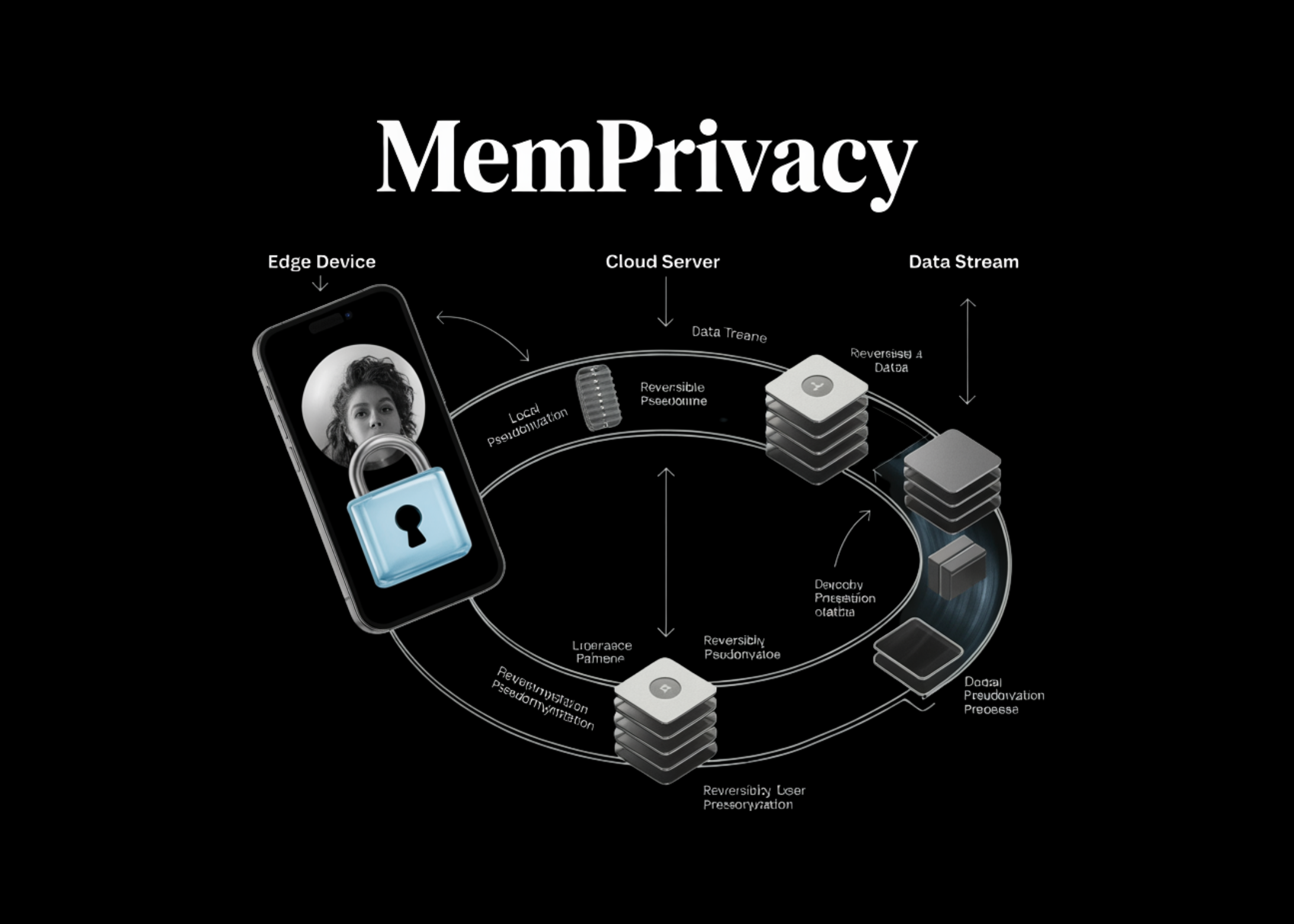
As LLM-powered agents move from research to production, one design tension is becoming harder to ignore: the more useful cloud-hosted memory becomes, the more private user data it exposes. Researchers from MemTensor (Shanghai), HONOR Device and Tongji University have introduced MemPrivacy, a framework that attempts to resolve this tension without sacrificing the utility that makes personalized memory worthwhile in the first place.
The Core Problem With Cloud Memory
When you interact with an AI agent, your conversation often contains sensitive details like health conditions, email addresses, financial figures, passwords, and more. In a typical edge-cloud deployment, the user’s device (the edge) handles input, while computation-heavy memory management and reasoning happen in the cloud. This architecture is efficient, but it means raw, unfiltered user data travels to and persists in cloud systems.
The risk is not theoretical. Prior studies show that multi-turn memory attacks can induce privacy violations with success rates up to 69%, and leakage attacks against memory systems can reach 75% success. Indirect prompt injection can even manipulate agents into actively eliciting private information from users. Once sensitive content enters cloud logs, vector databases, or external memory stores, it can remain accessible through subsequent storage, retrieval, and reuse stages well beyond the original interaction.