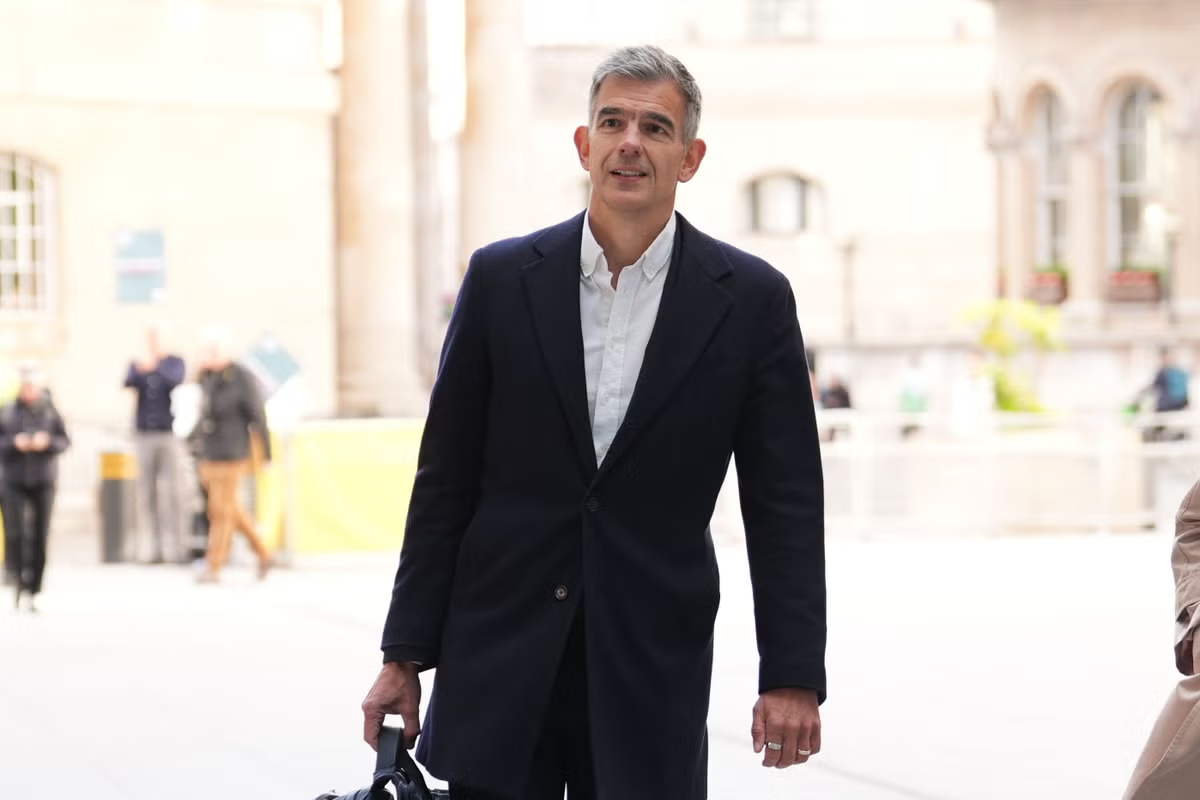
Matt Brittin is the BBC’s new director general – though not a name who has rocked TV or media circles hereto. The former Google executive mentioned that he has attended the industry event of the Edinburgh TV Festival “incognito”, which produced some amusement among veteran broadcast executives who joked that he wouldn’t have been widely recognised, even if he’d turned up “with a giant neon name badge”.It’s an anecdote that underlines the cultural gap between the worlds of TV news and a culture in which the top broadcast executives tend to move in shoals from one organisation to another. It also hints at a wariness about now having a “tech bro” in the open-plan corner office where, as the director general, he will sit among the programme-makers of Broadcasting House.And on his first day, he’s already signalling the “tough choices” that will have to be made. He was greeted by protesting journalists, striking over shift changes at the BBC World Service. “The BBC has proved throughout its history how quickly it can reinvent itself to serve the needs of audiences”, he said. “We need, collectively, to call on that sense of urgency now. That means moving with velocity and clarity.” Striking a tone that many unsure of the broadcaster’s future may find worrying, he added “I know change will not be easy. Tough choices are unavoidable as we make savings. We should ask ourselves, honestly: if we were inventing the BBC today, what would we do? Then respond with clarity, pace and purpose.”Brittin, 57, looks a bit like an inquisitive mole, with his youthful fuzzy haircut and brooding brows. He smiles a lot – at least for now. I have bumped into him over the years in his former role as head of Google in Europe and as a fixture on the Davos convening scene. He has always seemed positive and cheerful, with a good grasp of how to hold the room while giving presentations about the future of tech and society. He is certainly less arrogant than the usual tech bro stereotype.As someone who worked closely with him puts it, he’s about “good vibes”. That may be one of the reasons he impressed the BBC board browbeaten after an annus horribilis of Donald Trump litigation and rows over Gaza coverage, and the backwash of scandals around Huw Edwards and a court case looming over years of alleged sexual abuse by the DJ Tim Westwood.But the challenges show no sign of abating.Brittin will have to fend off brickbats for being too woke about trans rights and gender issues as well as accusations of shifting too far to the right in its coverage of Gaza. In the midst of upsetting all sides in the quest for an elusive impartiality, Brittin needs to tie down the terms of the BBC charter with the culture secretary, Lisa Nandy, while keeping one eye on Reform UK’s claim that it only serves the metropolitan elite and deserves less licence fee support.To clinch the job, he will have had to have answered what one board member describes as “the 20-point exam question” – how the BBC works with the streaming platforms, including YouTube, owned by Google’s parent company, without ending up trapped under the wheels of big tech interests. He also needs to figure out how to fulfil its founder Lord Reith’s mission to “inform, educate and entertain” with its licence-fee business model while competing with deep-pocketed US competitors producing global hits.Brittin won the job from a depleted field from which many industry players had absented themselves. One leading figure at another major broadcast outlet who did not enter the race says: “The pay is not that good for the blood pressure damage.”Brittin’s case for making the BBC more adaptive to the digital era will have secured his appointment, and he knows how to negotiate leverage in ways other contenders could not. However, anyone following the ups and downs of the Davie years from his appointment in 2020 might see echoes of the outgoing director general in the new one – namely that he has no real editorial experience. This in turn means he will have a limited understanding of the pressures on the BBC’s due impartiality model to withstand a more reactive and divisive mood in party politics and the country.Brittin met Prince William in 2017 at a meeting of The Royal Foundation’s Taskforce on the Prevention of Cyberbullying (PA)He also arrives with suspicion from Conservative and Reform quarters that, having worked on the business side at the left-leaning Trinity Mirror group and taken a role on a board overseeing the Guardian newspaper last year, he may bring certain assumptions with him. He definitely has a fan club: when he left, one colleague posted, “You role-modelled standing up for DEI.” But this ready embrace of corporate diversity and inclusion models is exactly the sort of assumption that raises more questions than it answers in broadcast settings, and frequently fuels internal arguments about everything from news and current affairs coverage to a tendency for senior staff to hail from similarly social and geographic backgrounds with metropolitan, centre-leftish outlooks.Brushfires and culture wars will surely greet Brittin, as they wore down Davie. They were in full effect even this week with the announcement of the death of Jenni Murray, one of its most beloved broadcasters. After Murray received internal criticism for her gender-critical views and ended an illustrious broadcast career on a sour note, the news of her passing didn’t stop another bout of hostilities being unleashed.By appointing a male director general, and with a male acting deputy, Rhodri Davies (a role hastily concocted by the board in its last crisis, which Brittin might want to shape to his own agenda), the gender balance at the top is awkward. Deborah Turness, the CEO of news, departed in a hurry with Davie. A desire to appoint the BBC’s first female boss melted away due to a lack of credentialed women applying for the job.It is hard to see, then, the head of news job or a permanent deputy director general slot in this constellation not going to a woman. Esme Wren, head of Channel 4 News, is touted for the news head role, but Nick Sutton, head of Sky News platforms and a well-liked former editor at Radio 4, may also have an eye on a senior role. However, the findings from the recent BBC-commissioned report, which pointed out that it is seen as failing to support female broadcasters who thrive in their fifties and then mysteriously disappear from the airwaves in droves, will be hard to ignore.Tim Davie announced his resignation as director general in November (PA)The hope, of course, will be for Brittin to bring a fresh eye to its talent range – and halt the tendency to look inwards and make “Buggins’ turn” appointments on screen and behind the scenes. As a former champion rower, he is naturally competitive and steely behind the ready smile. However, as a director general who is not a journalist, he will need to show that he can ask the hard questions of the BBC’s journalists and range of output with curiosity, or risk others doing that for him.However, despite the grumbles of low expectations, I see an experienced team leader who can manage complexity and has the convening power to bring more openness of opinion and debate to a BBC which is used to conducting its debates behind closed doors.When he joined Google in the early 2000s, at the height of tech optimism, its co-founder Larry Page advised Brittin to “put the best people you can on important work and get out of the way”. Getting out of the way is impossible for a director general. It’s a job in the limelight that comes with an ejector button attached. Brittin needs to strap in for the bumpy BBC ride. He’ll need more than vibes to get to the other side of a treacherous battlefield.Anne McElvoy is executive editor at Politico and co-host of the podcast ‘Politics at Sam and Anne’s’
I’ve met Matt Brittin – the new BBC boss is strapping in for a bumpy ride
As the new director-general eyes savings at the broadcaster, Anne McElvoy looks at how the former Google executive will fare at the helm of Britain’s most scrutinised newsroom
1,340 words~6 min read