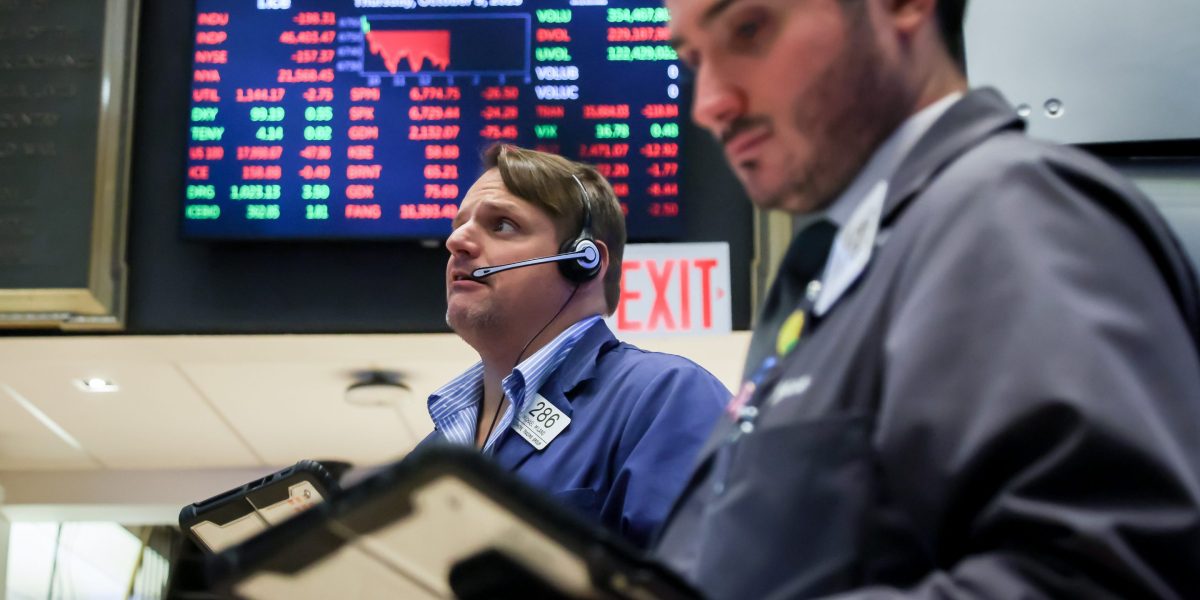
The numbers are hard to ignore. The top 10 companies in the S&P 500 now account for 34% of all index profits—a share that’s doubled since 1996—and 41% of its market cap. AI companies represent nearly 87% of all venture capital funding and roughly half of all investment-grade bond issuance.
By almost any measure, artificial intelligence isn’t just influencing markets. It is the market. And that has Wall Street doing something it can’t quite help: reaching for history.
Every major strategist covering equities is running the same mental comparison — lining up today’s AI boom against the late 1990s internet buildout and asking where we are in the cycle. Evercore ISI’s Julian Emanuel says the post-March 2026 rally “feels like 1999 … relatives, friends, doctors, Uber drivers are all talking about AI/Tech stocks.” On the other side, veteran chip analyst-turned-fund manager Dan Niles argues the closer parallel is 1997 — years three and four of an infrastructure buildout with real runway remaining. Both men are staring at the same market and seeing different years.
The Goldman Sachs equity strategy team led by Ben Snider put a fine point on the structural problem this week. In their Weekly Kickstart, they describe the S&P 500 as “one big trade”: technology accounts for 85% of the index’s 10% year-to-date return, and Nvidia alone — at 9% of S&P market cap — has contributed 20% of the aggregate YTD return.