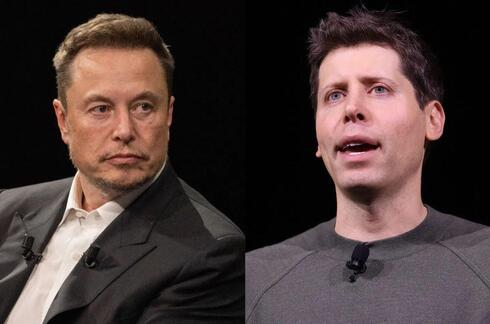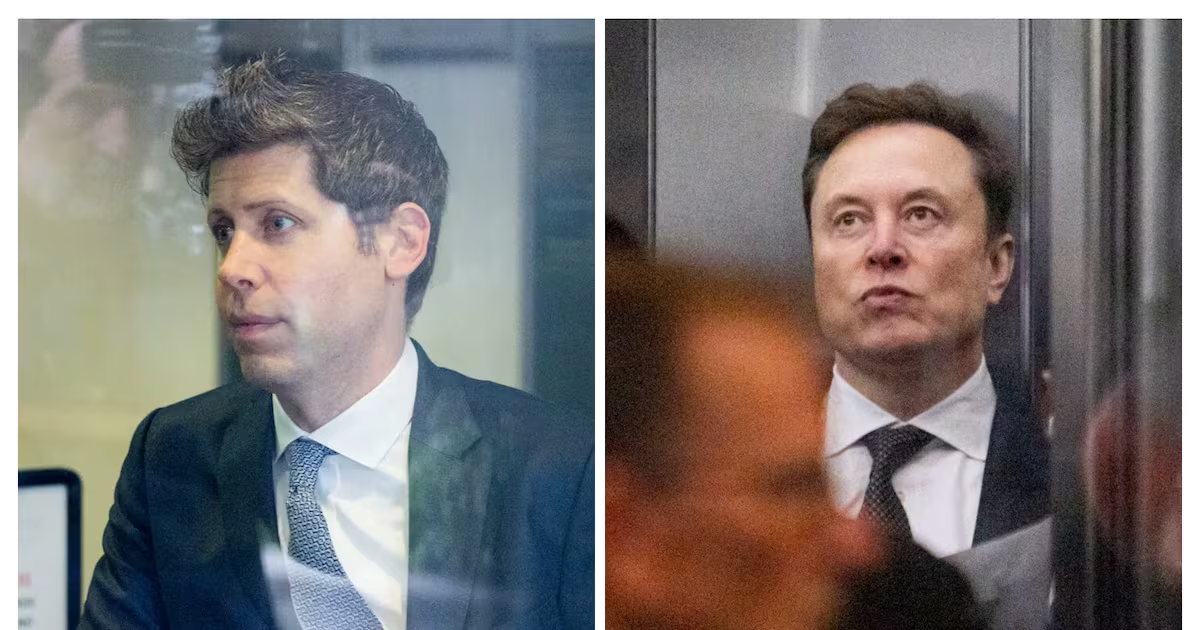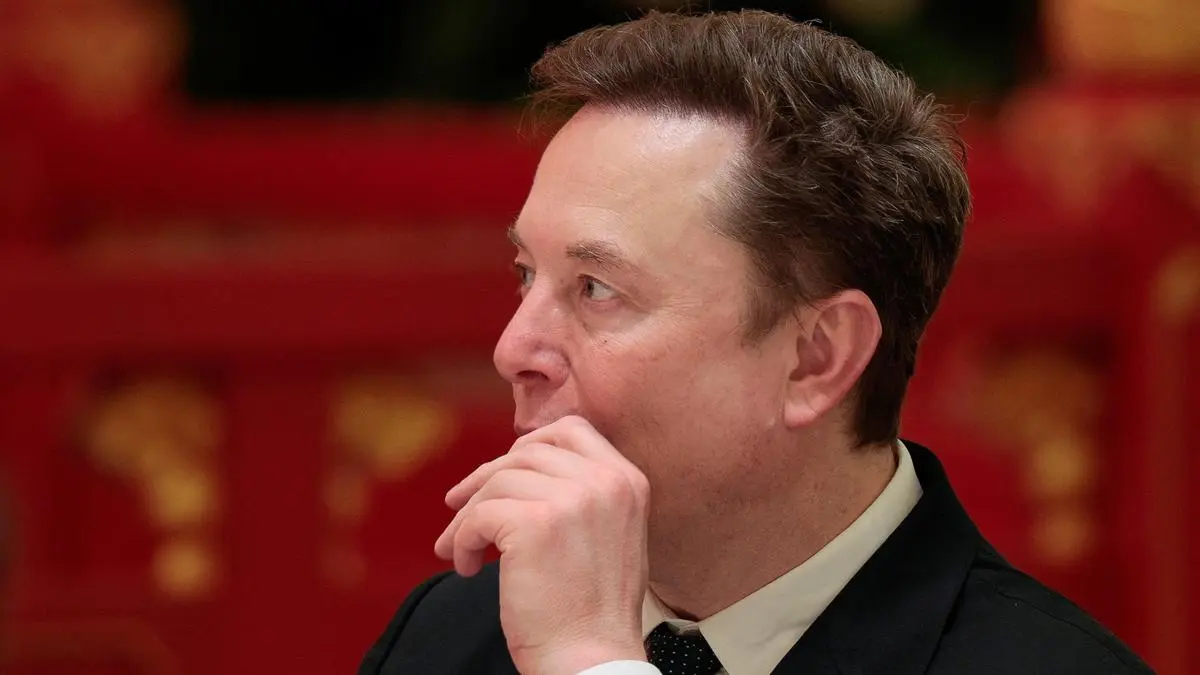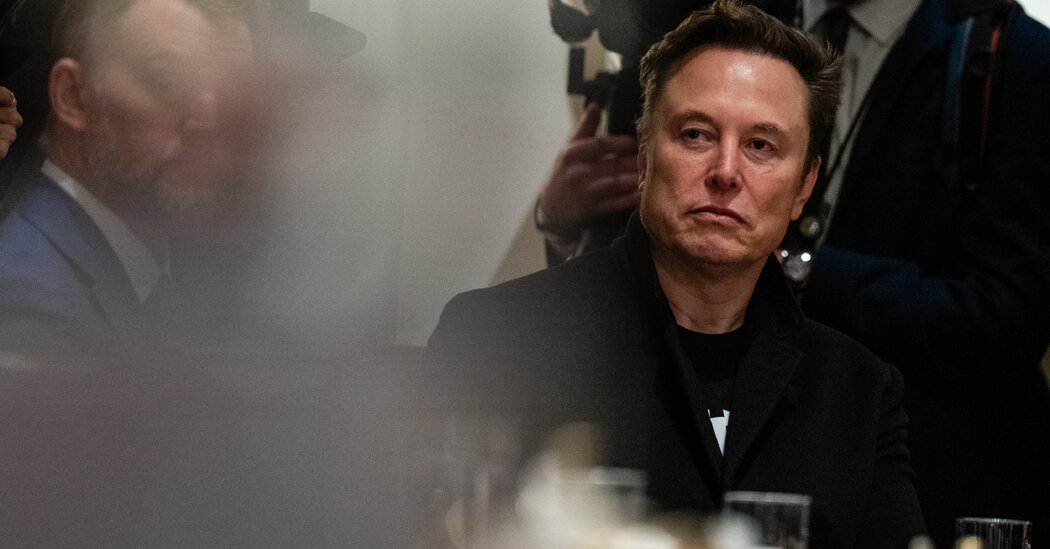
Latest PinnedUpdated Here’s the latest.A jury on Monday rejected Elon Musk’s lawsuit claiming that OpenAI, the artificial intelligence company he co-founded, had violated its original mission by putting commercial interests over the good of humanity.The closely watched case had the potential to upend the fast-growing A.I. landscape. Mr. Musk accused OpenAI and its leaders, Sam Altman and Greg Brockman, of “stealing a charity” by attaching a commercial company to the start-up’s original nonprofit and taking billions of dollars in investments from Microsoft.But the jury in Oakland, Calif., didn’t rule on the merits of the argument. Instead, it found that Mr. Musk did not bring his lawsuit until after the three-year statute of limitations expired, nullifying his claim. Mr. Musk filed his suit against the $730 billion artificial intelligence start-up in the summer of 2024, but the jury found that he was aware of the behavior discussed in his complaint against OpenAI as far back as 2021.That means that the jury found that OpenAI; Mr. Altman, its chief executive; and Greg Brockman, its president, were not liable for the claims Mr. Musk brought against the company.Mr. Musk’s lead counsel, Steven Molo, told Judge Yvonne Gonzalez Rogers that Mr. Musk intended to appeal. Marc Toberoff, who represented Mr. Musk in the trial, told reporters he planned to appeal the verdict but declined to answer a question about the basis for that appeal.Mr. Altman is now free to solidify his control of OpenAI, which appears headed toward one of the largest initial public offerings in history. The company also will be free to pursue a data center expansion plan that could cost hundreds of billions of dollars.Mr. Musk had asked for $150 billion in damages and wanted Mr. Altman to be kicked off OpenAI’s board of directors. He also wanted to unwind a move that OpenAI made to become a for-profit company ahead of an initial public offering as early as this year.(The New York Times has sued OpenAI and Microsoft, claiming copyright infringement of news content related to A.I. systems. The two companies have denied the suit’s claims.)Here’s what else to know:OpenAI reaction: In the hallway outside the courtroom, lawyers for OpenAI hugged and congratulated one another with big slaps on the back. William Savitt, OpenAI’s lead counsel, said outside the courthouse that he was “delighted” by the verdict. “I can’t say whether Mr. Musk will appeal, but we are very, very confident in our case,” he said.Microsoft not liable: The jury’s decision means that Microsoft, OpenAI’s chief partner and another defendant in the case, is also not liable for Mr. Musk’s claims. His suit accused Microsoft of aiding and abetting OpenAI in breaching its founding agreement. In a statement, Microsoft said, “The facts and the timeline in this case have long been clear and we welcome the jury’s decision to dismiss these claims as untimely.”Remaining claims: Some of the claims made in Mr. Musk’s suit still remain. The suit also made antitrust claims against Microsoft and OpenAI, and these were slated for a potential second stage of the trial. Judge Gonzalez Rogers said on Monday that the antitrust claims were “not very good claims” given the aggressive competition in the A.I. market, but she has not dismissed them.Major stakes: The trial’s outcome had the potential to disrupt the A.I. race. A win for Mr. Musk, who has his own for-profit lab, xAI, would have been a win for OpenAI’s competitors, including industry giants like Google and young companies like Anthropic, as well as international competitors such as China’s DeepSeek.Natallie Rocha contributed reporting.Just tuning in? Here’s what to know.The case has brought together the heads up tech luminaries, protestors and media.A jury reached a decision on Monday on Elon Musk’s blockbuster lawsuit against OpenAI, finding that the billionaire brought his suit after the statute of limitations expired.Mr. Musk co-founded OpenAI in 2015 with Sam Altman and other artificial intelligence researchers. But that relationship soured, and he left the company. He sued OpenAI in 2024 and later added Microsoft to the suit, too.Here’s what to know:What is the case about?OpenAI was established in 2015 as a nonprofit, but Mr. Musk left the start-up in early 2018 after a power struggle. OpenAI’s leadership then attached the A.I. lab to a for-profit venture and started seeking funding from investors like Microsoft.OpenAI is now worth an estimated $730 billion as a for-profit company overseen by the original nonprofit, and is expected to go public as soon as this year in one of the biggest initial offerings in history.Mr. Musk sued the start-up, its founders and Microsoft in 2024, arguing that OpenAI abandoned its humanitarian mission in favor of monetary gain. He asked for more than $150 billion in damages from OpenAI and Microsoft, OpenAI’s primary partner. He also sought to remove Mr. Altman, OpenAI’s chief executive, from the company’s board and to unravel the commercial company that OpenAI created last year to oversee technology like ChatGPT.What did Mr. Musk argue?Mr. Musk’s legal team built its case around a simple concept: “It is not OK to steal a charity,” as the billionaire said during his first day on the stand.How did OpenAI defend itself?OpenAI’s lawyers pointed to texts, emails and conversations in which Mr. Musk pushed the start-up to seek more funding and suggested the idea of it becoming a for-profit company.They also pointed to the timing of the lawsuit, which was filed years after Microsoft first invested in OpenAI and after Mr. Musk founded his own A.I. start-up, xAI.Who testified?A string of tech luminaries took the stand over the past three weeks, including Microsoft’s chief executive, Satya Nadella; OpenAI’s president, Greg Brockman; and Shivon Zilis, who served on the OpenAI board of directors, worked closely with Mr. Musk for years and is the mother of four of his children. Mr. Musk and Mr. Altman testified, too.What happens next?The judge accepted the jury’s decision and dismissed Mr. Musk’s claim “on the spot,” but some of the claims in the suit still remain.One last part of the trial was unresolved. When Mr. Musk added Microsoft to his suit in November of 2024, he claimed that two Microsoft board members had undermined antitrust laws because they were also on the board of OpenAI. He also claimed that OpenAI used anticompetitive practices as it raised money for its for-profit venture.These claims are still outstanding and were slated for a potential second stage of the trial. The judge discussed the claims with the lawyers on Monday. She has previously said that a second stage of the trial is unlikely to happen, because there is plenty of competition in the A.I. market.Mr. Musk’s lawyers said on Monday that he planned to appeal.(The New York Times has sued OpenAI and Microsoft, claiming copyright infringement of news content related to A.I. systems. The two companies have denied the suit’s claims.)AdvertisementSKIP ADVERTISEMENTMarc Toberoff, a lawyer who represented Musk, began a press conference by referencing two battles from the Revolutionary War and said “these were major losses for Americans, but who won the war? And this one is not over.”He said Musk plans to appeal the verdict, but Toberoff declined to answer a question about what the basis for that appeal will be. He also declined to comment on his communication with Musk since the verdict dropped.As he addressed reporters just outside the courtroom, Steven Molo, Musk’s lead counsel, said the evidence showed that OpenAI “stole a charity.” He said he wants to move an appeal forward even before the judge rules on whether the antirust portion of the trial can proceed.Molo was clear that his main interest is Musk’s claim of “breach of charitable trust,” not the antitrust claims. He repeatedly said that the breach has happened and is “ongoing.”One last part of the trial was unresolved. When Musk added Microsoft to his suit in November of 2024, he claimed that two Microsoft board members had undermined antitrust laws because they were also on the board of OpenAI. He also claimed that OpenAI used anticompetitive practices as it raised money for its for-profit venture. These claims are still outstanding.Judge Yvonne Gonzalez Rogers told Steven Molo, Musk’s lead counsel, that the antitrust claims are “not very good claims.” There is “a lot of competition in the industry” related to A.I., she added. But she has not yet dismissed the antitrust claims, instead asking Molo to review them. He acknowledged that he has not yet given the claims much thought.OpenAI’s lead counsel said he was “deeply skeptical” of the antitrust claims. Molo then told the judge that he “owed it to his client” to review the claims.While OpenAI has been at the heart of the trial, the verdict is an important win for Microsoft too. Though Microsoft has taken steps to be less closely entwined with OpenAI, the relationship is still critical for the company. Microsoft has access to OpenAI’s technology through 2032, and counts on the startup as a major customer of its computing services. Microsoft is also a large shareholder in the startup and could stand to benefit if and when OpenAI goes public.AdvertisementSKIP ADVERTISEMENTMusk’s lead counsel, Steven Molo, told the judge that Musk intends to appeal.ImageCredit...Jason Henry for The New York TimesThe lawyers have now trickled back into the courtroom to discuss Musk’s antitrust claims and other odds and ends.Here’s what was on the jury’s list for a decision.ImageThe Ronald V. Dellums U.S. Courthouse in Oakland, Calif.Credit...Brennan Smart for The New York TimesThe jury has made a decision on Elon Musk’s claims against OpenAI.During the jury instructions on Thursday, Judge Yvonne Gonzalez Rogers reminded the nine members of the jury that their decision needed to be based on the evidence of the case and not on their opinion of Mr. Musk or Sam Altman. And it must be unanimous.First, the jury had to decide whether Mr. Musk filed his lawsuit within the statute of limitations. If the answer was yes, the jury would have then weighed the claims themselves. The jury ultimately decided that the claims were barred by the statutes of limitations.Here’s what was on their forms for deliberation:Claim for breach of charitable trust: The statute expires after three years, which means Mr. Musk needed to prove that he had no way of knowing that OpenAI had breached its founding agreement before Aug. 5, 2021.Claim for restitution based on unjust enrichment: The statute expires after two years, which means Mr. Musk needed to prove his claim before Aug. 5, 2022.Claim for aiding and abetting breach of charitable trust: The statute expires after three years. However, this timeline differed from the others because Microsoft was added to the lawsuit four months after the initial filing.And second:Claim for breach of charitable trust: Did OpenAI, Mr. Altman or Greg Brockman, the start-up’s president, “steal a charity,” as Mr. Musk claims?Claim for restitution based on unjust enrichment: Did Mr. Altman, Mr. Brockman or OpenAI get rich off a nonprofit in an unjust way that went against the mission of building artificial intelligence to benefit humanity?Claim for aiding and abetting breach of charitable trust: Did Microsoft help the OpenAI defendants “steal a charity,” as Mr. Musk claims?AdvertisementSKIP ADVERTISEMENTThere’s a labor group outside that has been chanting against OpenAI and Musk. “Nothing about us, without us,” the group chanted. A man, wearing a pink beanie and glitter-covered belt, asked if Musk’s company, Neuralink, is “the mark of the beast,” referring to the Biblical prophecy.Some in the crowd chuckled nervously.Savitt says Sam Altman has “commitment to the mission” of building responsible A.I. in a press interview. “Artificial intelligence has the capacity to create tremendous gifts, but it also has risks,” he said. “There’s a lot of work to do.”Even after today’s decision from the judge and jury, some of the claims made in Musk’s suit still remain. The suit also made antitrust claims against Microsoft and OpenAI, and these were slated for a potential second stage of the trial. In about half an hour, the judge is expected to discuss these claims when the lawyers return to the courtroom.Judge Gonzalez Rogers has previously said that the second stage of the trial based on antitrust claims was unlikely to happen, because there is plenty of competition in the A.I. market.Outside the courthouse, William Savitt, OpenAI’s lead lawyer, told a reporter he was “delighted” with the verdict and thanked the jury. The fast verdict was “unusual” but he felt OpenAI had a strong case, he said.“I can’t say whether Mr. Musk will appeal, but we are very, very confident in our case,” Savitt added.Savitt gave Musk some credit while speaking to a CNBC reporter. “He is a formidable adversary, of course,” he said, “But we feel we have a strong case.” ImageCredit...Jason Henry for The New York TimesAdvertisementSKIP ADVERTISEMENTMicrosoft commented: “The facts and the timeline in this case have long been clear and we welcome the jury’s decision to dismiss these claims as untimely. We remain committed to our work with OpenAI to scale AI for people and organizations around the world.”Outside the courthouse, a gaggle of reporters waited for OpenAI’s lawyers to give remarks.Onlookers trickled into the courtyard, including a small group of people who are holding “STOP AI” signs and wearing T-shirts with the slogan. They have made appearances here throughout the trial.OpenAI’s legal team has gathered in a room just down the hall from the courtroom. As reporters waited in the hallway, applause erupted from inside the room.The jurors have not yet emerged.In the hallway outside the courtroom, lawyers for OpenAI are hugging and congratulating one another with big slaps on the back. William Savitt, OpenAI’s lead counsel, wore a wide grin on his face as he walked to the back of the hallway to join his colleagues.Jason Kwon, OpenAI’s chief strategy officer, celebrated with the trial team in the hallway.AdvertisementSKIP ADVERTISEMENTMarc Toberoff, one of Musk’s lawyers, just gave a one-word comment on the decision: “Appeal.”The judge has accepted the jury’s decision. She dismissed Musk’s claim “on the spot,” as she just told the (many) lawyers in the case.Musk also was not present for the verdict. He spent multiple days in the courtroom during the trial’s first week while he testified, but has not appeared since.ImageCredit...Jason Henry for The New York TimesJudge Yvonne Gonzalez Rogers has left the jurors with a “poetic comment” on the jury system.“A jury reflects the attitudes and mores of the community from which it is drawn,” she said, paraphrasing another judge. “It lives only for the day and does justice according to its limits. The group of jurors who are drawn to hear a case make a decision and then melt away. It is not present the next day to be criticized. It is the one governmental agency that has no ambition. It is as human as the people who make it up.”The judge then excused the jury.AdvertisementSKIP ADVERTISEMENTThough they were the courtroom for much of the trial, OpenAI executives Sam Altman and Greg Brockman were not present for the verdict.Lawyers on Musk’s trial team looked sunken in their chairs. The case has been years in the making and the past month of the trial has been grueling. I have spotted a few smiles from the OpenAI side of the room.The jury’s decision also means that Microsoft, another defendant in the case, is not liable for the claim Musk brought against the tech giant.The judge has given her thanks to the jury and has instructed them that they can talk to “anyone about anything.” A laugh goes out across the gallery. She also notes that those discussions must only occur at a reasonable time and place and “only with your consent.”She has prepared the jury for the deluge of attention the members will receive once they leave this courtroom.AdvertisementSKIP ADVERTISEMENT
OpenAI Lawsuit Live Updates: Jury Rejects Elon Musk's Claim in Unanimous Verdict
Elon Musk accused OpenAI of putting commercial gain over the public good, but jurors ruled that the statute of limitations had expired. Mr. Musk’s lawyers said they planned to appeal.
2,616 words~12 min read