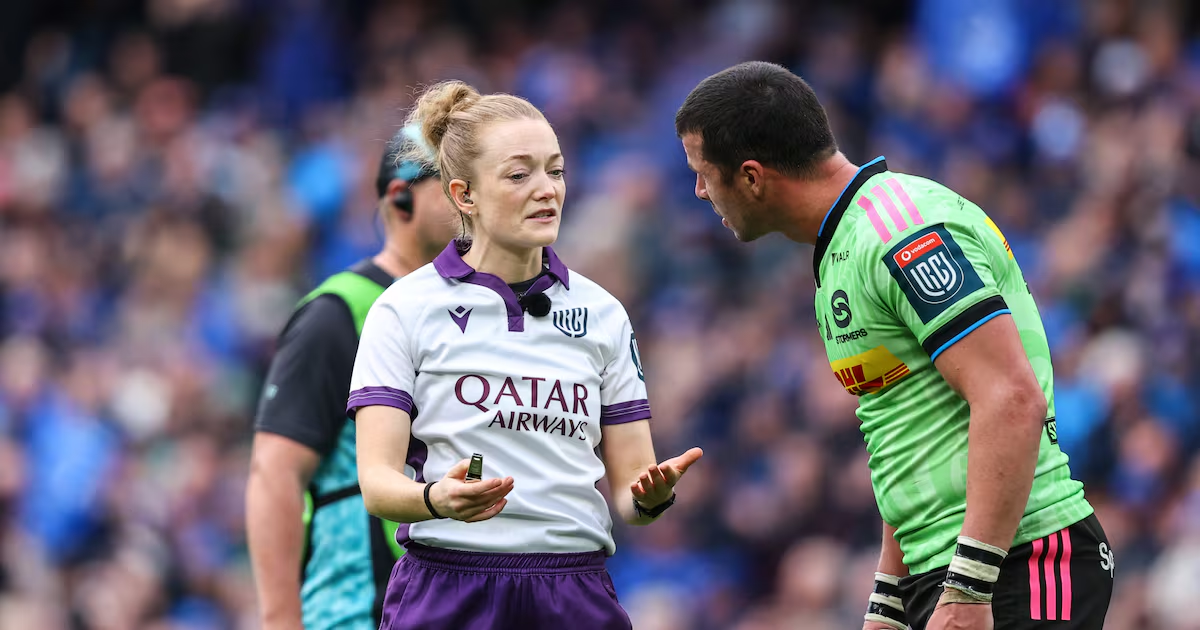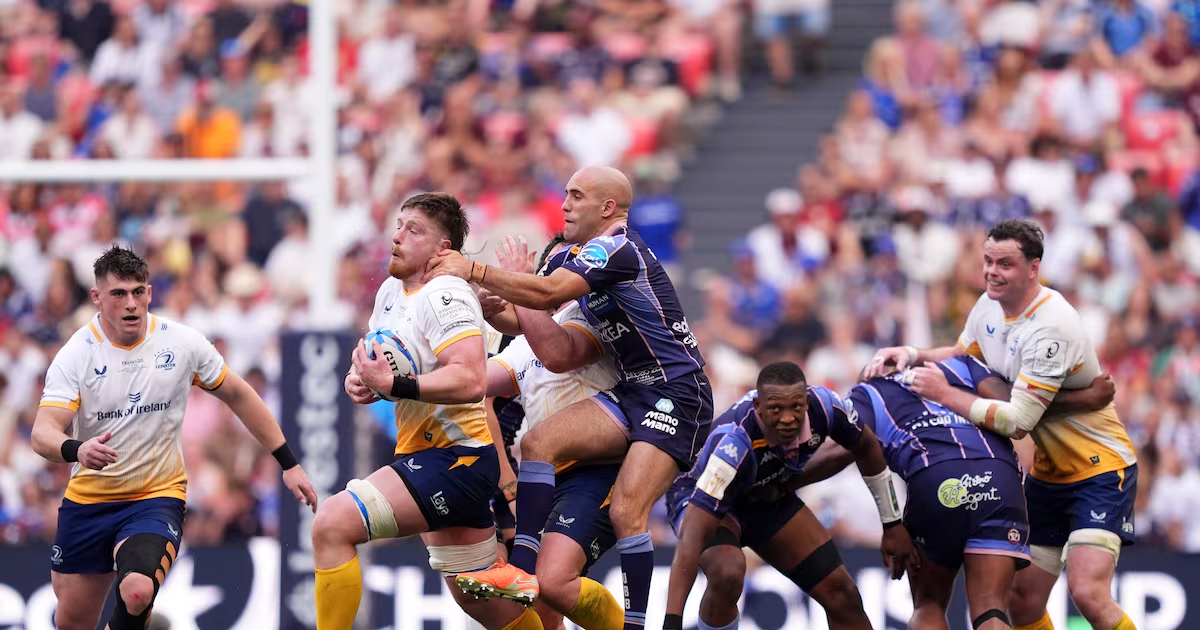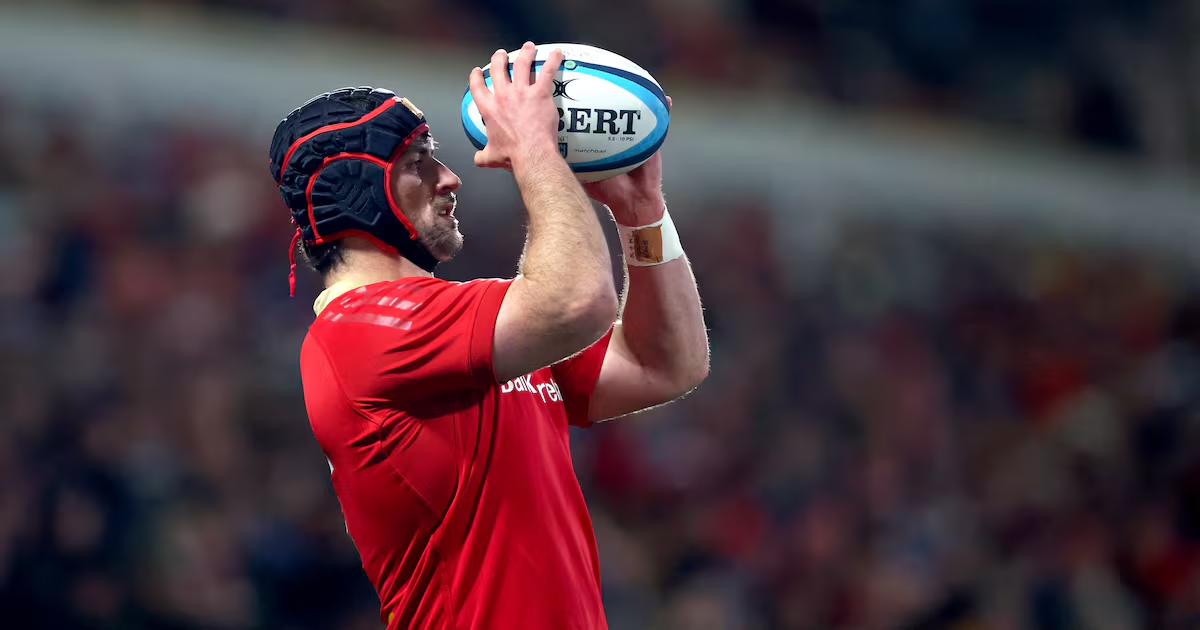
Spitting at someone is revolting. Unfortunately, I know only too well. A short while ago, in Dublin’s supposedly fair city, a cyclist broke the lights and thumped into the side of my car. As I got out to check for any damage, he spat at me. Without troubling you with further odious detail, let me assure you “revolting” is absolutely the correct word. To make matters worse, I couldn’t even remonstrate as he was far too big to risk being thumped. When Craig Casey approached referee Andrea Piardi during Munster’s win over the Lions to tell him that Diarmuid Barron had reported being spat on, the captain spoke earnestly and with conviction. Players do not go around pulling rabbits like this out of the hat. However, Piardi and his TMO Stefano Penne could not find the necessary evidence. The citing commissioner, the vastly experienced Eugene Ryan, interviewed both players and also studied all available video footage. But he could not find conclusive evidence of spitting. It must have been like trying to find rugby’s equivalent of a needle in a haystack. Barron confirmed the allegation to Ryan: that the Lions’ number six, Sibabalwe Mahashe, had spat into his mouth. This was categorically denied by Mahashe, who said he was having a problem with his mouthguard. With no hard evidence, Ryan could not cite. Spitting, of course, does not occur often and is not as painful as other forms of horrible foul play, such as biting or eye gouging. But it has exactly the same effect. It brings the game into total disrepute, tossing the sport into the nearest available sewer. If ever Munster have dug as deeply into their reserves, both in actual personnel and in their play, then it hasn’t been for quite some time – they were terrific last Saturday. Whether it was with 15, 14 or even 13 players, they brought the fight to their opponents, producing a vital victory which avoids the spectre of missing out on the Champions Cup next season. The number of injuries in a squad is not an issue confined to Munster. All professional teams persistently have a long list of players who are crocked. A figure of 27 per cent regular unavailability was mentioned to me recently. That is high but all too believable. The game demands maximum physical force continuously for 80 minutes. Week in, week out. The human body was hardly designed, or constructed, to absorb such levels of punishment. A case in point is Oli Jager, a much-needed Munster front-row asset. He has suffered a lot from concussion and, wisely, is taking time off to consider his future. He may be familiar with the old adage, “if there’s doubt, there is no doubt”.In Ulster, the result once again went down to the wire and there’s yet another huge match approaching in the Challenge Cup final. Matthew Carley will be the referee and I’m sure the excellent Richie Murphy has done his homework on the team of officials. Referee Gianluca Gnecchi was right not to chalk off Glasgow Warriors' final try against Ulster at Affidea Stadium, Belfast, last Friday. Photograph: Ben Brady/Inpho Glasgow were clearly the better team against Ulster last Friday. They had their final try checked for potential obstruction in the build-up. At first look, it appeared that the home team had a good case. However, Gianluca Gnecchi didn’t take long to confirm the vital try. On review, there was nothing clear and obvious enough to chalk off it off. As now happens in all matches, players continue to burden referees with non-stop, incessant queries. The dark art has now progressed to players picking specific incidents as they try to persuade the referee to check this or that with the TMO. At one point at Affidea Stadium last Friday, it seemed Gnecchi would do Glasgow’s bidding and he was put under unacceptable pressure. One way or another, this has got to be stopped.Generally, I am not in favour of protocols, but I have to wonder if it is reaching the point where it might be better to write it all down; as to how, why and when captains are allowed to bring up issues with the referee. Too few referees have the gumption of Nigel Owens, who famously told Richie McCaw not to approach him again. Very politely, he informed the New Zealand captain that if anything more needed to be said that he, Owens, would go to him – not the other way around.[ URC to take no further action over alleged spitting incident during Munster win over the LionsOpens in new window ]The lineout double-banking farce continues, with assistant referees also seemingly unwilling to advise the referee that the thrower has moved from the mark to position himself opposite his own line of players before releasing the ball. That adds up to a crooked throw. Officials falling short in this regard need to do a whole lot better. Currently, they do little by way of what’s written in their job description.If English referee Luke Pearce ever writes a book, maybe he’ll let me choose the title. It’s a favoured phrase: “Next one’s a penalty.” He was in charge last Friday night when Northampton beat Bristol on an extraordinary scoreline of 94-33.In the early stages, Ellis Genge neck-rolled Henry Pollock to the ground from a standing position. A yellow card surely beckoned, but Pearce, having called “Henry and Ellis” over for a chat, invoked the suggested title for his book.The decision not to sanction appropriately looked completely wrong and hardly fair to fellow referees, particularly new officials trying to make their way. Pearce is good, but he lets himself down too often with how he goes about his business. Is this communication-and-sanction approach really the gold standard everybody should strive for? Not in my book it isn’t.
Owen Doyle: Spitting is just as bad as eye-gouging – it drags rugby into the sewer
Diarmuid Barron’s complaint went no further due to lack of evidence, but Munster dug deep for a crucial win
971 words~4 min read