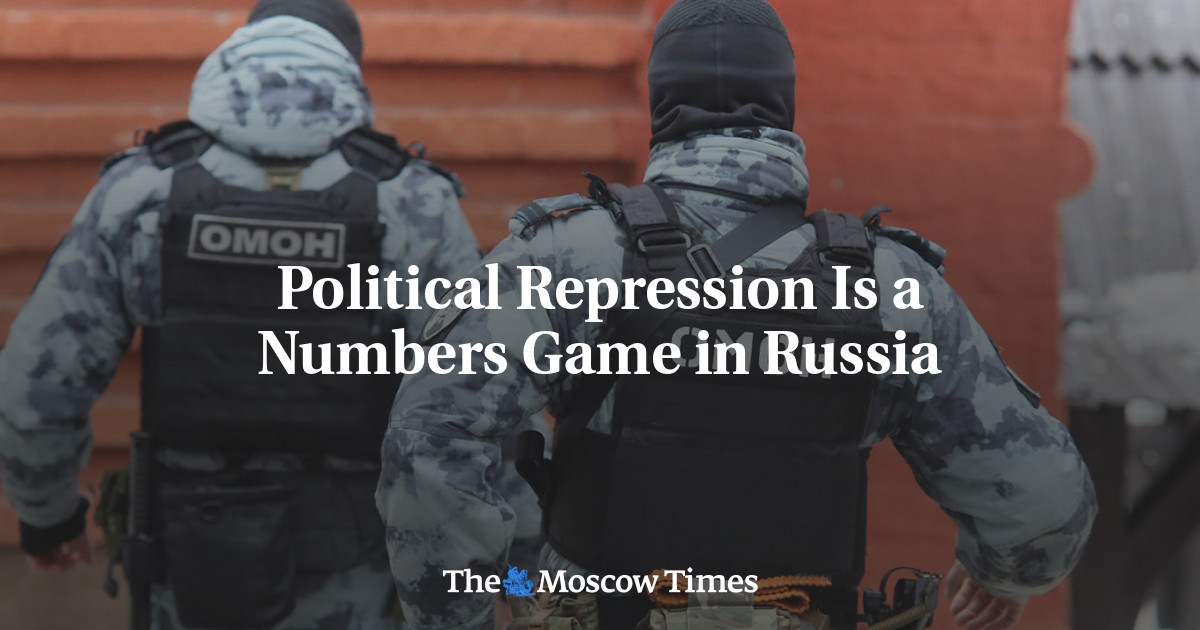
Repression in today’s Russia is not on par with the mass repression of the country’s past. Nevertheless, it fulfills the same function by intimidating society and changing the behavior of millions.
Many people also feel that this repression is intensifying. But human rights data show the opposite: for a year now, the number of new politically motivated cases has remained at the same level — around 500 per quarter.
In the “Repression Barometer” report for the first three months of 2026, researchers from Memorial’s project in support of political prisoners made clear that Russian authorities appear to regard the current level of politically motivated arrests — which plateaued at 500 per quarter — as optimal.
Out of a population of around 140 million, that is not very many cases. By comparison, around four times as many murder cases are opened over the same time frame. Repression does not affect the majority. In 1937-1938, for example, more than 1.37 million people out of the U.S.S.R.’s population of 162 million were arrested in cases involving “counter-revolutionary crimes” and around half of them were shot.
But modern repression performs the same role as the mass repressions of the 1930s by creating a sense of an all-powerful, punitive hand of the state that effectively changes the behavior of millions.