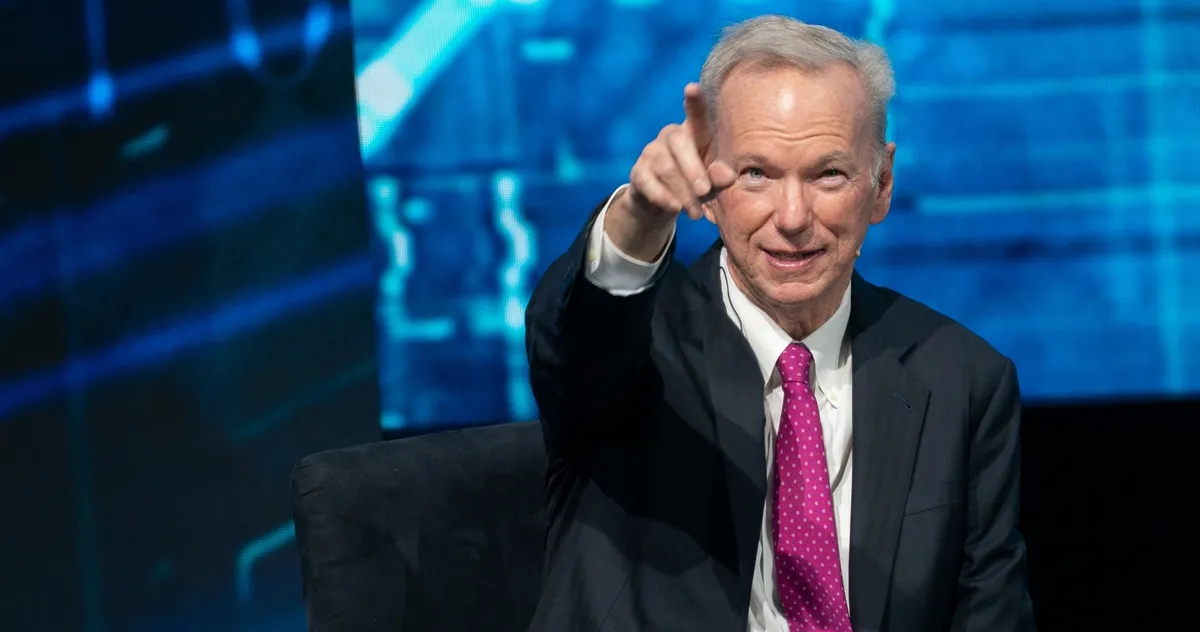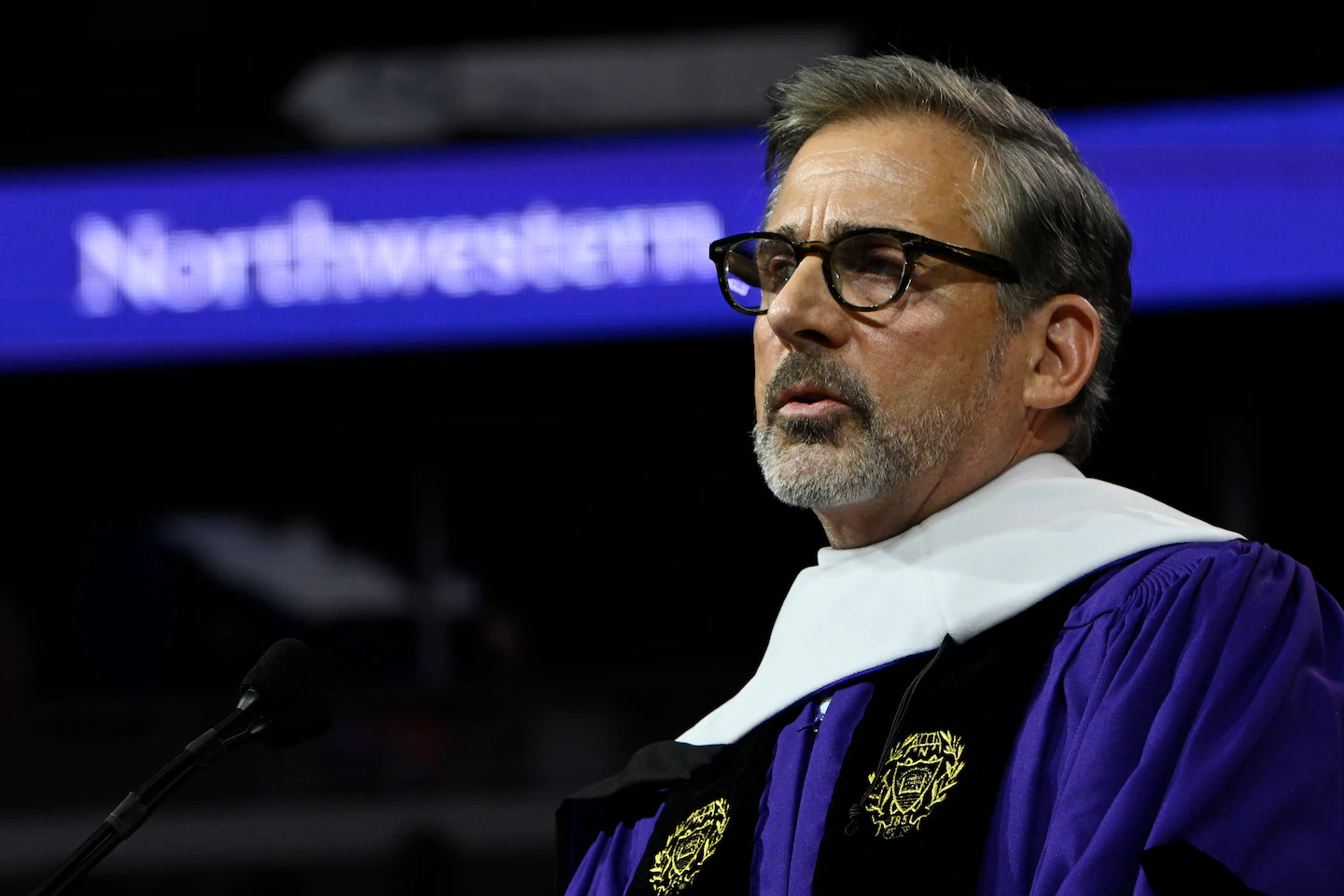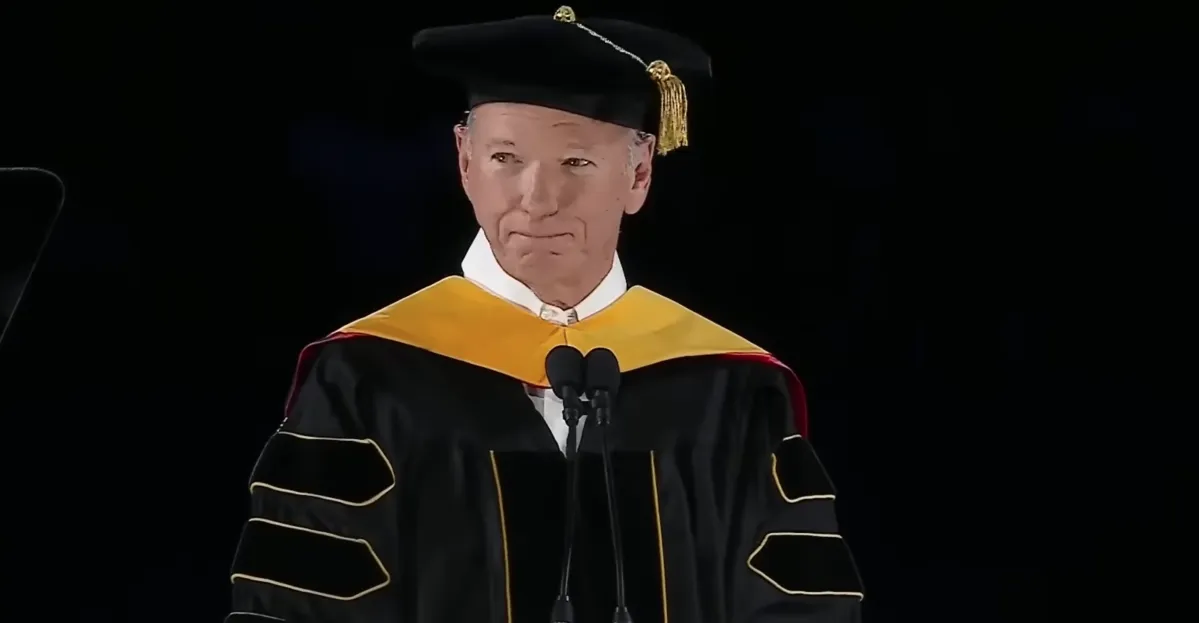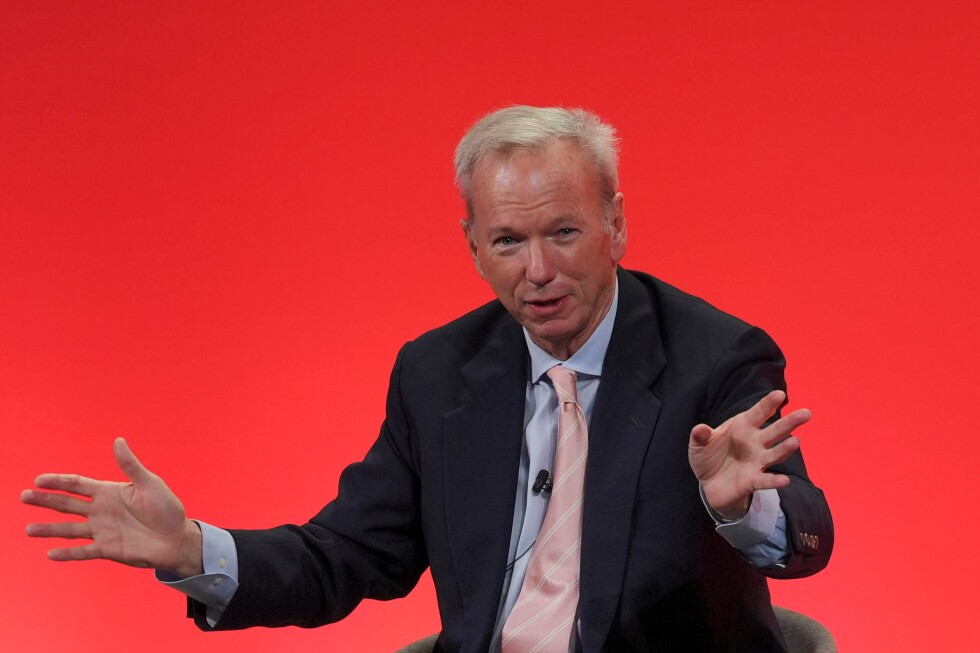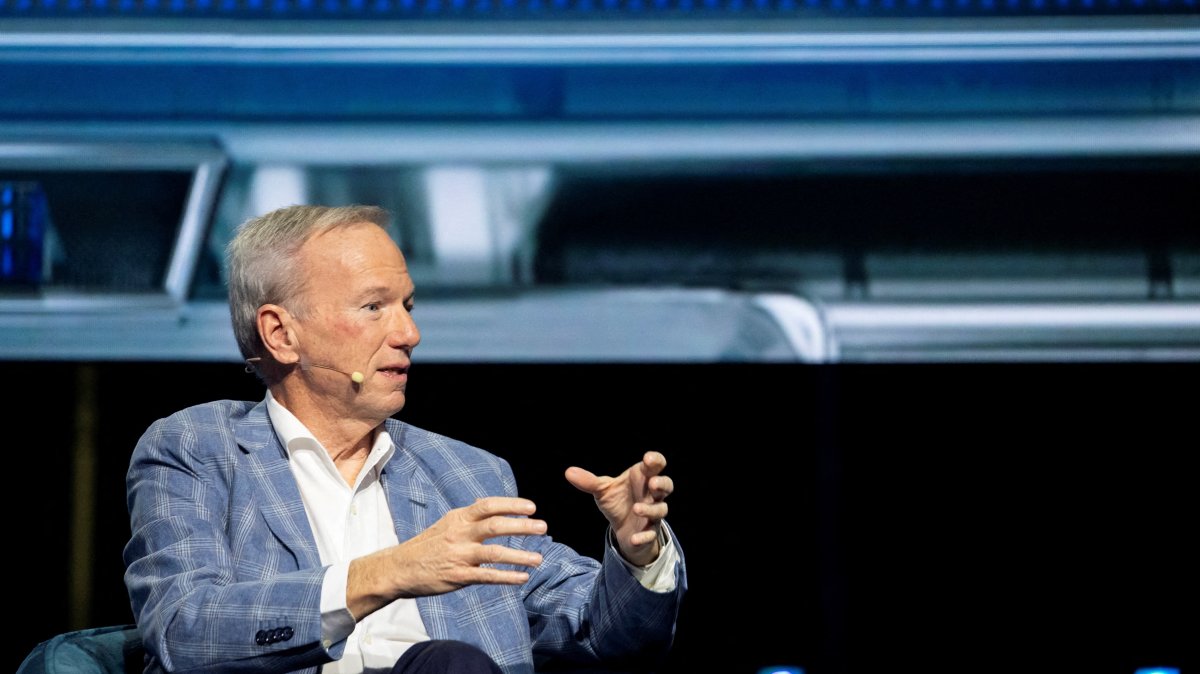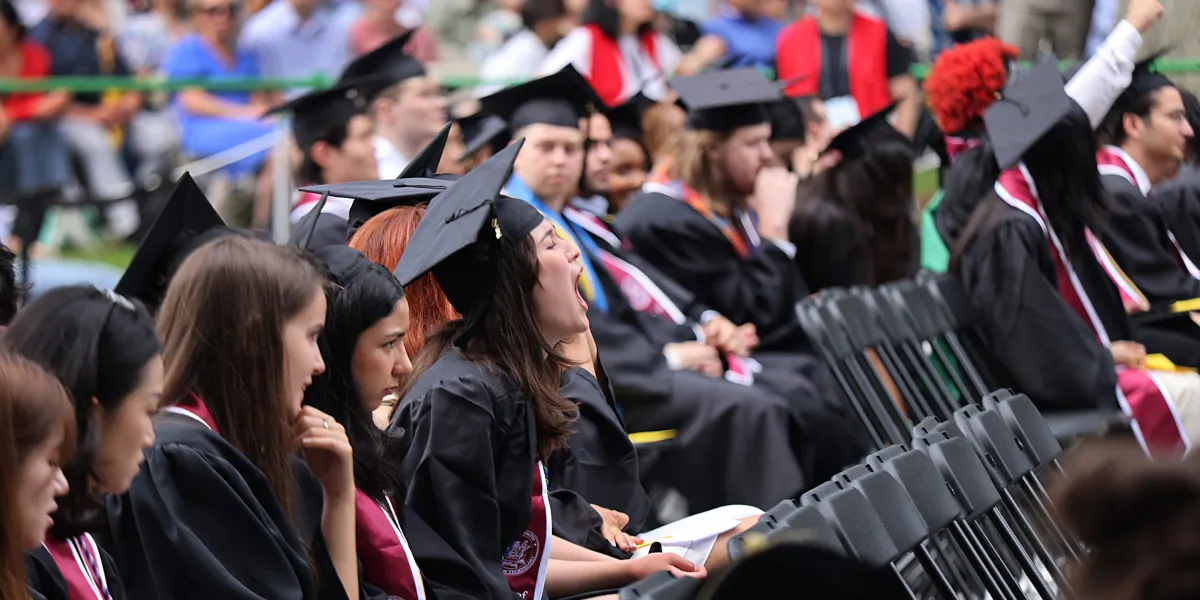
Commencement speeches are turning into the latest test of free speech principles on college campuses.gettyCollege commencement ceremonies have become something of a nightmare at dozens of the nation’s colleges this spring. Normally a time for celebrating the achievements of the graduates and championing the value of higher education, graduation day has instead turned into a polarizing event at several campuses, resulting in bad press and hard feelings. Speakers have been disinvited because someone decided they were too controversial, they’ve been protested over past remarks they’ve made, they’ve been booed because students didn’t like what they had to say, and they’ve been apologized for by the institution who invited them in the first place. AI Is A Risky TopicFormer Google CEO Eric Schmidt commencement’s address at the University of Arizona was repeatedly met with boos from students last week when he broached the topic of AI, a sensitive topic with graduates, many of whom are worried that the technology is threatening their careers. “There is a fear in your generation that the future has already been written, that the machines are coming, that the jobs are evaporating, that the climate is breaking, that politics is fractured, and that you are inheriting a mess that you did not create. And I understand that fear,” Schmidt said, adding that graduates needed to help shape that future — "when someone offers you a seat on the rocket ship, you do not ask which seat. You just get on. The rocket ship is here.” Schmidt should have learned a lesson that AI was an unpopular topic with graduates when about a week earlier, Gloria Caulfield, a real estate executive told graduates of the University of Central Florida’s College of Arts and Humanities and School of Communication that AI was the “next Industrial Revolution.” That elicited a round of boos.“What happened?” Caulfield asked. “Okay, I struck a chord.”MORE FOR YOUAn Institution Apologizes For Its SpeakerAfter Derek R. Peterson, a professor of history and African studies and the outgoing Faculty Senate Chair at the University of Michigan weighed in about Israel’s war with Gaza, Domenico Grasso, the university’s president, soon apologized for the professor’s remarks, claiming they violated the university’s neutrality policy.In his speech, Peterson referred to Michigan’s famous fight song The Victors. He urged students to remember when they sang that song to celebrate various activists who had been part of the university, like its first woman student, its first Jewish faculty member, and its Black students who had protested aspects of the curriculum. Then, he added, “sing for the pro-Palestinian student activists who have over these past two years opened our hearts to the injustice and inhumanity of Israel’s war in Gaza.” Later that same day, Grasso apologized for what he called “remarks regarding the Israel-Palestine conflict that were hurtful and insensitive to many members of our community.” Peterson had “deviated from the remarks he had shared before the ceremony,” Grasso wrote, adding that his reference to Gaza was “inappropriate and do[es] not represent our institutional position.” Grasso’s apology elicited a letter from UM faculty and others condemning him for “using the university’s highest-level perch to criticize a faculty member for offering views on a public issue” and for failing to implement the University’s professed commitment to institutional neutrality in a neutral way. Speaker Selections ProtestedStudents have protested several speakers invited to give a commencement address this year and demanded they be disinvited because of past behavior or remarks they’ve made.At New York University, students sent a letter requesting that the university reconsider its selection of Jonathan Haidt, a social psychologist at NYU’s Stern School of Business and frequently cited critic of "cancel culture," to give the commencement address. In their letter, the students said the choice of Haidt was “deeply unsettling” and a “regression.” They described him as an "individual who has been accused of making homophobic remarks in a class and public misconceptions about transgender identity, and has promoted disturbing rhetoric around antiracism, social justice, and diversity, equity and inclusion, claiming that the abolition ofDEI may be the only way out of the Leftist ideological capture of American campuses." NYU held firm, and Haidt delivered his commencement speech, which was greeted with boos from some students, while others walked out.Speakers Canceled Or WithdrawUnlike NYU, some universities elected to withdraw their invitations to speakers over concerns that their appearance would draw protests and disruptions. In other instances, speakers have volunteered to back out of their planned address.Rutgers University withdrew its selection of Arcellx CEO Rami Elghandour to speak to its School of Engineering graduates this spring over student concerns about his support of Palestinian rights.At Utah Valley University, author and educator Sharon McMaho, was disinvited from being the graduation keynote speaker after students from the institution’s Turning Point USA chapter objected to a post she had made about the murder of Charlie Kirk on UVU’s campus last year. The university cited safety concerns for its decision.South Carolina State University canceled a planned commencement speech by Pamela Evette, South Carolina’s lieutenant governor and a gubernatorial candidate, after students protested her selection. The school cited security concerns as the reason for the cancellation. Evette referred to the student protestors as a “woke mob,” and some Republican legislators in South Carolina responded by calling for the state’s only HNCU to be defunded.Former Northwestern University president Morton Schapiro elected to not deliver the commencement address to Georgetown University Law Center graduates, after students had demanded that the university cancel his invitation. The students has objected to Schapiro’s support for Israel and to his handling of Black Lives Matter protests while at the helm at Northwestern. Their petition charged him with holding “controversial, Zionist, and harmful opinions."Commencement OptionsCommencement interruptions, controversies and protests are nothing new, but they do seem to be on the rise in recent years. In 2024, some universities cancelled their graduation ceremonies over concerns about student protests over Israel’s war with Hamas. In 2021, colleges across the country cancelled traditional graduation celebrations over public health concerns about the pandemic and hosted virtual events instead.However, the 2026 commencement scene seems different. A politically fraught environment, the footprints that public figures leave on social media, and a continuing preoccupation with cultural differences have made the selection of a commencement speaker an increasingly risky decision for college leaders. Administrators wrestling with their choices have several options:They can opt for local speakers of limited notoriety, trusting that — like millions of students before them — most graduates will recall next to nothing of what their commencement speakers had to say.They can skip hosting a keynote speaker altogether.They can get lucky and have a surprise hit like this year’s widely praised remarks by country music star Eric Church at the University of North Carolina. They can invite presumably “safe” figures like Kermit the Frog or Will Ferrell to entertain rather than lecture the graduates.They can insist on pre-screening a speaker’s remarks, an ironic, if not offensive, requirement for institutions that claim to champion and protect free speech.They can try to maintain an institutional neutrality policy by asking speakers to avoid controversial political and social issues in their addresses.Or they can accept the fact that both a commencement speaker’s point of view and a student’s right to protest that view are legitimate and should be respected. As Kristen Shahverdian, PEN America’s Director of Higher Education and Free Expression, said, “sometimes speech takes us to new and uncomfortable places, but institutions must model resilience, tolerance, and engagement with speech, and resist reversing their choices in the face of discontent and pressure." She added, "we must remember that remarks from a guest speaker are not institutional speech, they are opportunities for graduating students to encounter different views that expand beyond the world of their campus. Trying to control such speech or sanitize any possibility of offense, disagreement, or discomfort, will be a fool’s errand in a diverse democracy. The better solution is to side with speech, both of the invited speakers and of their detractors, and to let people air their views, without rescinding invitations.”
Discontentment With Commencement, Vexation At Graduation
Normally a time to celebrate the achievements of graduates and champion the value of higher education, graduation day has often turned into a polarizing event instead.
1,341 words~6 min read