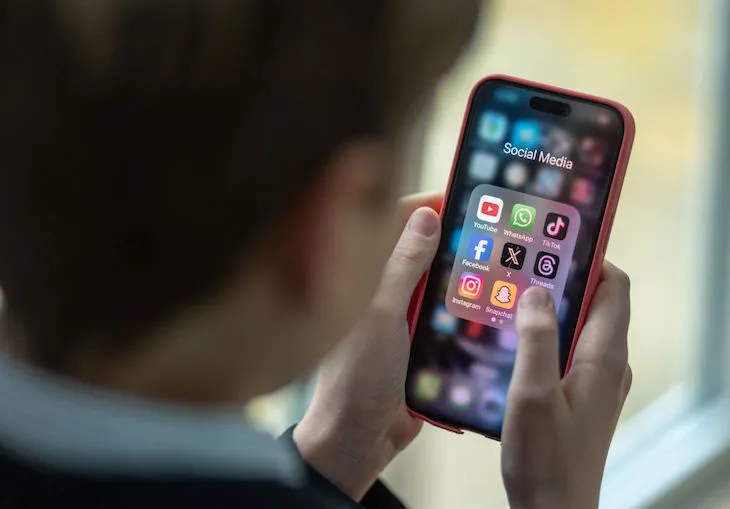
Highly effective campaigning from parents and parliamentarians has forced the government to agree to introduce age restrictions for under 16s on social media. This promises to be extraordinarily popular among the public, but there are many well-founded objections that should be taken seriously.
Raising the age limit for social media for under 16s will not be a silver bullet
Some of these objections are practical. How exactly would a social media ban work? Critics point to Australia, where a world-first ban was implemented in December last year. It is being claimed that the policy is not working, but it’s far too soon to write off the Aussie experience. Nearly five million child social media accounts have been removed and 61 per cent of Australian parents already report positive behavioural changes in their offspring. Where children are still evading the ban, this is not a failure of the law but a conscious decision to break it since social media companies have not yet been forced to remove minors’ accounts.
The most strident objections to social media restrictions come from those who believe that a ban for children is a threat to civil liberties, both by ushering in universal digital ID and threatening freedom of speech. Yet digital ID is not required to keep kids off social media: a wide range of effective third party age verification services are already available.