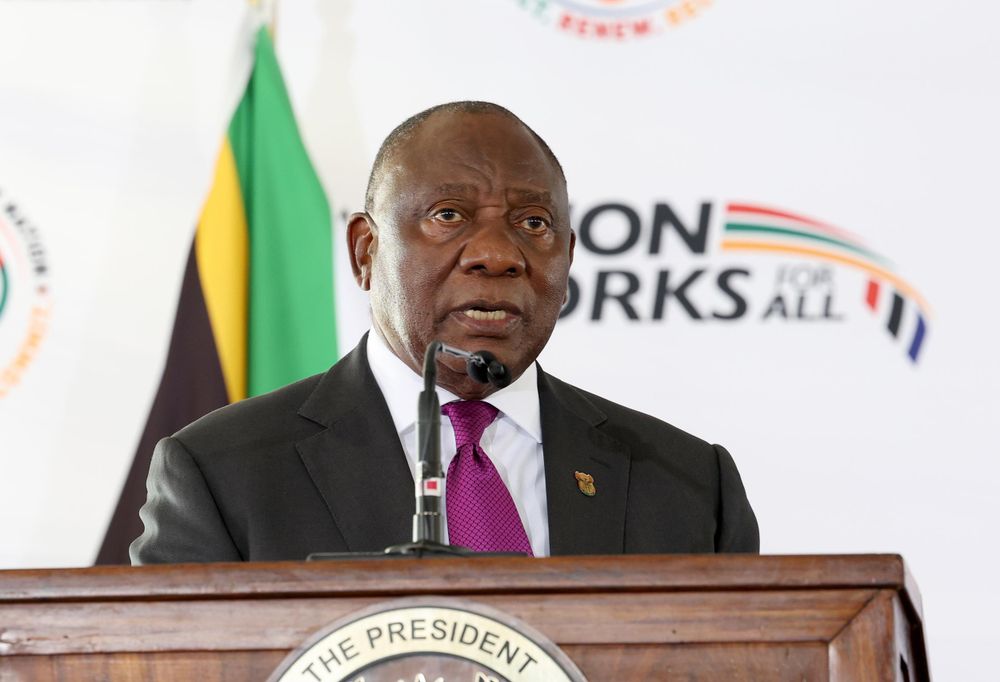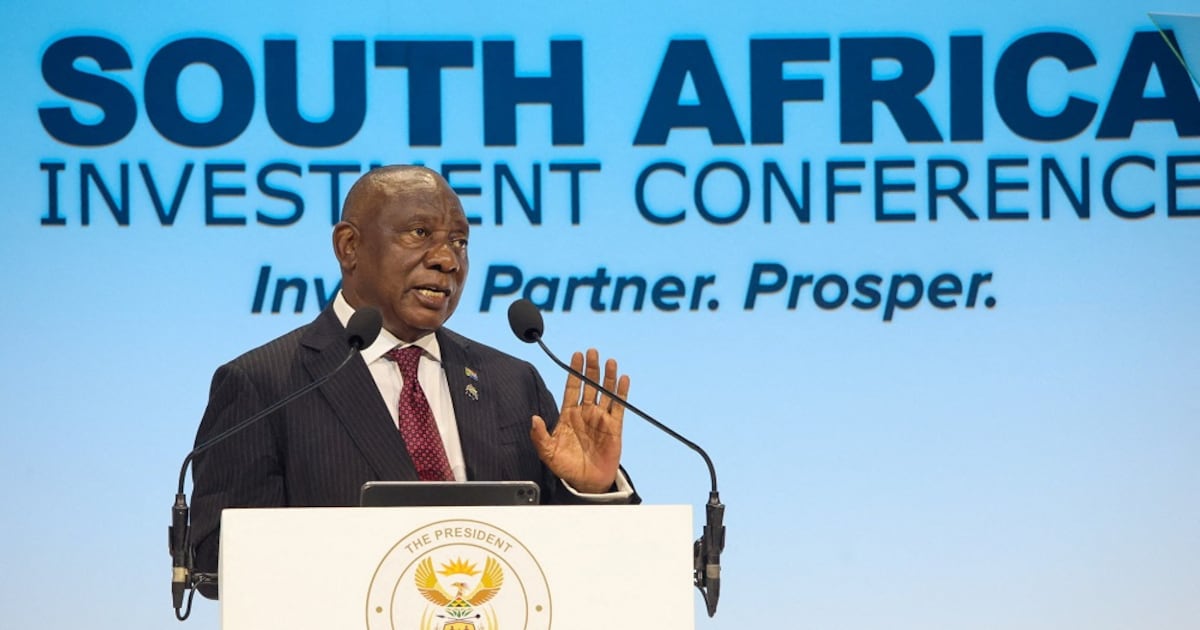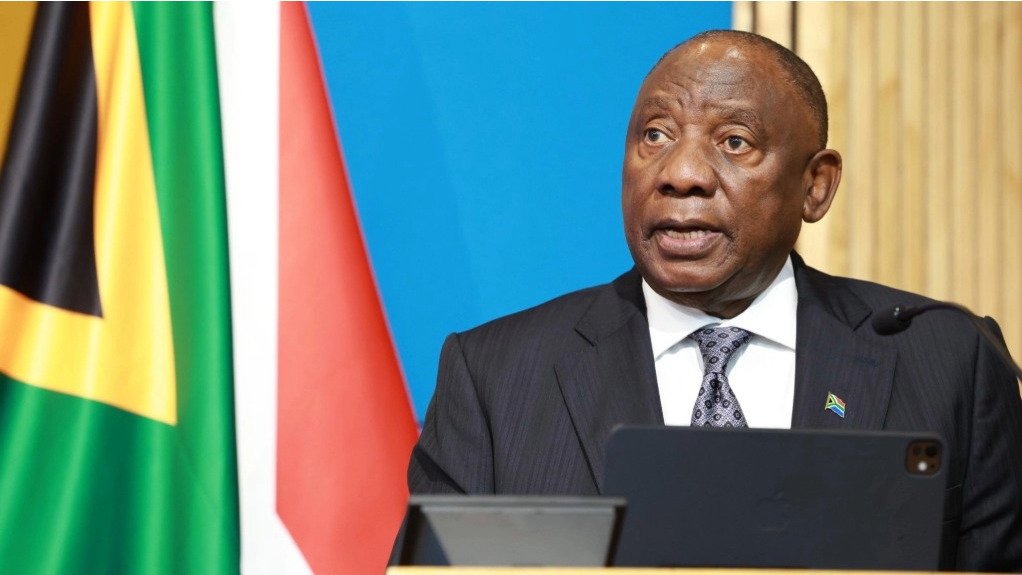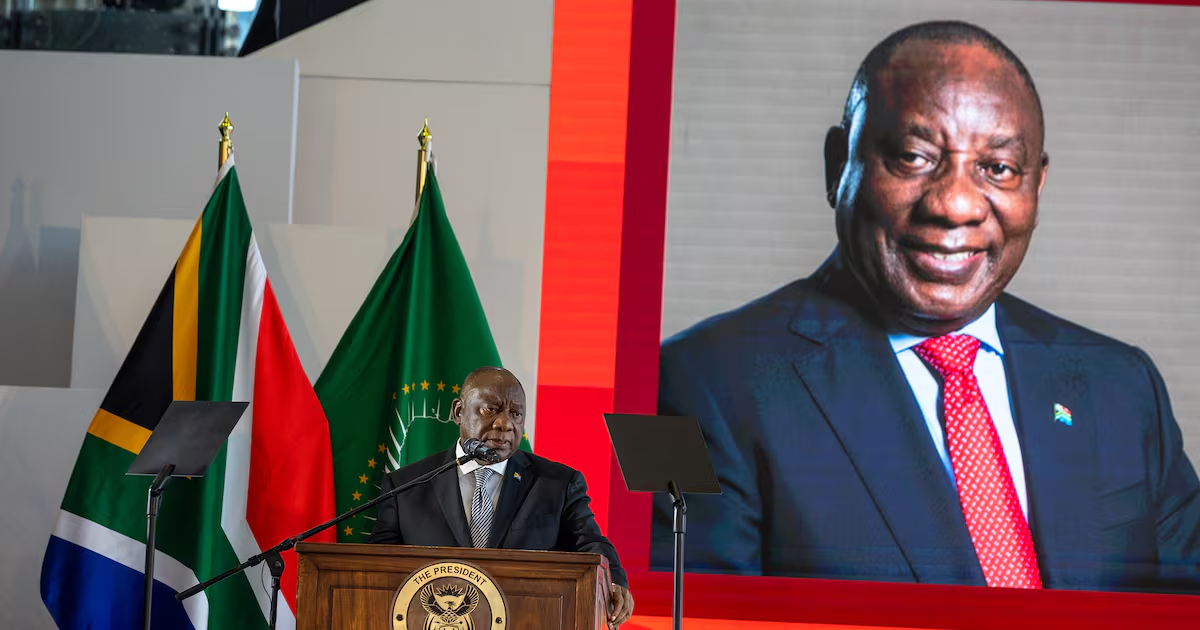
President Cyril Ramaphosa has rallied behind the series of high-profile investment conferences South Africa has hosted recently, saying the engagements were not “just for show”, describing them as an opportunity to connect investors with local opportunities. They were also aimed at bringing together governments, business, banks and development finance institutions, Ramaphosa said in his weekly newsletter on Monday. The conferences, he said, have included business forums on the margins of visits to Brazil and Spain, the sixth South Africa Investment Conference in March and, “last week, the Infrastructure Investment Summit convened by BlackRock, one of the world’s largest infrastructure investment managers”. At the South Africa Infrastructure Investment Summit in Cape Town last Wednesday, Ramaphosa moved to assure investors their investments are safe, as South Africa’s business operating environment is underpinned by the rule of law. He said that because it is the building block of every modern economy on earth, “infrastructure is the next great frontier of investment”. The event was hosted by one of the world’s largest infrastructure platforms, BlackRock, which has made a $500m (R8.32bn) commitment towards the African Infrastructure Fund, with investments in energy systems, logistics corridors and transport infrastructure. Over the next three years, South Africa will be spending more than $60bn (R1-trillion) on infrastructure across the three spheres of government, public entities and state-owned enterprises. In his state of the nation address (Sona) in February, the president sold infrastructure as a primary driver of economic growth, saying that through the Infrastructure Fund, the government had committed R100bn in fiscal support over 10 years to crowd in private capital and blended finance into strategic infrastructure projects.In the subsequent budget speech, finance minister Enoch Godongwana said the government was earmarking more than R1-trillion for public infrastructure over the medium term to drive economic activity, with key focus areas including rail, ports, water and energy projects, alongside private-public partnerships. At the sixth South Africa Investment Conference, held a month ago, the government secured a record $54bn (R890bn) in pledges. This, Ramaphosa said, has encouraged “us to set a new investment goal of R3-trillion — or $180bn — over the next five years”. On Monday, Ramaphosa said that around the world, investment conferences and summits were platforms to attract foreign direct investment (FDI) in a global investor landscape that had become increasingly competitive. “The fact that international and domestic investors are willing to commit capital to South Africa demonstrates confidence in our country as an attractive investment destination,” he said. “Since we launched our first national investment drive in 2018, we have attracted investments in energy, telecoms, infrastructure, automotive, mining, advanced manufacturing and many other sectors.” He said that from R1.5-trillion in pledges, a total of R634bn had already been invested into factories, mines, data centres, power plants and other infrastructure, and had been creating jobs. “These include the R4.2bn investment by BMW to electrify its Rosslyn plant in Gauteng and to support new energy vehicle production; the R500m investment by Tetra Pak to upgrade its plant in KwaZulu-Natal; Corobrik’s R500m investment to build its Kwastina plant in Gauteng; and the Newlyn PX terminal in the Port of Durban that began operating in 2024. “Last year, I opened the Ivanplats Platreef mine in Mokopane that originated from a R2.8bn investment conference pledge.” Ramaphosa said that in addition to creating jobs, these investments were supporting skills development to better equip young South Africans for the rapidly evolving world of work. “For example, Microsoft has partnered with the Youth Employment Service (YES) to offer globally recognised certification in high-demand AI skills. This forms part of a more than R5.4bn investment by Microsoft to expand its cloud and AI infrastructure in South Africa by 2027. We welcome all forms of investment, whether it is planned or new,” the president said. The message the government had been taking to its meetings with investors “is that we are creating the conditions for growth and providing the necessary policy certainty”. “As we reiterated at last week’s Infrastructure Investment Summit, we are improving project planning, funding and execution. Through this, we aim to narrow the gap between investment pledges, implementation and eventually job creation,” he said. “We aim to encourage the substantial private capital that is in reserve to be used for productive domestic investment. According to the South African Reserve Bank (Sarb), by July 2025 South Africa’s non-financial companies held R1.8-trillion in reserves. “It is now abundantly clear that the engagements and commitments made in conference halls are steadily and increasingly translating into the economic activity that creates jobs and opportunities for South Africans.” Business Day
Billions in pledges prove SA summits not ‘just for show’, says Ramaphosa
Infrastructure is ‘the next great frontier of investment’, the president says
761 words~3 min read