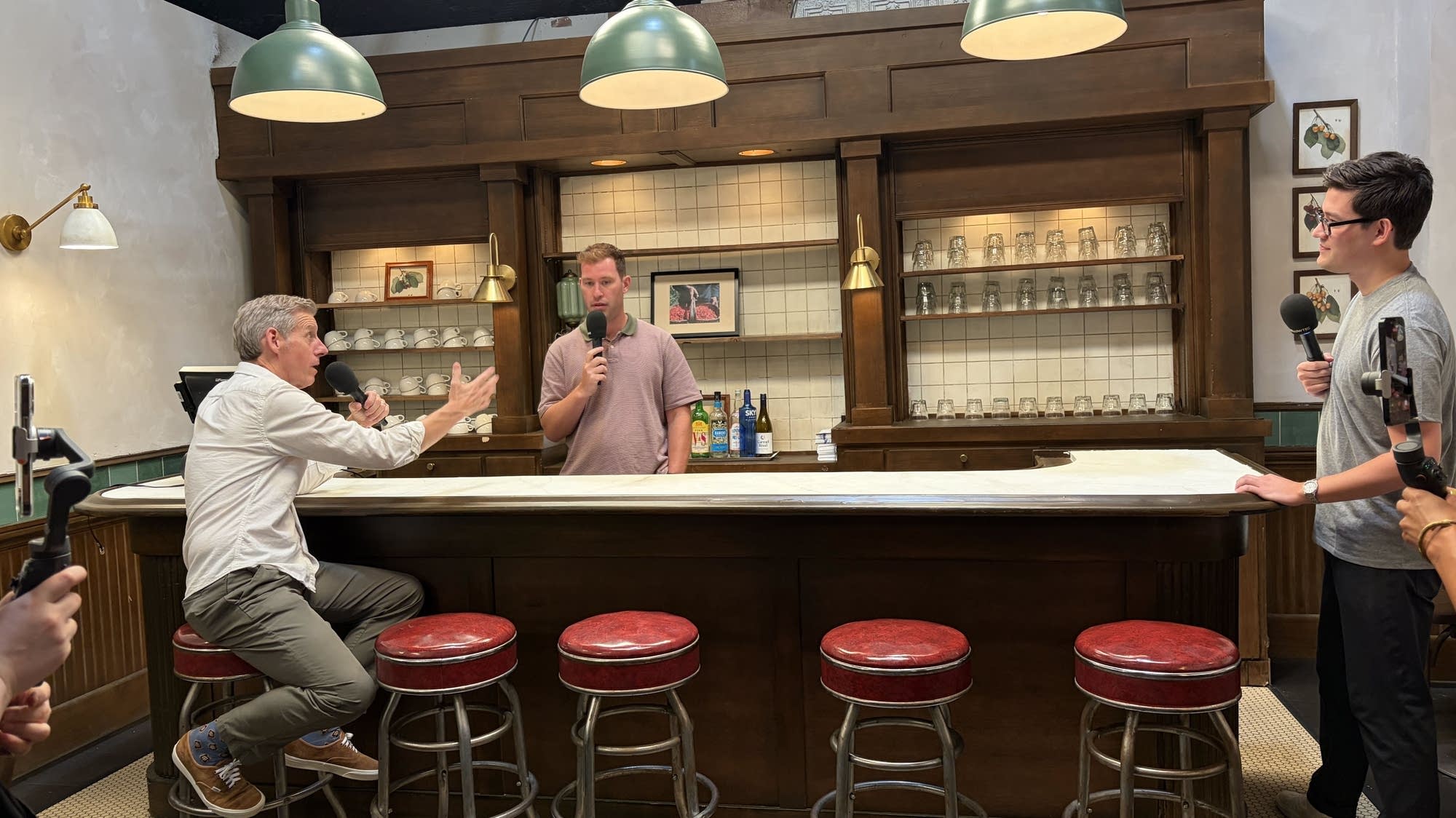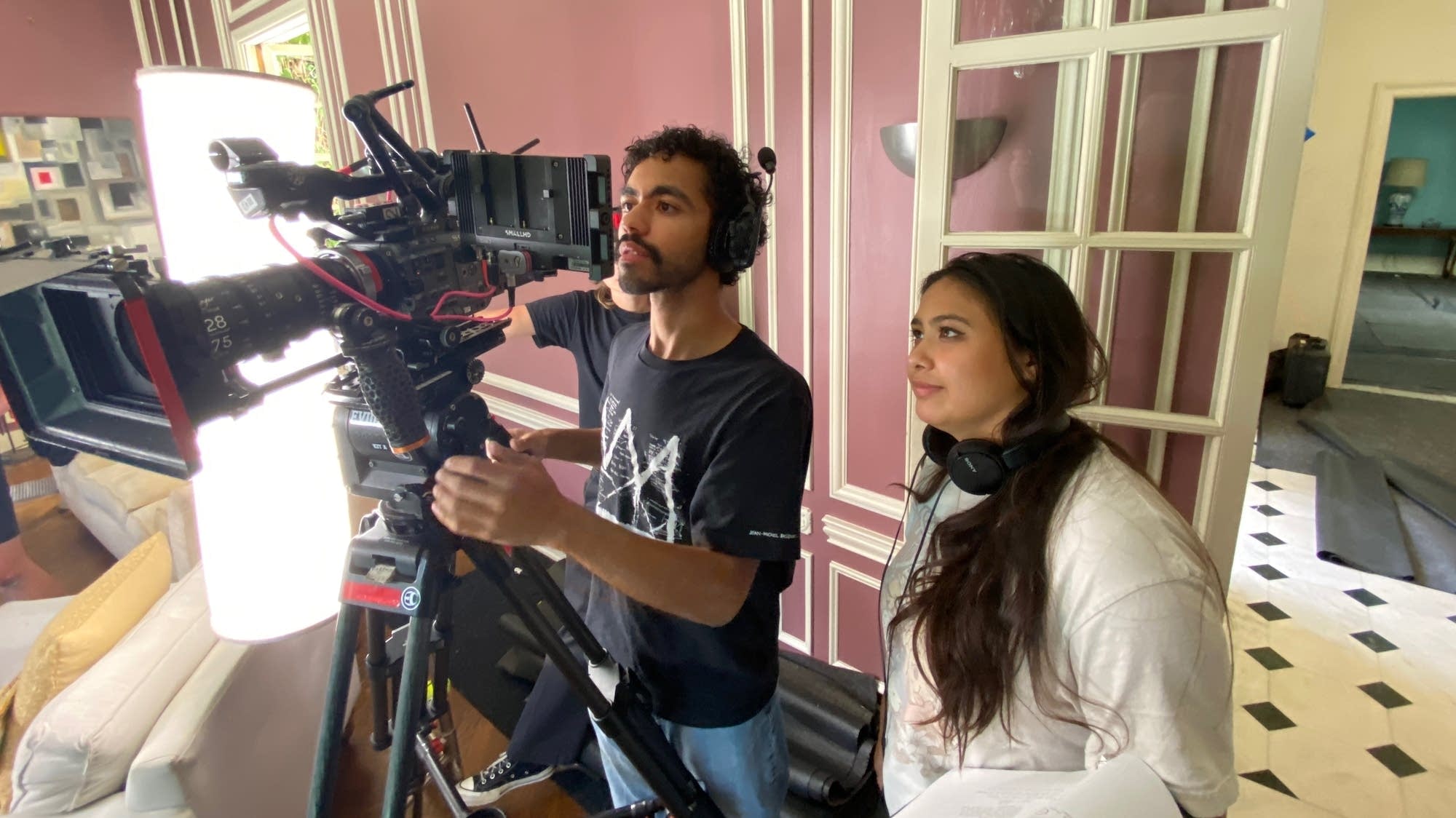
On the patio of a Hollywood coffee shop, directors Corey Gibbons and Kristen Brancaccio laugh as they scroll through their résumés, with a list of titles that can sound more like clickbait than conventional entertainment.“My first one was ‘Billionaire’s Borrowed Bride,’” Brancaccio said. “We did that one together,” added Gibbons.Other titles include “The Reluctant Billionaire Protector” and “Mafia Daddy Surprise Sextuplets.”These aren’t traditional TV shows. Verticals are bite-sized episodes, typically one to three minutes long, formatted vertically for smartphones, with each installment ending on a cliffhanger, nudging viewers to keep tapping for more.The format first gained traction in Asia. Now, it’s spreading quickly in the U.S., offering steady work to crews who’ve endured a long dry spell.“The overall tenor of the industry was so bleak,” Brancaccio said. “And once verticals came along, it was like — I’m busy, and so is everyone I know.”Austin Herring, CEO of Snowy Productions, says his company now produces five vertical series a month, or roughly the output of five feature films.“When we had the one-two punch of COVID and the writers’ strike, there were tumbleweeds rolling through Hollywood,” Herring said. “If it hadn’t been for verticals, the whole industry would have cleared out in a much more dramatic way.”Part of the appeal is cost. A typical vertical series runs between $100,000 and $200,000, a fraction of traditional TV budgets. Crews are small. Shoots are fast. Productions use multiple cameras or even smartphones.Inside a Koreatown mansion, director Aiko Lozar raced to wrap before lunch. I ask her how many pages she’ll shoot today.“Thirteen,” she replied with a laugh. “Yesterday it was 18 and a half.”For comparison, a traditional TV drama might shoot three to five.Peter Sullivan, with Vert TV, said the storytelling formula is simple and addictive.“What we call cognitive dopamine,” he said. “You’re constantly engaging the viewer … hitting a cliffhanger every minute and a half to keep them going to the next episode.”The business model leans heavily on microtransactions. Viewers typically watch the first few episodes for free. Then they pay, often around 50 cents per episode, to unlock the rest of a series that can run 80 to 90 installments. If a show catches on, those payments add up quickly. Some verticals generate millions in revenue.The content itself often leans into melodrama: secret billionaires, werewolf romances, mistaken identities. Many titles are rough translations from Mandarin, resulting in names like “Pregnant with My Infertile Alpha King” or “Ugly Cinderella and Her Hobo Billionaire.”The format has even minted its first breakout stars. Kasey Esser, a former personal trainer, has appeared in more than 50 vertical series after landing a role in the hit, “Fated to My Forbidden Alpha.” Some fans now call him the “vertical Brad Pitt.”“I don’t think I’d reject that association,” Esser said with a smile.Esser said he had just lost his agent and manager before booking that role. Now, he makes $2,000 a day. He and his partner, fellow actor Vanessa von Schwartz, now plan to produce their own projects.“No one predicted the introduction of these, but my goal is to always have a foothold in verticals,” Esser said.As the format grows, bigger players are starting to take notice. Producers expect budgets and production values to rise.Vert TV producer Jeff Schenck sees it as part of a longer evolution in entertainment.“Cinema started with motion pictures, then TV came along and was seen as lesser,” Schenck said. “People realized it was just another form of media. Everything evolves. It doesn’t replace.”Still, the recovery for Hollywood workers is far from complete. Vertical productions can be made anywhere — from Atlanta to Canada to Eastern Europe — and some already are. And at least one major company has announced plans for an entirely AI-generated slate, with no actors or crew, at costs under $20,000 per series.That prospect may worry some in the industry, but director Corey Gibbons isn’t convinced. “People want that human connection,” Gibbons said. “No one’s going to want to watch the prompt creator on Jimmy Fallon.”
After Hollywood’s slowdown, "vertical dramas" are putting some crews back to work
The past few years have been bruising for Hollywood. Pandemic shutdowns and labor unrest led studios to scale back production. Now, a fast-growing, unlikely format is helping fill some of that gap.
665 words~3 min read