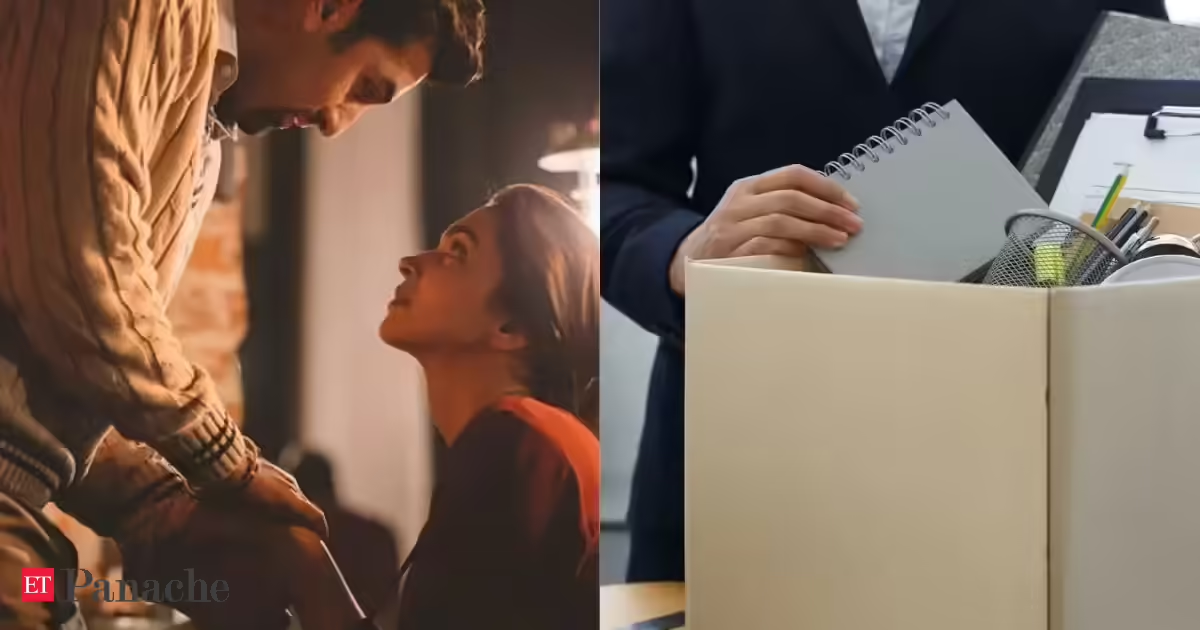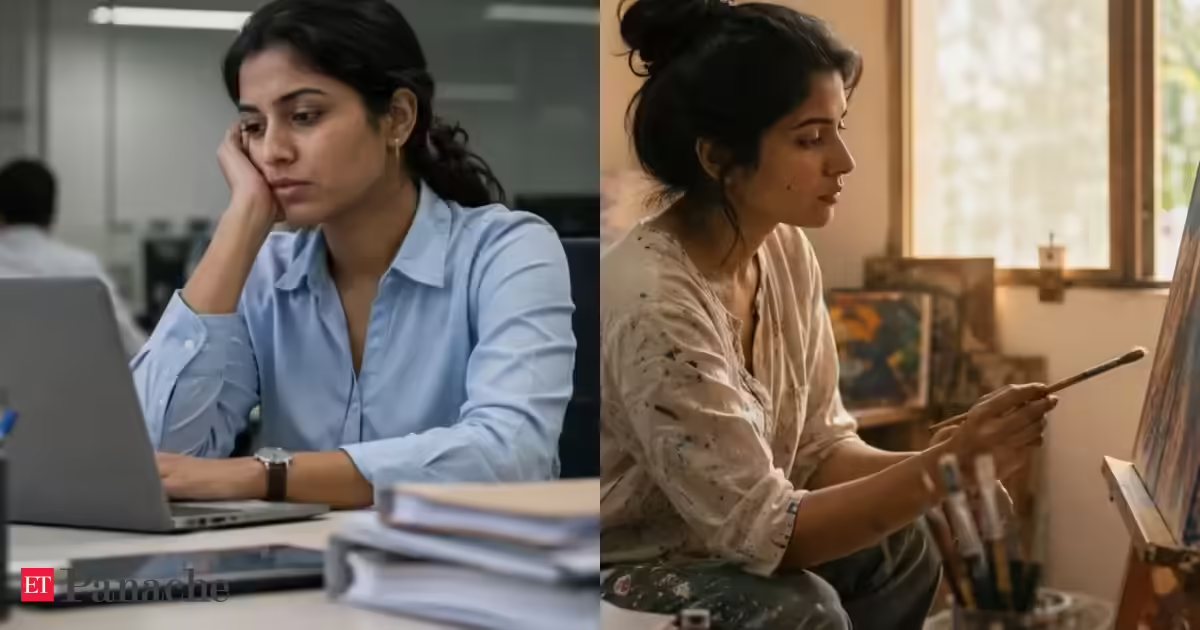
Stories about people changing their careers after sudden inspiration often spread quickly on social media because they feel relatable and uncertain at the same time. One such case recently came into the spotlight after a post on X shared by Harsh described how a woman left her stable corporate job after being influenced by a film, only to later struggle with financial pressure and return to job hunting.A post shared by Harsh on X recently brought attention to a woman’s career shift that started with inspiration from a film and later turned into a difficult financial reality. Harsh mentioned he met a woman in her 30s who was appearing for interviews after a two-year gap in her career.In the post, he wrote: “Met a woman in her 30s interviewing after a 2 year gap. She said she got campus placed, worked in corporate for 6 years, then watched Tamasha and realised she wanted to be an artist and pursues painting full time. So she quit and did a diploma in arts.”He further explained that after completing her course, she tried to build a career through exhibitions and selling paintings. According to him, she genuinely enjoyed the work, but eventually the financial side did not support her lifestyle anymore.The post added: “After the course, she tried building a career through exhibitions and selling her paintings. She loved doing it, but eventually the money ran out and reality caught up. Now she’s trying to return to corporate life for stability.”He also reflected on both sides of the situation, saying she would not carry regret for not trying, but at the same time restarting a corporate career in her 30s would not be easy.Inspired by Film, Life Took a Different TurnThe turning point in her story reportedly came after watching the 2015 Hindi film Tamasha, directed by Imtiaz Ali and starring Ranbir Kapoor and Deepika Padukone. The film focuses on identity, routine life, and the struggle between passion and societal expectations, which reportedly influenced her decision to leave her corporate job.After six years in the corporate sector, she chose to resign and pursue painting more seriously. She even enrolled in a diploma in arts to formalize her shift.At first, the transition appeared fulfilling. She focused on exhibitions, selling artwork, and building a name in the creative space. However, over time, the income was not stable enough to support long-term needs. What started as a passion-driven decision slowly became financially difficult to sustain.Eventually, she decided to start attending corporate interviews again, aiming to rebuild financial stability even if it meant returning to a completely different career path.Online Reactions and Divided OpinionsThe post triggered mixed reactions in the comments section. One user wrote that passion should always be judged along with earning potential and referenced the idea of Ikigai, saying work should align with skill, interest, and financial viability.Another user pointed out that even creative careers take years of consistent effort and that two years may not be enough to judge a field like fine arts.There were also users sharing personal experiences, including one who said they left their job during the pandemic and later built a successful photography career.Harsh, responding to several comments, clarified that the intention of sharing the story was not to suggest a right or wrong decision, but to highlight both outcomes that can follow such life changes.The incident once again highlights a common conflict seen among young professionals today, choosing between passion-driven careers and financial security. While some find long-term success after taking risks, others realize that returning to structured jobs becomes necessary when financial pressure builds up.
Woman, inspired by movie, quits stable job for artist career. Later learns a life lesson about following passion that people ignore
A viral post on X shared the story of a woman in her 30s who left her six-year corporate job after being inspired by the film Tamasha and decided to pursue painting full-time. After completing an arts diploma and trying to build a career through exhibitions and sales, she eventually struggled with financial stability. As money ran out, she began looking for corporate job opportunities again.
598 words~3 min read