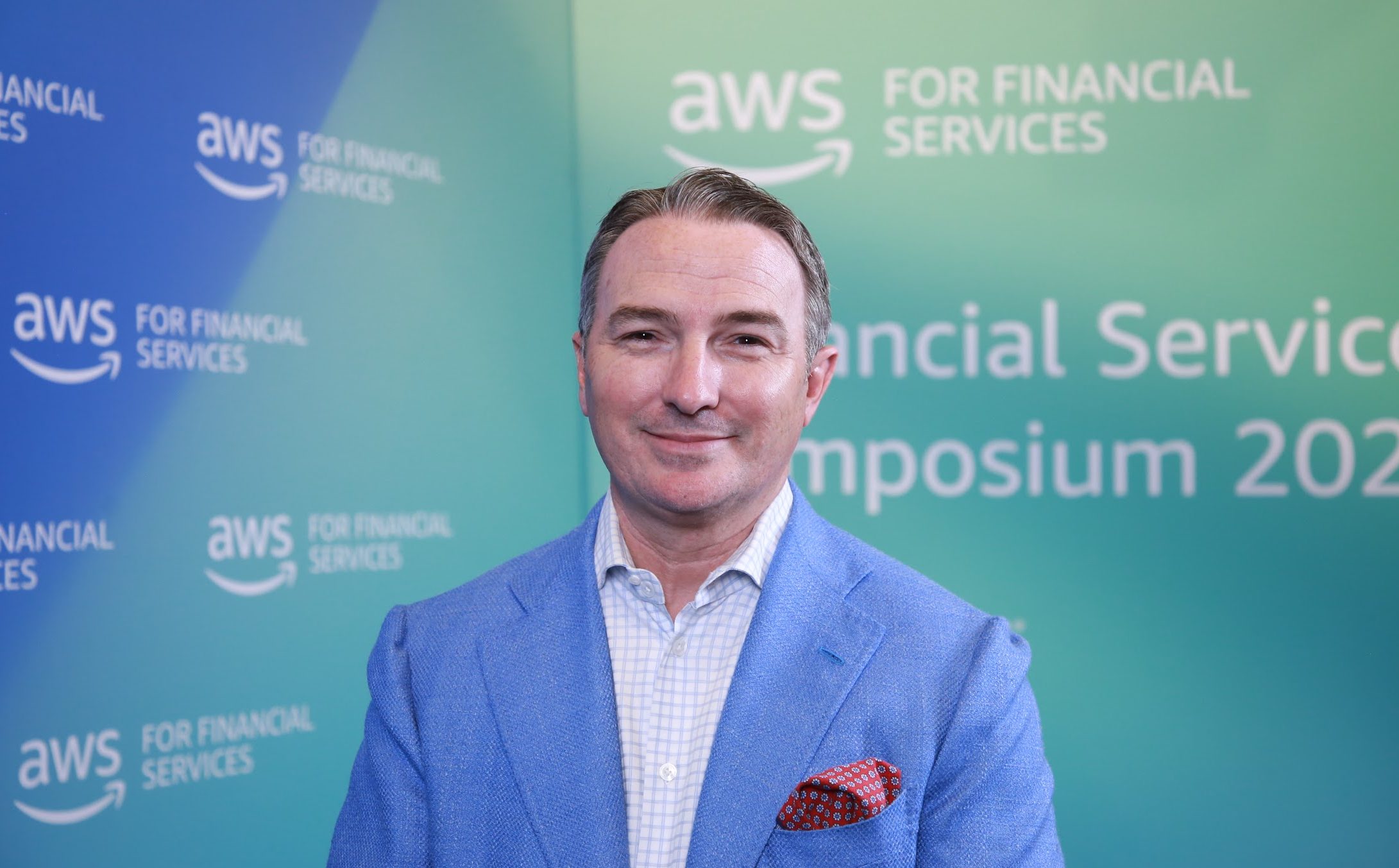
Pragashani Reddy, group managing executive: banking, financial services and insurance at Digital Solutions Group. Artificial intelligence (A) needs to move beyond experimentation and become a measurable business capability embedded into the core of enterprise operations.This is the word from Pragashani Reddy, group managing executive: banking, financial services and insurance at Digital Solutions Group, delivering a presentation, titled “From AI hype to AI value”, at ITWeb AI Summit 2026.The former executive director of digital business banking at Absa Group noted that local organisations are still caught between fascination and experimentation with AI, but the focus now needs to shift towards execution, governance and measurable return on investment.She noted that 80% of organisations’ AI projects are still in pilot phase, having no revenue impact, while their data and governance issues have been overlooked.Shifting AI initiatives from experimentation to enterprise value will require organisations to shift from using AI as a tool to using it as a business capability, she asserted. See also This will require firms to focus on four key elements in order to gain real business value: revenue growth, cost optimisation, risk reduction and customer trust.“AI is no longer a signed experiment. It needs to evolve into a core enterprise capability, but it needs to be broken down into four core pillars. For your revenue growth, you need to look at new products, you need to look at better targeting,” she said.“When you look at cost optimisation, yes, we know all clients want everything for free. That's not going to work, but you need automation at scale. How do you price so that it's a win-win both for you and for the client?”Reddy pointed out that many consumers are already interacting with AI-driven systems daily, often without realising it.Using streaming platform recommendations as an example, she explained how predictive analytics and behavioural data are already shaping personalised experiences.“If you look at a simple example like Netflix: you currently have an algorithm that's linked to your specific choices of things that you like to watch. No two people will ever have the same top 10. No two people will have the same set of series or movies that come up.”AI is rapidly shifting from being a competitive advantage to becoming a competitive necessity across industries, she pointed out.Reddy urged organisations to stop treating AI as a side project and instead develop formal governance structures, policies and execution plans.“The organisations that win are not going to be the ones that talk about AI. It's going to be the ones that actually have an AI policy, they have protocols, they have a plan and they have governance, and they have an execution plan.”Reddy warned that many AI initiatives fail because organisations attempt to digitise inefficient processes without addressing underlying operational complexity.Fragmented data environments, disconnected platforms and weak governance structures continue to undermine AI rollouts, she stated.“Organisations don't move from chaos to clarity overnight. They just create smarter chaos and then they call it data.“AI doesn't fail because of algorithms; there are plenty of those. It fails because of organisational design and lack of structured implementation. The question you need to ask yourself is: are you actually simplifying your business, or are you just trying to digitise complexity?”She added that siloed data ecosystems and the absence of a “single version of the truth” remain major barriers to successful implementation.Reddy highlighted several areas within the banking and financial services sector where AI is already delivering operational and customer benefits. These include faster credit approvals, real-time fraud prevention, hyper-personalised customer engagement and process automation.“When you apply for a loan, you want your money and you want your money now. You don't want it three weeks later, after it's been checked and cross-checked by several bureaucratic steps in the process.”According to Reddy, firms need to move away from segmentation to personalisation. The same client for a bank might be in retail, but they could also could be in business banking, and could even be in corporate as well.“Organisations need to then personalise the experience so that the client is not bombarded with offers from different parts of the bank.”Reddy said organisations focusing only on experimentation, risk falling behind competitors that are scaling practical AI use cases.“The winners are not going to be those that experiment all the time, but those that actually scale with a few high-impact use cases. It's moving away from the terminology of a spray and pray.”According to Reddy, trust has become one of the most important components of AI adoption, particularly within regulated industries such as financial services.Customers increasingly want transparency around how AI-driven decisions are made, especially when it comes to lending, compliance and risk management.“Why did AI make that specific decision for me on my loan, on my application? Why did I get filtered out? Why did it ask me for more documents?“Bias does come in through AI. It's very real. It means that it cannot just be a standalone; it needs to have checkpoints and human intervention.”Reddy stressed that AI should augment human capabilities rather than replace them entirely.“AI is equal to speed, to scale and to pattern recognition. Humans bring judgement, they bring ethics and they bring accountability. Having a human in the loop is not a limitation; it's a control mechanism.”When AI is done right, it can optimise a business and transform its possibilities, she concluded.
Financial firms warned of ‘smarter chaos’ with AI
Fragmented data, weak governance and siloed systems continue to derail many enterprise artificial intelligence initiatives.
888 words~4 min read