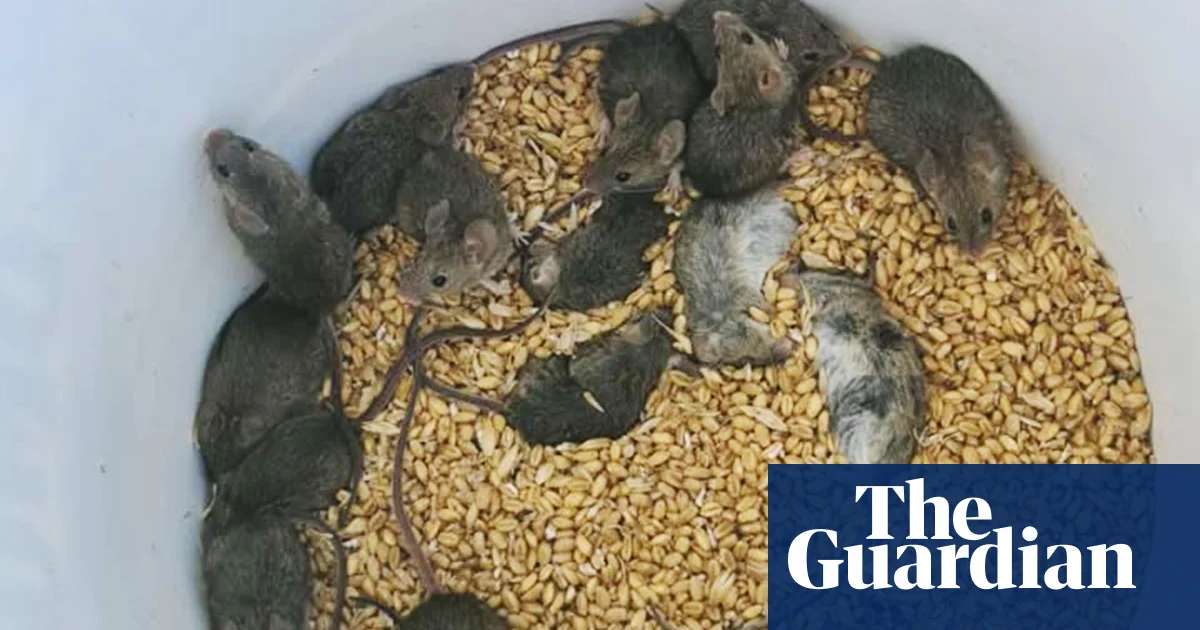
in briefFarmers have been calling for access to the more potent control chemical.The decision is expected to give farmers a significant boost in controlling mouse numbers on their properties.Australian farmers have been granted a new tool to combat mouse plagues that have gripped parts of the country. The Australian Pesticides and Veterinary Medicines Authority (APVMA) has granted an emergency permit for the use of mouse bait containing 50 grams per kilogram of zinc phosphide (ZP50) in areas where rodent numbers are high.Grain Producers Australia (GPA), which applied for the emergency permit, has said it is "incredibly grateful" for access to the chemical. "While grain producers have had ongoing access to 25g/kg zinc phosphide (ZP25) mouse bait, it’s not strong enough to tackle the level of mice issues that we’re seeing at the moment," GPA research development and extension spokesperson Andrew Weidemann said. "Mouse plagues can obviously cause massive crop and financial losses in the absence of adequate management tools, as well as significant psychological stress for farmers, their families and those living in affected areas."In March, the CSIRO mouse forecast stated that mouse levels were high in regions of Western Australia and South Australia, with the Geraldton, Esperance, and York Peninsula areas particularly affected. ZP50 is a double-strength version of the already-available ZP25, the only chemical rodent control that can be spread in-crop in Australia.Situation 'worse' than beforeSteve Henry, a mouse expert and research officer at the CSIRO, told SBS News in April that the situation was "as bad as can be."On Monday, he told SBS that, although his information is anecdotal, "it's not showing any signs of abating over there". "In fact, if anything, the situation is slightly worse than it was," he said.Mouse plagues in the grain belt of WA were said to be among the worst on record, with up to 4,000 mice per hectare. Mice numbers above 200 per hectare can start to have an economic impact on crops, according to the CSIRO. Mouse plagues are defined by the CSIRO as population numbers above 800 to 1,000 per hectare."People are still baiting, they're still losing crop as a result of high numbers. Anecdotally, I'm hearing stories of people about doing houses because they can't get the mice out," Henry said.CSIRO data shows that the current outbreaks are centered around southern SA and south-western WA.The decision to licence the use of ZP50 was supported by the GPA, the CSIRO, and the government's Grains Research and Development Corporation. The permit is temporary and used as an emergency measure because further research still needs to be done on the broader impact ZP50 might have on other wildlife and the environment.APVMA chief executive Scott Hansen said that the permit was granted following two consultations with every state and is in line with "the strong safety and environmental standards that Australians expect"."This prioritisation does not mean taking shortcuts in examination of the product and the way in which it is proposed to be used, including its potential impacts on human health, wildlife and the environment," he said.Henry, whose research underpins the development of the rodent-targeting toxin, told SBS News that he has not seen any bird deaths associated with the use of the bait, but that it is important that farmers follow the safety guidelines."There's still a bit of work to be done around the impact on non-target species but we don't seem to see any non-target mammals in these cropping systems," he said.Mouse plagues typically follow successful crop seasons, with wet weather and high yields providing perfect conditions for mice breeding. Female mice can give birth to 10 pups every 20 days and fall pregnant two to three days afterwards. "If you've got 100 female mice per hectare, you're only three weeks away from having over 600 mice per hectare," Henry said.Farmers in troubleFarmers in Australia have been affected by rising fuel costs thanks to the ongoing war in the Middle East. That conflict has also disrupted fertiliser supplies, making the current sewing season significantly more expensive than previous ones.In addition, the Bureau of Meteorology has said every jurisdiction outside of the Northern Territory experienced lower-than-average rainfall in April, with NSW experiencing the second driest month since records began in 1900. Some water storage systems in the eastern and southern states are at 50 per cent capacity or lower. With a "super El Niño" weather system potentially on the forecast for later this year, the combined stresses are likely to have a negative impact on the wider agricultural system. Mouse plagues and the costs to control them are only set to increase food production expenses, but Henry said that farmers are used to dealing with difficult conditions while still producing crop yields and that the emergency licensing of ZP50 will only assist them."There's still a lot of crops to be sown and bait application as the remainder of the crop is sown is really important," he said.The GPA is offering online information sessions and training programs for farmers who are interested in using the bait.For the latest from SBS News, download our app and subscribe to our newsletter.
Farmers given new weapon in fight against mouse plague gripping rural Australia
An emergency permit has been granted due to high mouse populations in South Australia and Western Australia.
848 words~4 min read