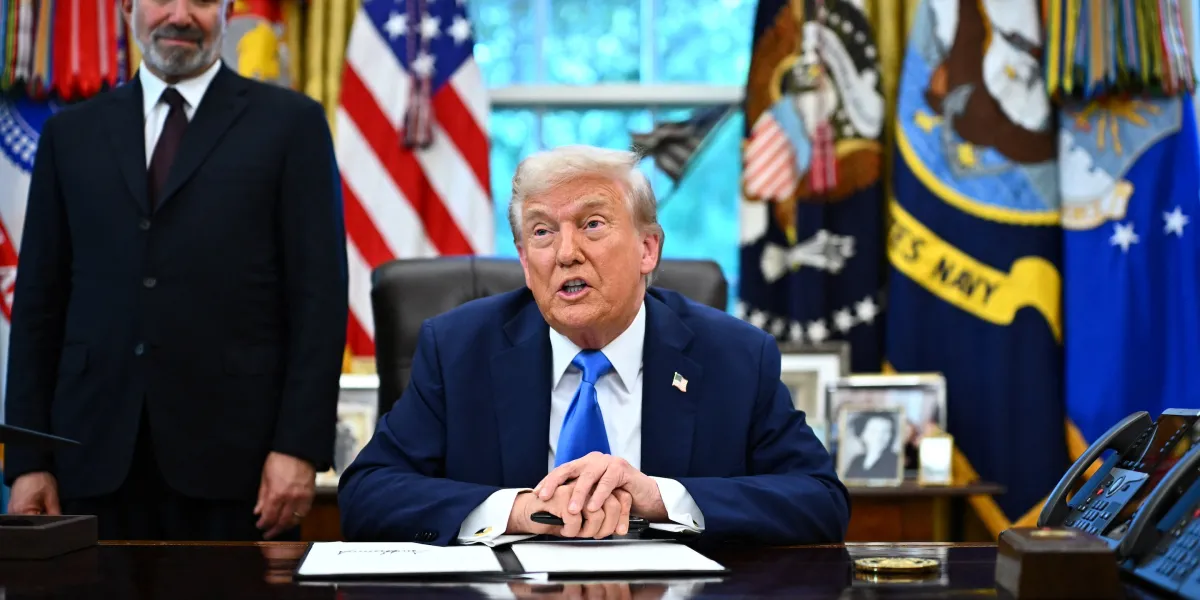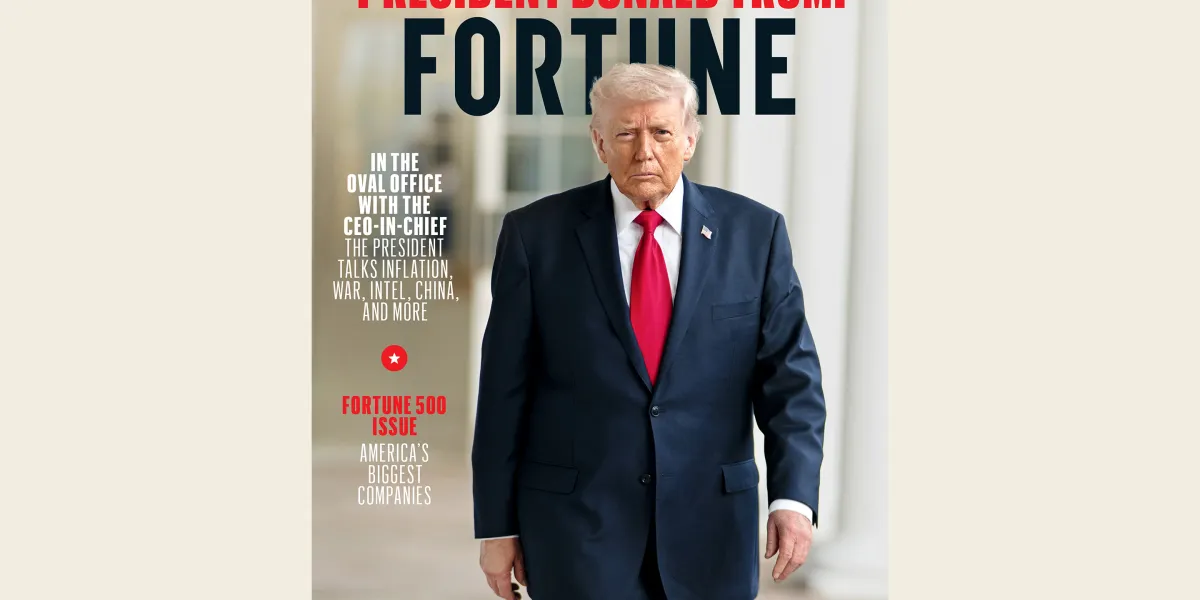
In a wide-ranging conversation that spanned an hour—and covered topics from tariffs to AI data centers to the war in Iran—the president outlined the broader, top-down dealmaking mentality he’s using to try to reinvigorate the American economy. (A small group of Fortune Media executives joined us in Trump’s office; they did not take part in the interview.)
With the help of Wall Street–savvy cabinet members like Commerce Secretary Howard Lutnick and Treasury Secretary Scott Bessent, Trump has turned old economic norms on their head. The president has been an evangelist for a healthy mix of new revenue streams generated by global tariffs and strategic equity investments, alongside trade megadeals designed to lure foreign investment back into the U.S. Trump’s twin goals: ending the trade imbalances that he argues have weakened America, and offsetting the ever-rising national debt.
Nvidia’s Jensen Huang (top) and Tesla and SpaceX CEO Elon Musk (bottom center) joined Trump (lower left) on Air Force One en route to a Beijing summit with Chinese President Xi Jinping in May.Brendan SMIALOWSKI—AFP/Getty Images
Past presidents and Congresses, stuck in partisan gridlock, haven’t been able to deliver on these fronts. Trump’s response has been, essentially, to either steamroll or outright ignore the politicos and regulators. It’s a fast-paced one-man show that thrills his fans and makes his detractors sound the alarm on the ethics and the legality of it all.