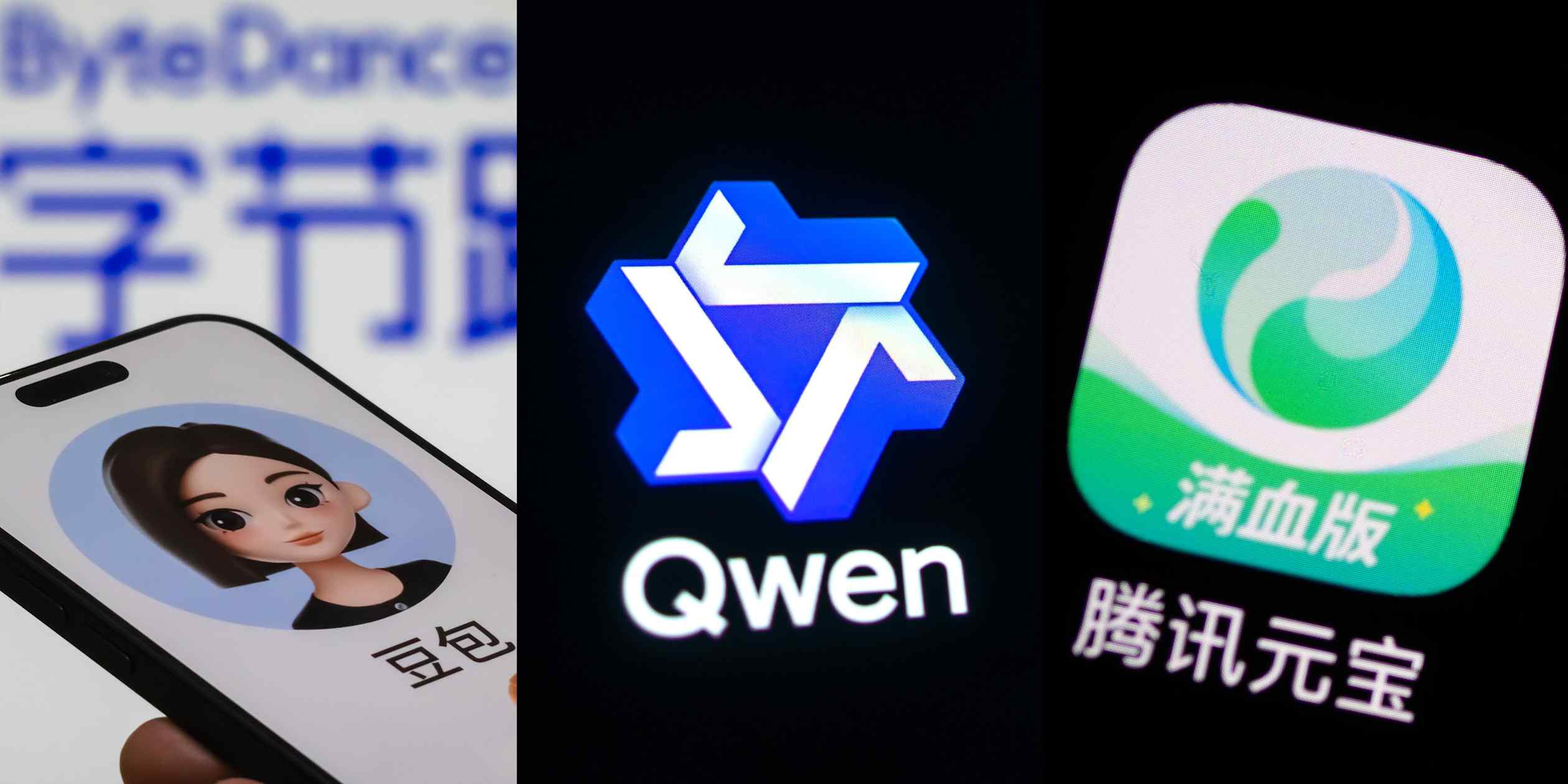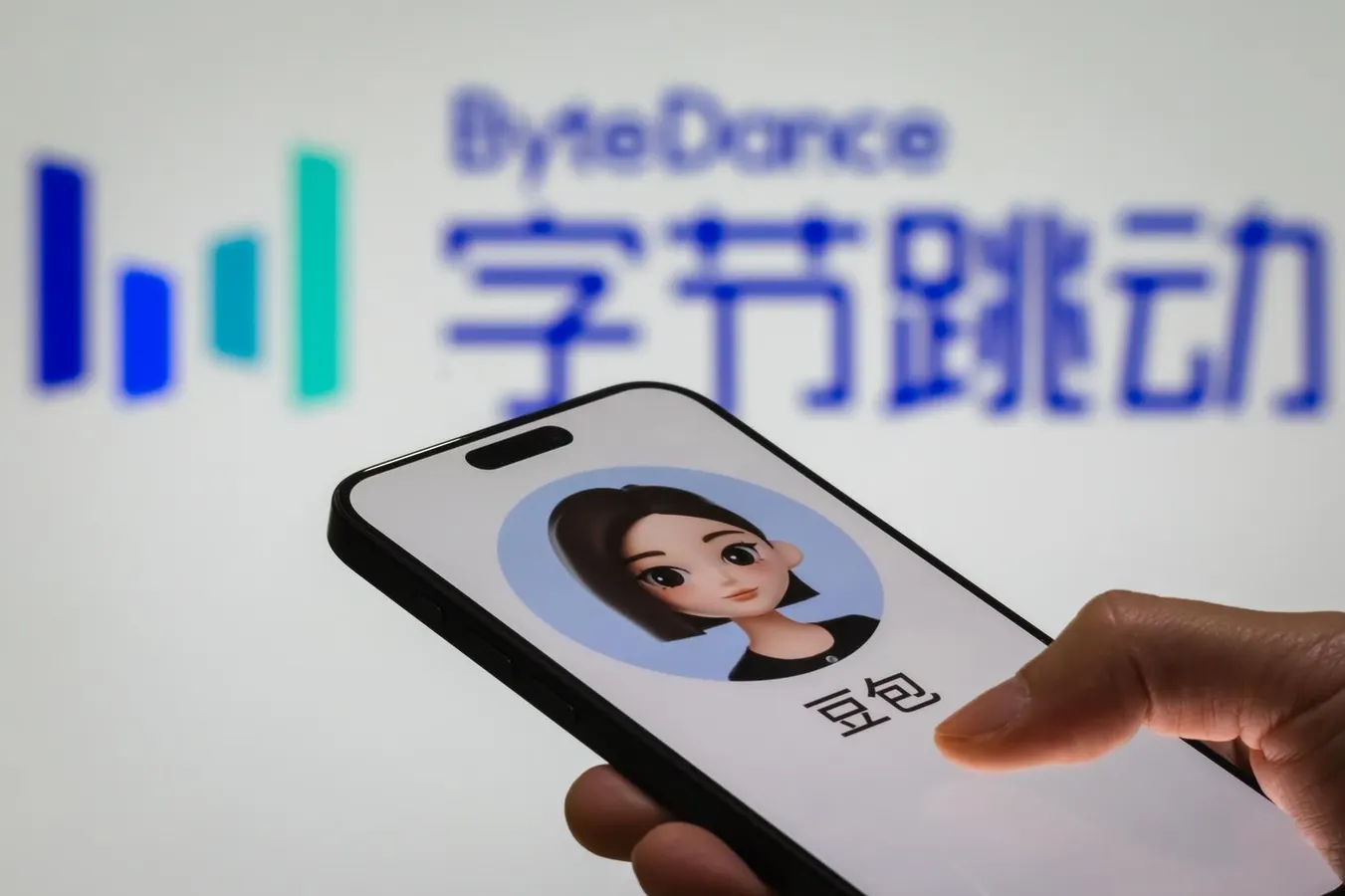
CHONGQING, CHINA - DECEMBER 29: In this photo illustration, a person interacts with the Doubao app on a smartphone, with the ByteDance logo visible in the background, showcasing the growing use of AI-driven applications in creating personalized virtual avatars, on December 29, 2024 in Chongqing, China. Artificial Intelligence (AI) has become a cornerstone of China’s strategic ambitions, with the government aiming to establish the country as a global leader in AI by 2030. (Photo illustration by Cheng Xin/Getty Images)Getty ImagesIn recent weeks, a widely circulated internal update from ByteDance revealed a striking decision: the company has cut roughly 30% of its AI application projects and explicitly abandoned the “spray-and-pray” product strategy that once defined China’s mobile internet playbook.This is an early signal that China’s AI application layer (once inflated by capital, experimentation, and hype) is entering a structural reset. As one industry analyst put it: “The mobile internet expansion logic no longer works in the AI era.”A Cost Structure That Punishes GrowthThe most revealing detail is financial.ByteDance’s AI inference costs in 2025 reportedly exceeded RMB 8 billion — approximately 2.3 times its incremental revenue from AI products. One executive summarized the problem bluntly: “At this burn rate, you can’t build another Doubao.”The underlying dynamic is counterintuitive. In the mobile era, scale drove profitability; marginal costs approached zero as user growth accelerated. In AI, every additional query incurs real compute and storage costs — unlike the mobile internet era, where costs were largely offloaded to user devices, AI centralizes that burden back onto the provider. Growth deepens losses.MORE FOR YOUThis inversion explains why ByteDance’s goal of launching three AI apps with over 10 million daily active users resulted in zero successes, despite billions poured into AI video, writing, and education tools. Doubao’s subsequent move to a paid model, combined with the headcount cuts, makes the same point plainly: scaling user numbers indiscriminately is not a viable path forward.Why the Old Playbook BrokeOver the past three years, Chinese tech giants, Tencent, Alibaba, Baidu, followed a familiar strategy: launch dozens of parallel products and bet on a breakout hit. That logic worked in the era of super apps. In AI, it fails for three structural reasons.First, inference costs scale with usage. Unlike social platforms, there is no “free” user at scale. Second, foundational models are swallowing the application layer. A startup might build an AI writing tool today, only to see the same functionality embedded natively into ChatGPT, Claude, or China’s Kimi within months. As one analyst put it: “What you build today gets absorbed by base models within six months.”Third, user switching costs have collapsed. Moving between AI tools is frictionless — no social graphs, no locked-in data ecosystems. Loyalty is thin and retention fragile.Together, these dynamics dismantle traditional network effects. High daily active users no longer guarantee defensibility, let alone sustainability.Network Effects, RewrittenNetwork effects in AI have not disappeared. They have relocated to entry points, data, and increasingly, real production usage.1) Model and distribution. Doubao’s rise is rooted less in model superiority than in its integration with ByteDance’s massive distribution ecosystem, especially Douyin. With hundreds of millions of users interacting across its platforms, ByteDance has a continuous stream of behavioral data to feed back into model training and it’s a compounding advantage that pure-play AI companies struggle to replicate.Tencent is charting a different but equally consequential path. At its May 13 shareholder meeting, founder Pony Ma declared that “Tencent has switched ships”, signaling a strategic departure that goes beyond simply bundling AI into the WeChat ecosystem. The market is paying attention as its token usage quality is beginning to matter more than raw user count. Hy3 Preview has held the top position on OpenRouter’s overall rankings for three consecutive weeks since April 27 — a streak that continued even after the model transitioned from free to paid. Tencent’s early restraint on AI capital expenditure has left it with significant room to maneuver.2) Vertical data moats. In healthcare, finance, and law, proprietary datasets are becoming the true barriers to entry. An AI trained on tens of thousands of hospital records is nearly impossible to replicate without equivalent access. The definition of “moat” has shifted from user scale to data exclusivity.3) Hardware integration. AI embedded into hardware creates a different kind of lock-in. Apple Intelligence’s integration into the iPhone ensures persistent usage regardless of how the product evolves. As one analyst noted: “Hardware is the ultimate entry point for AI.” Over the next five years, competition is expected to expand into wearables, automotive systems, and robotics.From Chatbots to WorkflowsA more fundamental shift is underway: the market is moving beyond the chatbot phase.Products like WorkBuddy and CodeBuddy (focused on enterprise productivity and developer workflows) are demonstrating something the DAU era never could: high willingness to pay, strong retention, and clear ROI. These are embedded systems solving specific, recurring tasks, not mass-market tools chasing scale.The economics make the case. More users mean higher token costs — spanning compute and storage alike. ByteDance’s retrenchment and Doubao’s pivot to paid are two data points pointing at the same conclusion: the age of subsidized scale is closing.The Rise of Precision AIThe AI application market is bifurcating.On one side are super-scale players, ByteDance, OpenAI, Google, competing to build general-purpose platforms for massive user bases. Capital-intensive, high-risk, with diminishing returns baked in.On the other side, a quieter but growing segment is emerging: precision AI systems built for specific workflows and loyal customer bases. These systems prioritize depth over breadth — serving 100 high-value clients rather than 800 million casual users.This is where “harness engineering” comes in: structuring AI through defined roles, compliance rules, and iterative workflows to make it reliable in real-world operations. Less about model brilliance, more about system design. Smaller teams hold the advantage here — they can move fast, embed proprietary knowledge, and build defensible positions that larger organizations struggle to replicate.The Recalibration Is HereByteDance’s retreat from 30% of its AI portfolio is less a corporate housekeeping exercise and more a leading indicator of where the broader industry is heading.Tencent’s “switching ships,” Alibaba and Baidu’s expected consolidation, and the rise of production-grade AI agents all point in the same direction: the industry is shifting from scale-first experimentation toward defensibility-first execution.Startups without proprietary data, differentiated workflows, or clear integration points will face mounting pressure — particularly those built as thin wrappers on existing models. Capital is already adjusting, flowing back into foundational models, vertical data platforms, and AI hardware, where long-term moats are more plausible.The era of more apps, more users, more growth is ending. In its place, a more grounded logic is emerging: control the entry point, own the data, or embed into the workflow.Everything else is increasingly expendable.
Doubao Cuts, Tencent Pivots: China’s AI Enters A Self-Correction Cycle
Bytedance cut AI products and Tencent shifted AI Ships. It is a signal that China’s AI application layer is entering a structural reset.
1,112 words~5 min read